



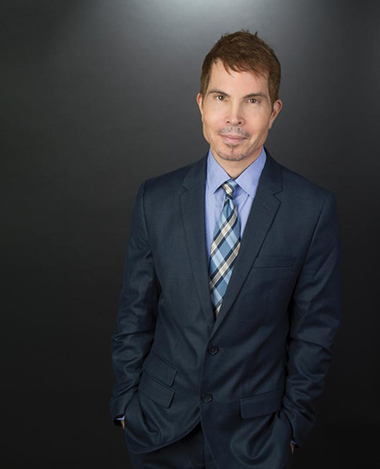
Gerald Posner, author of "PHARMA: Greed, Lies, And The Poisoning Of America."
("PHARMA: Greed, Lies, And The Poisoning Of America," by Gerald Posner, Avid Reader Press, 802 pages, $35.)
Author Gerald Posner lives in Miami Beach, and, full disclosure, I know him and his wife Trisha, who is his researcher and an author in her own right.
Posner is a lawyer and investigative journalist with a number of impressive and bestselling non-fiction books under his belt. His last book was a sharp look at the inner workings of the Vatican Bank, and he has written extensively on Nazism ("Hitler’s Children,""Mengele") as well as the Kennedy assassination ("Case Closed"). He also has been a contributor to various cable station news programs on a number of topics.
Posner has been on the case of Big Pharma for many years, beginning with the idea of doing such a book that came to him in the 1990s after a discussion with a fellow investigative journalist. The writing of this particular book took him five years.
“Big Pharma resides at the intersection of public health and free enterprise. [It] likes to portray itself as a quasi-public trust focused on curing illnesses and saving lives. Its profits, while large, come at great cost for research and development. Its critics cast pharma as a veritable evil empire in which money trumps health. Wild conspiracy theories have flourished, that the industry has developed and hidden a cancer cure or pushes autism-causing vaccines, all to make more money.”
This tremendously well-researched work clocks in with a narrative of just over 30 pages of Selected Bibliography, almost 200 pages of Notes and over 30 pages of Footnotes. Daunting, indeed! But Gerald Posner well knows how to tell a good story, and this history of the American pharmaceutical industry will have you turning the pages and appreciating his insights and commentary. It is not, however, a book to read in one sitting. It is a serious and very well written reference book.
I used the fine Index and dipped into it looking up particular stories – such as Elizabeth Holmes/Theranos; security fraudster Martin Shrekli and what sent him to prison; Mylan CEO Heather Bresch(daughter of Senator Joe Manchin of West Virginia) and that company’s EpiPen price increase; the fascinating history of how penicillin was discovered and how it finally became a potent antibiotic; AIDS/the “gay cancer”; et alia – but the meat of this book is the expose of Purdue Pharma, OxyContin, and the Sackler family.
The sordid story of Purdue, opiods/OxyContin and the Sacklers could well be a separate, shorter book. Not as all-encompassing as the greater book, PHARMA, of course, but as valuable to the general reader. Chapter 52, on the Sackler family, “Essentially A Crime Family,” is gripping fare. Having known someone addicted to OxyContin, I can attest to how incredibly destructive this pain-killer is. The woman my husband and I were acquainted with truly went out of her mind, addicted to this drug. No one should be allowed to market such products, nor to enrich themselves by doing so.
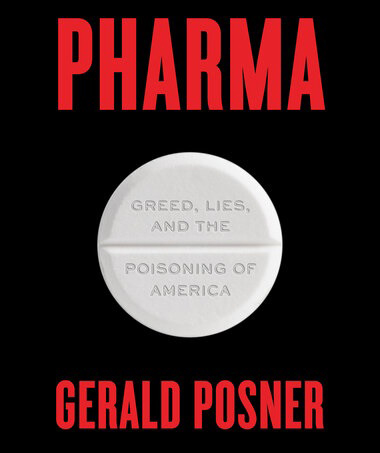
Posner’s short chapter The Coming Pandemic is sobering and could not be more timely, given what is happening now all over the world – that’s what a pandemic is, a worldwide epidemic – and many will sicken and die. Posner posits that superbugs/supergerms – such as the novel Covid-19 virus – and antibiotic-resistant bacterial infections – plus the unchecked use of antibiotics in the food chain fed to animals as well as being sprayed as pesticides on fruit and vegetables -- will lead to the deaths of many of us. And the tragedy of all this, he writes is that “Exacerbating fears over the growth of supergerms is that few pharmaceutical companies are developing new antibiotics.” A former marketing director at Merck (Mark Skoien) is quoted, “Part of this problem is that anti-infectives can be notoriously difficult to make.” And, as Gerald Posner adds, “There is less profit too.” Greed rules in Big Pharma.
Posner goes on, “The prediction of a coming pandemic, unstoppable because the pharmaceutical industry has put profits over its duty to develop drugs for the public good, is no wild-eyed conspiracy theory heavy on drama and light on evidence. “ And as these ominous last words from Karen Bush, a biology professor with forty years of experience in the development of anti-bacterials in a number of pharmaceutical companies whom he quotes articulates rather succinctly, “It is not a question of if - it is a question of when.” When - and has when come to us? Possibly, quite possibly.
This is a valuable reference source. No, it is by no means a quick read, but it is a serious wake-up call, a detailed research tome that deserves a place on the shelves of those of us concerned with the very important issues of life, health, and survival which we all face, never more so than now.