



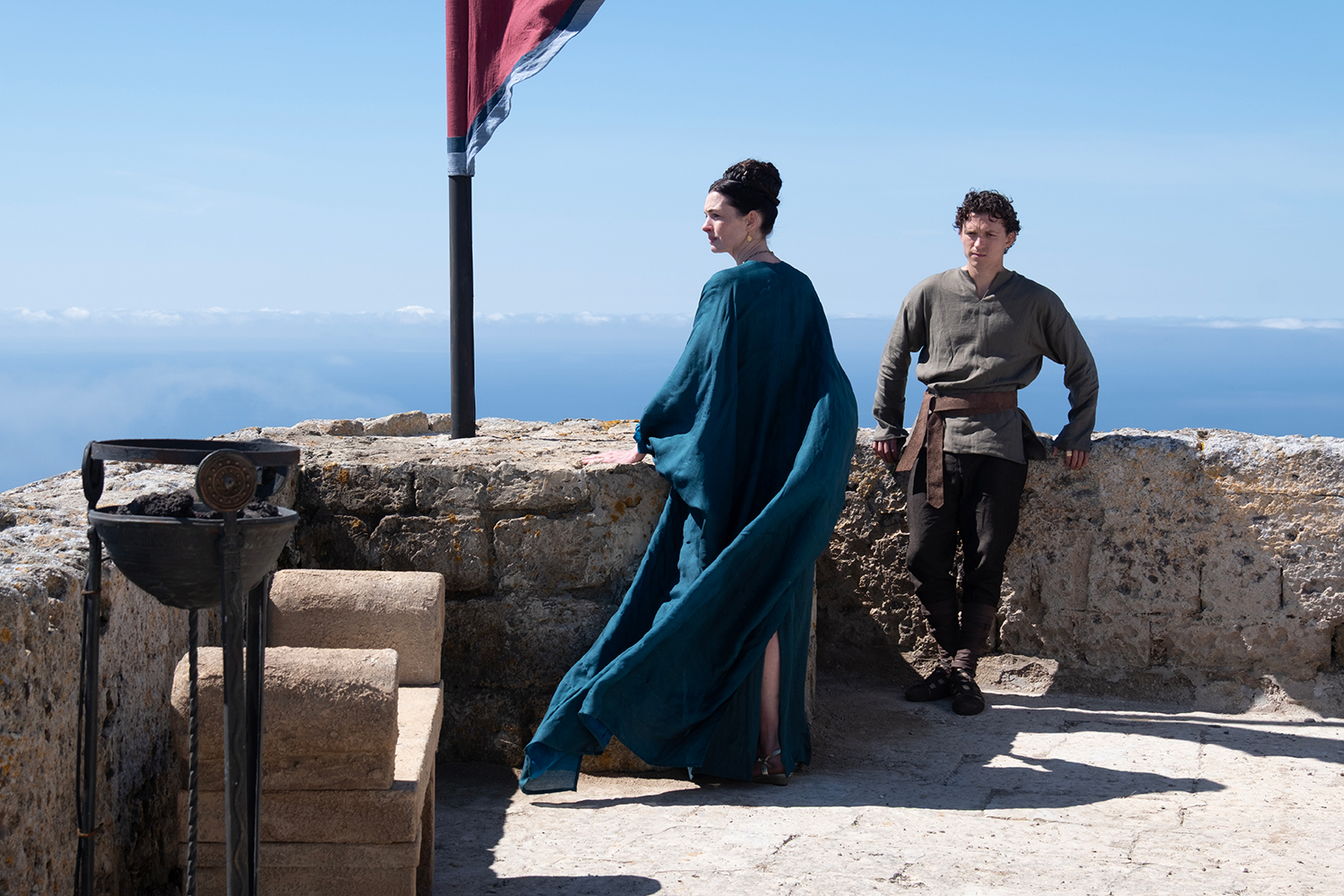
Anne Hathaway as Penelope and Tom Holland as Telemachus in a scene from "The Odyssey." (Photo courtesy of Universal Pictures)
Sing to me of the man, Muse, the man obsessed with bending chronology to suit his storytelling needs. Regale me, Muse, with tales of the rigid taskmaster who demands much of those under his command, as they embark on a daunting quest filled with daunting challenges and intimidating pitfalls. Enlighten me, Muse, with the tests of stamina and mettle that ensue, the ones that may plant the notion in some of these desperate souls' minds that they might be better off walking away from this punishing ordeal.
“The Odyssey,” Christopher Nolan's star-studded new retelling of a very old story, reshapes Homer's epic poem in the form of its director's heady mind-game contraptions. Its jagged rhythms are immediately reminiscent of “Oppenheimer,” his acclaimed biopic about the father of the atomic bomb. But even more so than in previous efforts, the English auteur holds up a mirror to the other side of the lens, to the extent that it's not always clear where his portrait of Odysseus ends and his own self-portrait, brooding and self-critical, begins.
The Universal Pictures release has been revolving in my head since I saw it earlier this week, much like the bad weather its morose protagonist and his soldiers encounter in their calamity-riddled voyage home. And I wish I could concur with the current consensus among most of my colleagues, some of whom regard Nolan with such reverence, it's almost as if he'd descended from Mount Olympus to mingle with us mortals.
But no. As “The Odyssey” darts forward and backwards in time, plastering the canvas of the movie screen with one robustly composed IMAX shot after another, I see all my concerns that Nolan is too much of a square to do justice to these great Mediterranean myths come to fruition. The “Memento” director replaces wonder with grit, his somber lyricism closer in spirit to Italian neorealism than Ray Harryhausen. It's an earthier, less remote undertaking than his previous two efforts, “Oppenheimer” and the impenetrable “Tenet,” but the filmmaker has leeched the material of the very pulp that would have made his introspective, rigorously rendered approach to the text easier to digest and, you know, fun.
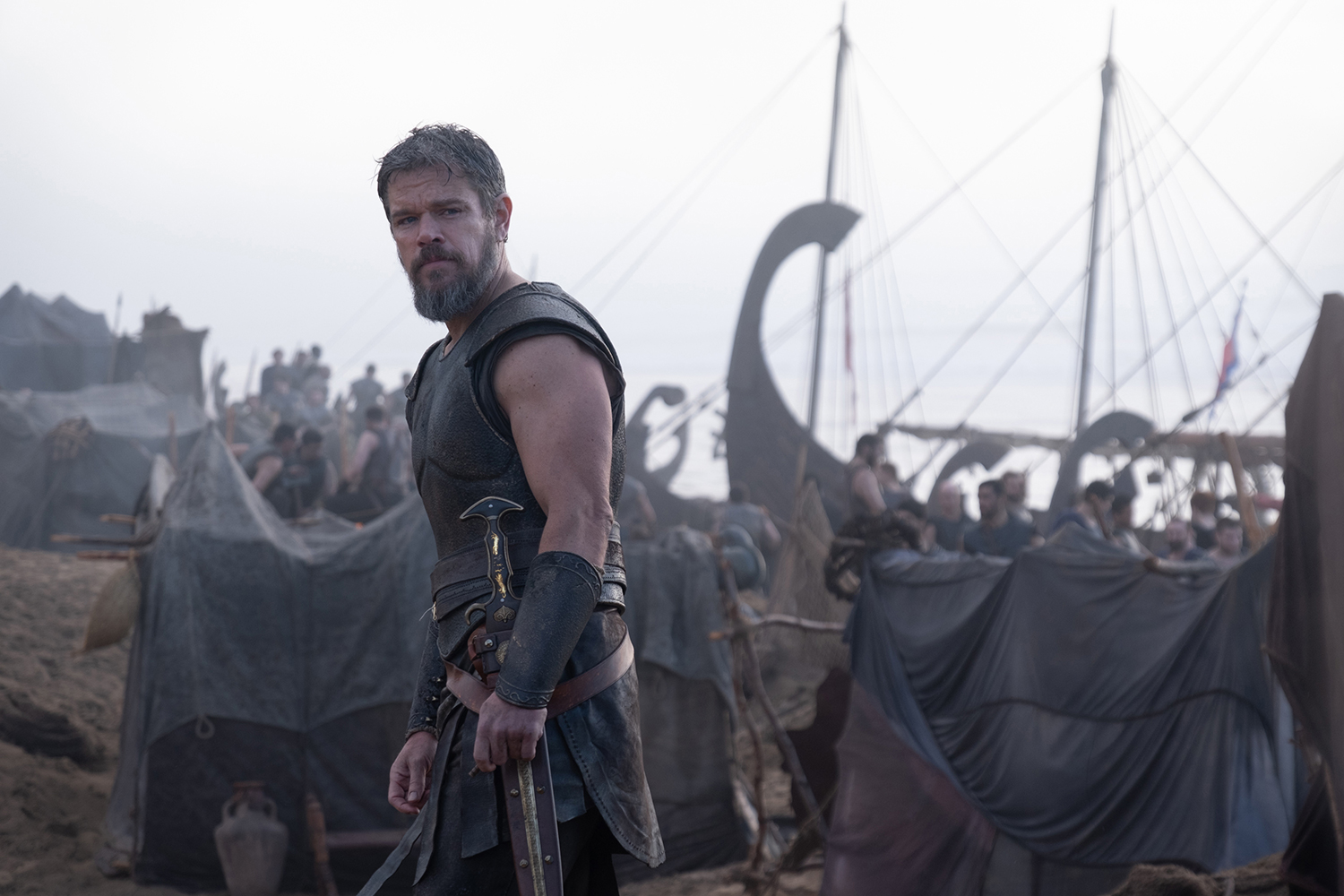
Matt Damon as Odysseus in a scene from "The Odyssey." (Photo courtesy of Universal Pictures)
The dark cloud hovers above “The Odyssey” from the start, as Telemachus (Tom Holland), Odysseus' adult son, and his mother Penelope (Anne Hathaway) begin to grapple with the possibility that Odysseus (Matt Damon), the king of Ithaca who went off to war against Troy when Telemachus was still a boy, is no longer in the realm of the living. Entitled suitors hover menacingly, eager to be the one to wed Penelope and flick aside Telemachus, whom they perceive as a spineless dweeb. The most Machiavellian among them is Antinous (an oily Robert Pattinson), his veneer of affability masking the viper he is inside, ready to strike.
The problem with these early scenes is not that, unbeknownst to his loved ones, Odysseus is alive (but not well), and Nolan would much rather focus on him. It's that on top of that, Nolan is no good at depicting palace intrigue. The machinations feel rudimentary and unsophisticated, like an episode of “Game of Thrones” before it got lousy, only devoid of venom. The notable exception is Eumaeus (a top-notch John Leguizamo), a visually impaired farmhand who shares Telemachus and Penelope's loyalty to their king. Leguizamo injects much-needed conviction, and the film is always watchable whenever he's onscreen.
But Damon is strong as well. He takes on the unenviable task of carrying this film, with its byzantine structure, on his capable shoulders. It's the best performance the “Good Will Hunting” star has given since Robert De Niro's “The Good Shepherd,” which came out twenty years ago.
He rises to the challenge of selling “The Odyssey's” most intriguing notion: that this is a hero's journey without a hero. There are no heroes here, Nolan asserts, because in the hellfire of warfare, both sides commit atrocities. The ingenious Trojan horse maneuver, rendered with occasionally breathtaking scale, gives way to a Pyrrhic victory for the Greeks. In this regard, the film plays like an Aegean riff on Clint Eastwood's “Unforgiven,” with its weathered gunslinger reflecting on all the lives he took, innocent and otherwise.
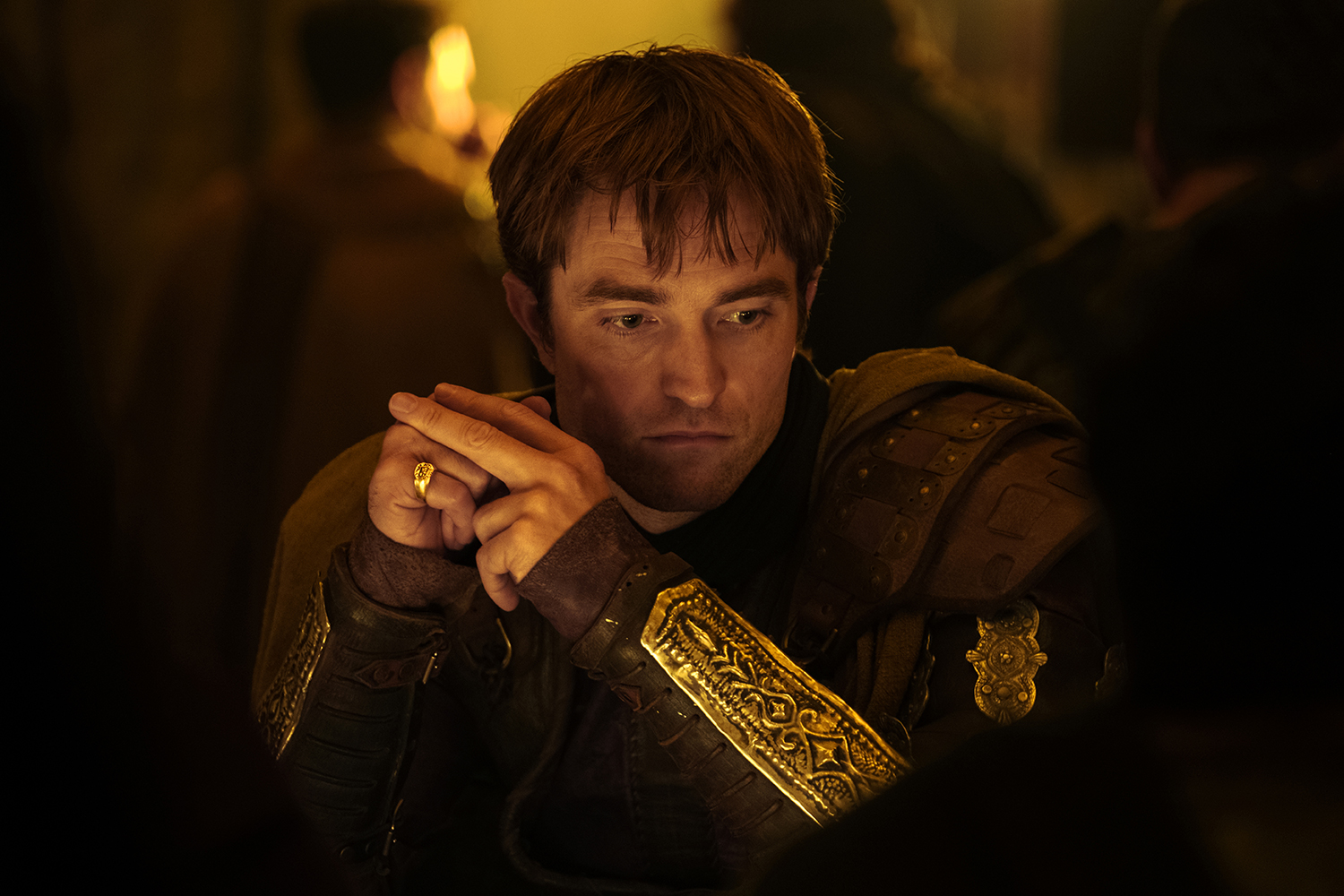
Robert Pattinson as Antinous in a scene from "The Odyssey." (Photo courtesy of Universal Pictures)
It all sounds provocative, thrilling even. Damon and the rest of a nearly uniformly strong cast put up a gallant fight. Only Holland struggles to keep up, not because he is bad, really, but because he is fundamentally wrong for the part. But none of them can overcome “The Odyssey's” often disruptive narrative. Yes, Nolan is staying true to the source material's own nonlinear structure, but the filmmaker doubles down, chopping his narrative to bits in order to explore his career-long fixations with time and memory. (There is, indeed, a lot of “Memento” in this film's DNA.)
There are stretches of “The Odyssey” that feature a cyclops with an unsettling face, an army of giants and even a witch with the ability to transform grown men. Into what? Let's just say I finally know where Hayao Miyazaki got the idea for Yubaba and Zeniba, the twin witches in “Spirited Away.” These sequences are all competently staged and lensed, though shooting a film entirely with IMAX cameras comes with its own set of limitations, such as nocturnal shots that appear to be lit with available light. It's a decision that may have made more sense on the page than when we're struggling to tell what the hell is happening because it's too damn dark.
But in the end, too much of “The Odyssey” plays like a dry humanities lecture, albeit one with more depth of feeling than we've seen from Nolan in well over a decade. There is no need for any of Odysseus' brushes with danger to feel like homework, but here we are. The movie finally gets its act together in the final half hour, after it's done jumping back and forth through time. An elaborate climactic confrontation, in particular, is solid sword-and-sandal fare, but this is an unfortunate case of #toolittletoolate.
I emerged from “The Odyssey” more exhausted than entertained, yearning in vain for an adventure with a more streamlined narrative. Yearning also for the filmmaker Christopher Nolan used to be, and lamenting the one he has become.
Have mercy on me, Muse. Have I lost my way, much like Odysseus after he runs afoul of the deities monitoring his every move?
As soon as I write the above question, I detect movement out of the corner of my left eye. She sits next to me, and I feel her gaze as others inside the corporate coffee shop remain oblivious to her presence. Right away I feel the creative spark that largely eluded Nolan bubbling up inside of me. But I have questions for my Muse. I turn to look into her incandescent eyes, and this is what I tell her.
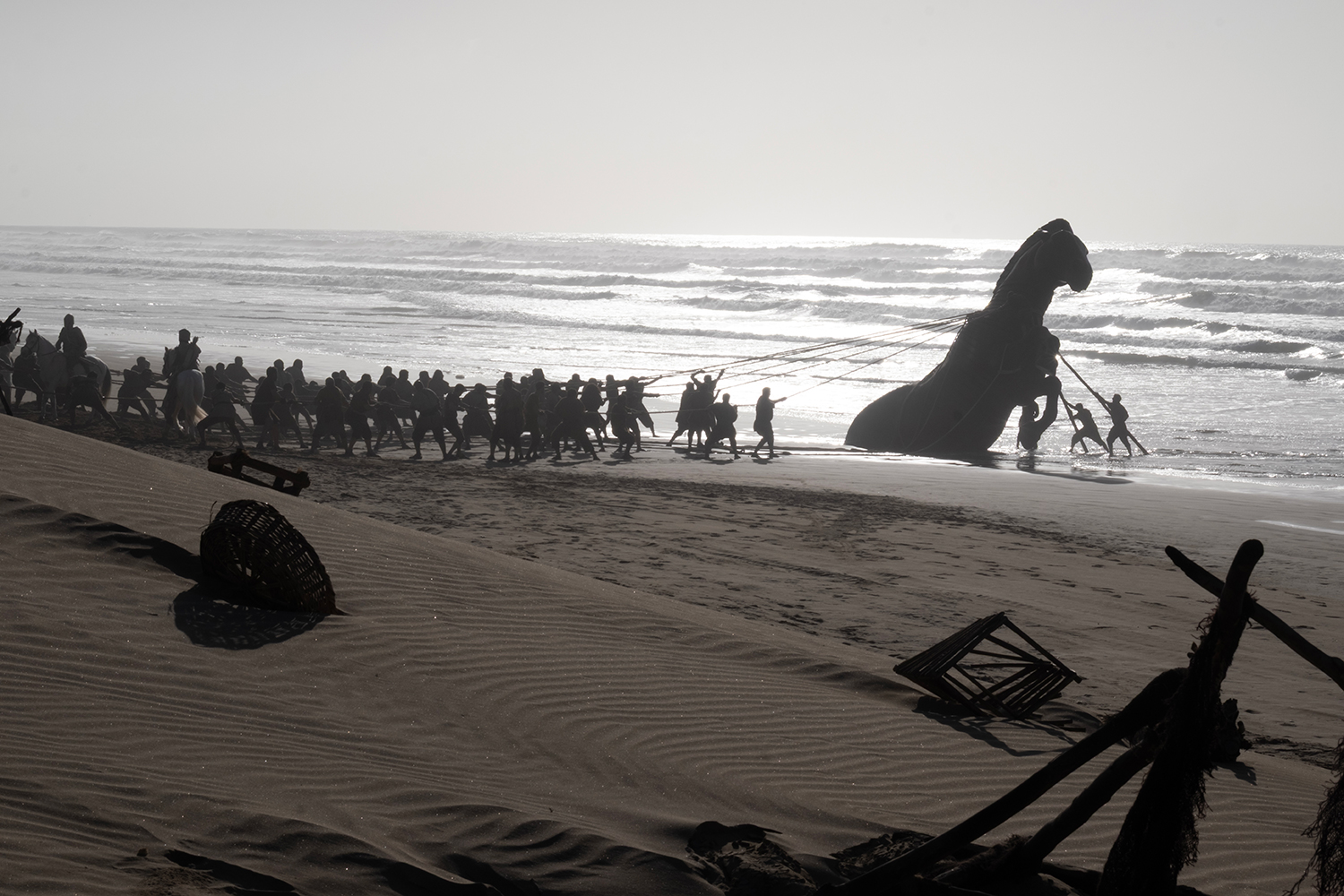
A Greek army hides inside the Trojan horse in a scene from "The Odyssey." (Photo courtesy of Universal Pictures)
“Have the movie gods forsaken me? This summer began with so much promise, but things have taken a turn. It's not enough that 'The Odyssey' was a disappointment. It was screened to us in poorly projected 70mm, some of it out of focus, in an auditorium with a busted air conditioner, with some audience members defying the rules and peeking at their smartphones, convinced no one would notice.”
Her voice is a rippling stream. “You are wondering how you can recapture the rush of discovery. That feeling when you saw your first film from a director who may have gone on to become a personal favorite. But you feel the current cinema is not helping.”
“No, it is not!” I hiss, trying not to draw attention to the others who, like me, are staring at their laptops. “I feel like I'm fumbling in the dark, searching for that glimmer that will set me on my way.”
My Muse smiles. That Mona Lisa smile that keeps secrets and holds the answers to so many of life's mysteries. And then I realize she's reading my mind. “The answers are inside you, and in this case, the solution is simple. You just need to remember.”
Her hand touches my shoulder, and I gasp.
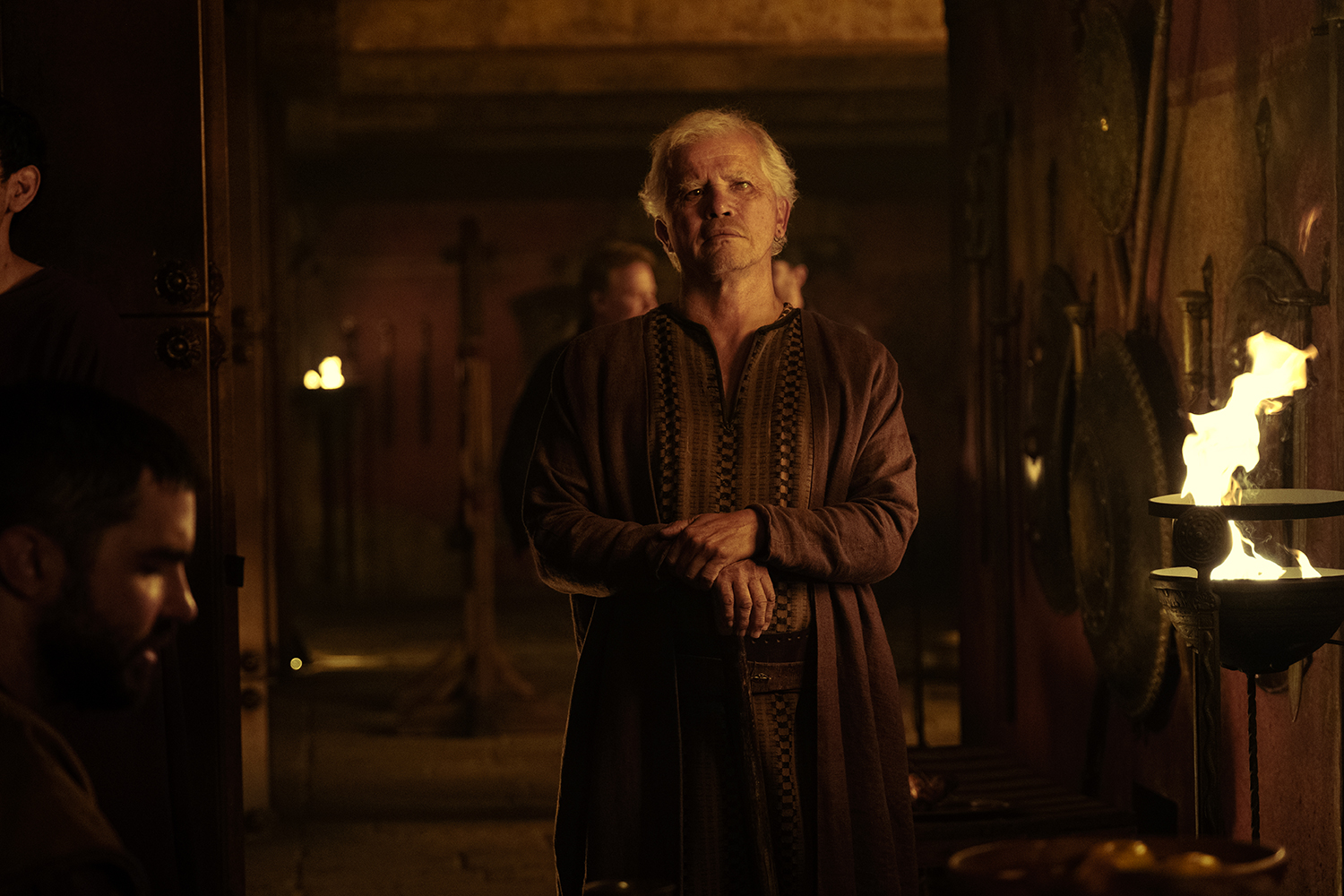
John Leguizamo as Eumaeus in a scene from "The Odyssey." (Photo courtesy of Universal Pictures)
It's a night showing of “Memento” at the Intracoastal Mall multiplex. An amnesiac Guy Pearce crosses out the message he wrote to himself, and I admire the inverted narrative structure, even if it feels too schematic at the time. But wait. Now Robin Williams is hitting Al Pacino with a shovel in “Insomnia,” and the moment is so visceral. “That's more like it,” I say to myself.
Then I'm back at Sunset Place, and I wish the women in “The Prestige” had more agency, though it's the best performance I've seen from Hugh Jackman at that time. (Also, David Bowie!) But now I'm back at Intracoastal, and Batman is riding off into the night, and all I can think of is the ending to “I Am a Fugitive from a Chain Gang.” (“I steal!”)
And now it's morning, and “Inception” is screening for critics at Regal South Beach, and that top will never stop spinning, will it? It's a couple of years later, at AMC Aventura's LIEMAX auditorium, and Joseph Gordon-Levitt is rising, literally, and I'm sitting next to a dear friend who no longer speaks to me, and I don't want the moment to end, because the alternative is too painful.
And now I'm back at the LIEMAX, and Matthew McConaughey is breaking down in tears, separated from his loved ones by space and time, and for the first time, Christopher Nolan reduces me to a puddle. But now the sound of World War II planes at the AutoNation IMAX is deafening, as I sit next to my late mother seeing “Dunkirk,” and I feel like Nolan has retreated into his cocoon after showing a more raw and vulnerable side of him in “Interstellar.”
I'm back at the AutoNation IMAX, double-masked next to my editor, baffled and confused as “Tenet” plays in the middle of a pandemic. And for the first time, I feel like Nolan has gone astray.
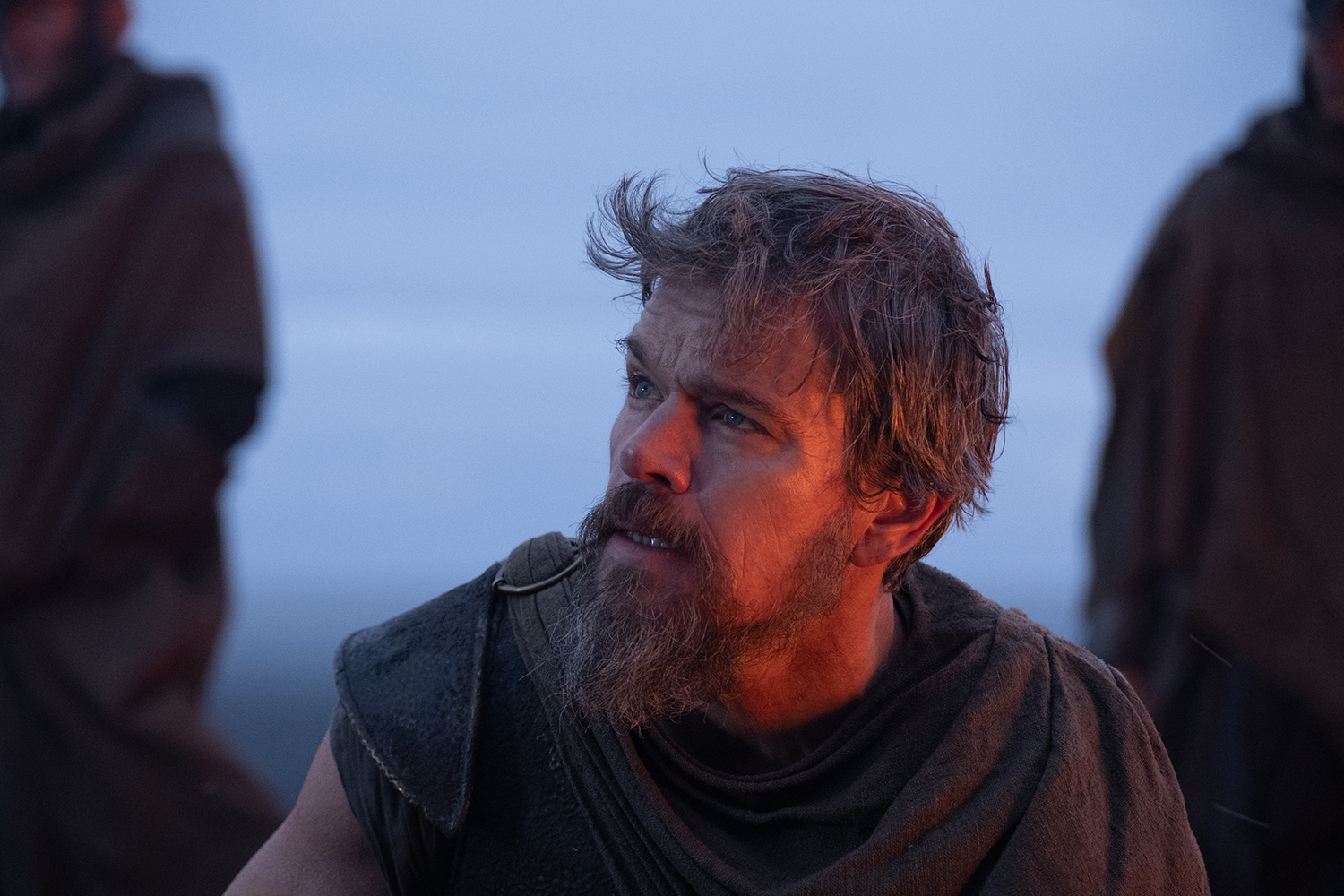
Matt Damon as Odysseus in a scene from "The Odyssey." (Photo courtesy of Universal Pictures)
And I don't think he's come back since. Not the way he was. So what happens now?
“Thank you for the inspiration,” I say as I turn around, but then I feel a sudden breeze. Woosh. And the chair next to me is empty once again.
Okay, I think I got this. “The Odyssey,” at its best, suggests there might be a path back for this director whose distinctive approach to the medium is cerebral, bold and sometimes boldly full of himself. He has crafted what is decidedly an agnostic's depiction of the Greek gods, but here's the thing: For this stuff to truly sing, it needs to come from a true believer. The question is, do I still believe in Christopher Nolan?
“The Odyssey” is now playing in wide release. The AutoNation IMAX at the Museum of Discovery and Science in downtown Fort Lauderdale is one of about two dozen screens in the U.S. and the only one in Florida projecting the film in 70mm IMAX film. Other local IMAX engagements include AMC Aventura, AMC Sunset Place, CMX Cinemas Dolphin, Regal Kendall Village and Regal Sawgrass. It is also showing in regular 70mm at AMC Aventura and Coral Gables Art Cinema.