


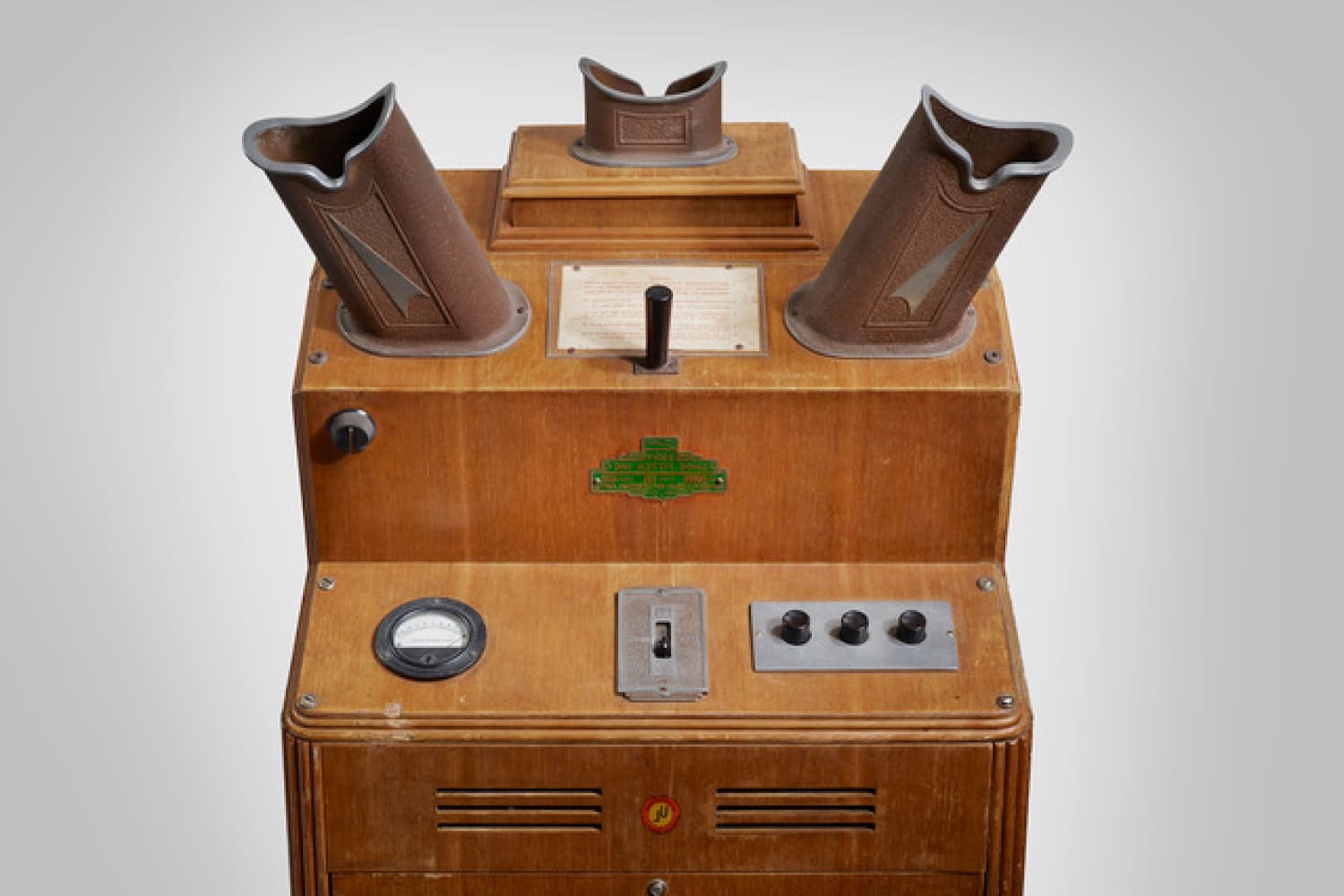
Simplex for X-Ray Shoe Fitter, Inc., 1946 (Image courtesy of The Wolfsonian–FIU)
Open your closet. What stares back? Yes . . . shoes. Lots and lots of shoes. Why is it that footwear is so compelling to so many?
The Wolfsonian-FIU Museum on Miami Beach gives us the lowdown, presenting nearly 150 footwear-related objects covering the first half of the twentieth century.
Opening Thursday, July 2 through Sunday, Feb. 28, 2027, the museum presents "Footnotes: Shoes, Symbolism, and Society," tackling the task through drawings and photographs, focusing in on designers such as Ferragamo and Beth Levine (America’s First Lady of Shoe Design), shoe-inspired decorative arts (think Mies van der Rohe’s cantilevered chair), advertising, and footwear that can be downright sculptural. A relationship to the dark side of history uses the image of boots to indicate control of humanity, revealing the use of footwear as effective symbolism and strong communication.
How we’re shod takes up a large part of every day, often directing how successfully we complete our daily activities . . . yet rarely does an institution focus on honoring a major skeletal workhorse and their man-made protectors. The history, design and cultural relevance of footwear is laced together throughout this show, potentially resonating with every living person.
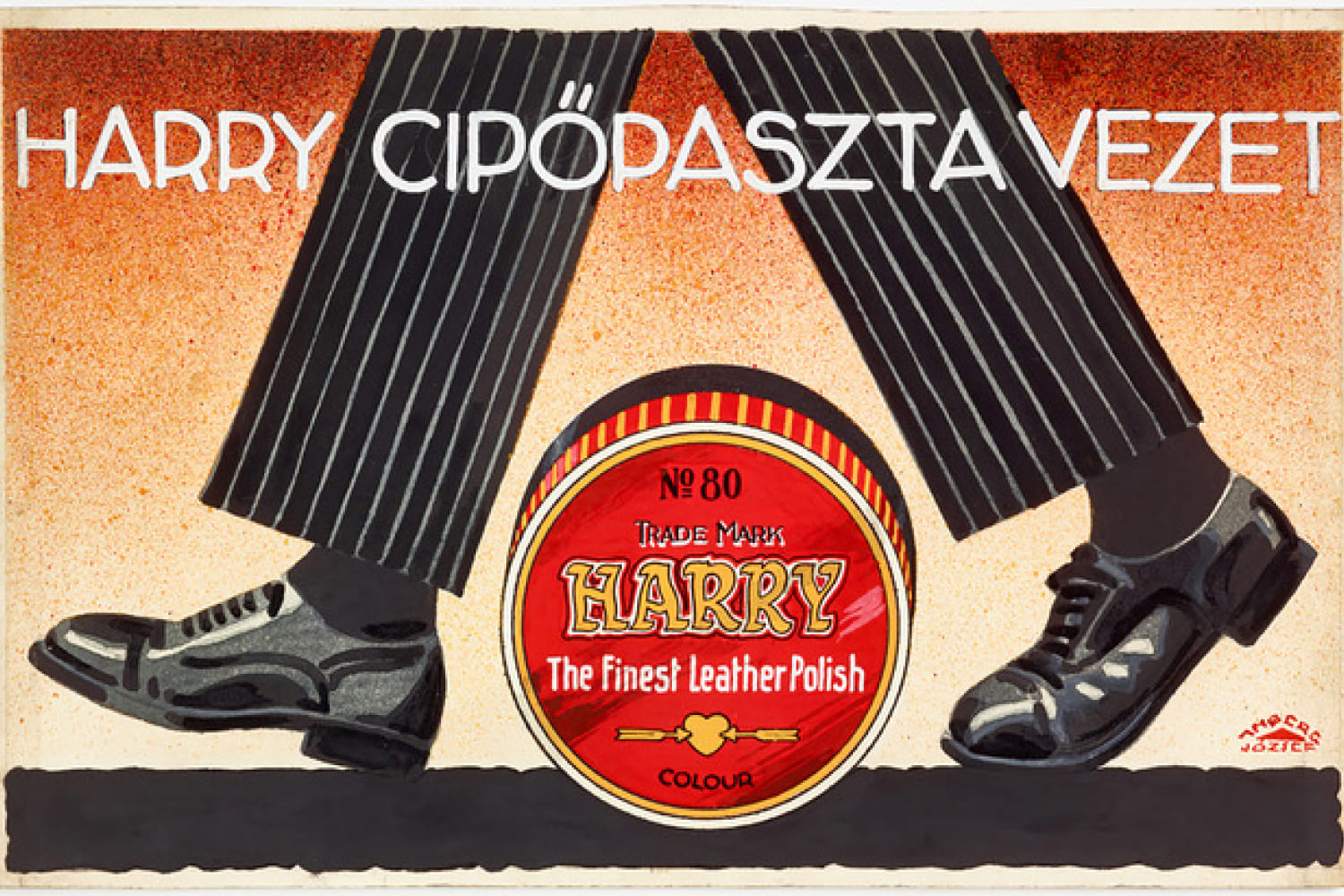
Harry cipöpaszta vezet 1925, Gouache, watercolor, ink, and graphite on paper by József Amberg, Hungary, Budapest. (Image courtesy of The Wolfsonian–FIU)
Researching the article, I’ve had flashbacks of the importance of shoes in my own life. Euphoria on my first pair of pretty, girly shoes when I was four years old is ingrained in my memory. I clearly recall insisting on sleeping with them beside me, not wanting to separate from the idea of now owning the status-enhancing, multi-pastel colored strappy sandals. A definite harbinger to a lifelong attraction.
"Sneakerheads" are a whole new level of modern shoe collector which entered the scene in the ’80s and '90s. Jordy Geller, of Las Vegas, calls his place the ‘ShoeZeum, owning the largest and most comprehensive collection of Nikes in the world, estimated to be worth over a million dollars. At Geller’s collecting apex he harbored over 2,400 pairs, worth over $100 million, before selling off the majority. The brain reels.
Shoes affect the attractive and functional quality of ones walk; they dictate degree of comfort and how we are noted by the outside world with this non-verbal cue.
"Surprisingly minimal appearance cues lead perceivers to accurately judge others’ personality, status, or politics." according to a study by Wellesley’s Angela Bahns, assistant professor of psychology. Footwear is a powerful force in society.
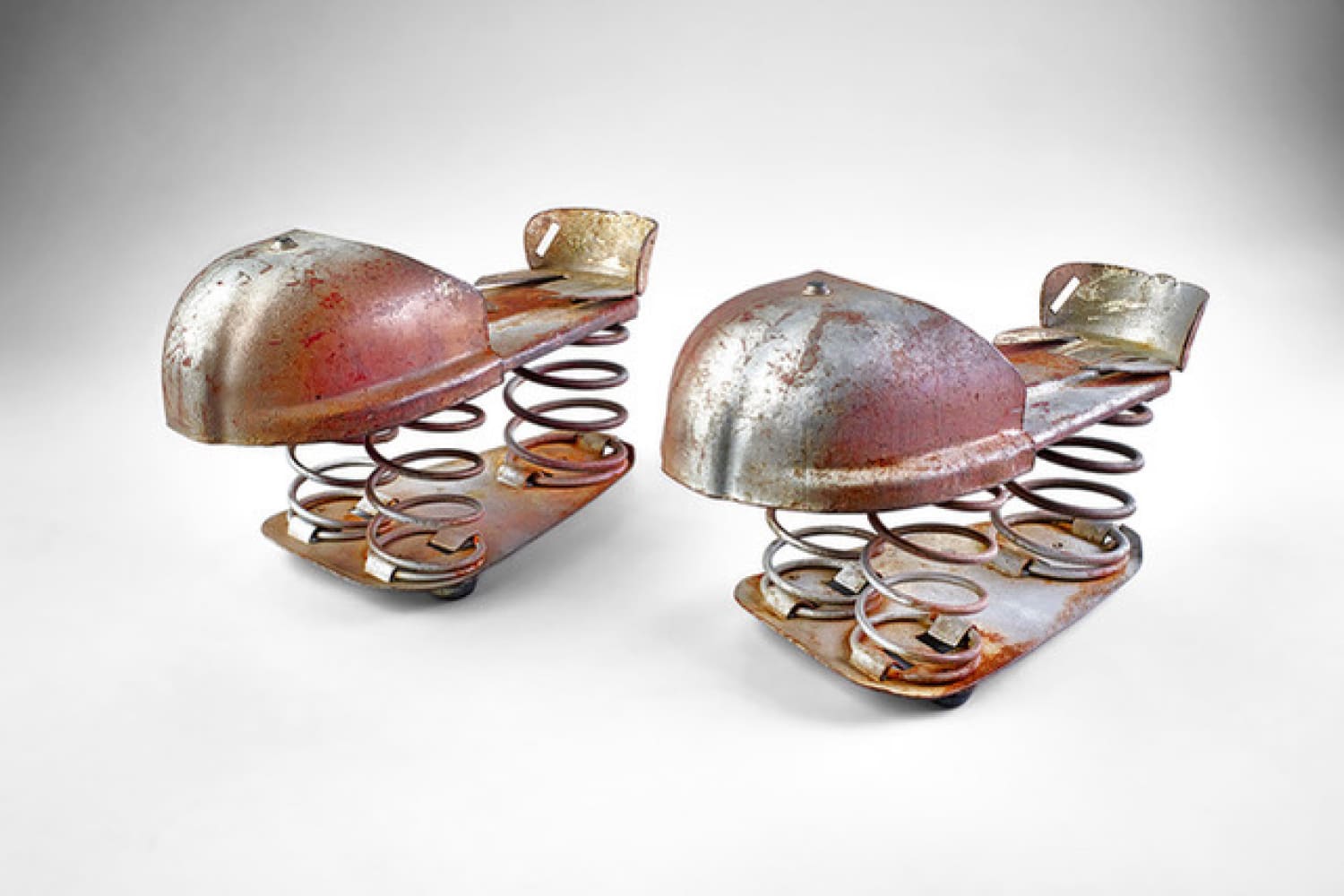
Rocket Shoes, 1953, metal, paint. (Image courtesy of The Wolfsonian–FIU)
The former First Lady of the Philippines (1965 to 1986) was known for the basement full of shoes she kept in Manila’s Malacañang Palace. After Imelda and husband, Ferdinand Marcos, were tossed out of the country in 1986 for a over a decade of an authoritarian government, economic mismanagement, and human rights abuses, the temporarily empty palace was opened briefly for tours.
I happened to be living in Asia in the 1980s and took the palace tour, ogling Imelda’s cellar full of shoes (over 1,000 pair) from Christian Dior to locally crafted designs. Filipinos, struggling for basics, did not take kindly to such an overt extravagant misuse of funds. "They went into my closets looking for skeletons, but thank God, all they found were shoes, beautiful shoes," the former first lady was quoted as saying.
The degree of difficulty in constructing footwear is a complicated architectural feat. Shoes must accommodate a variety of activities and durability. Think how many tiny shape-shifts are in a foot, myriad repetitive movements necessary in carrying out one’s day. If they rub, gape or flap about, an unfortunate tumble could befall your perfect self.
Recent shoe styles have focused on sky-high rubber soles, rubber being mandatory for maximum comfort and mobility. Fewer modern women are likely to tolerate pain and constriction than previous generations. I wondered what excessive rubber sole height indicated about today’s society and its direction. Apparently it's perceived to subconsciously translate to feelings of power, dominance.
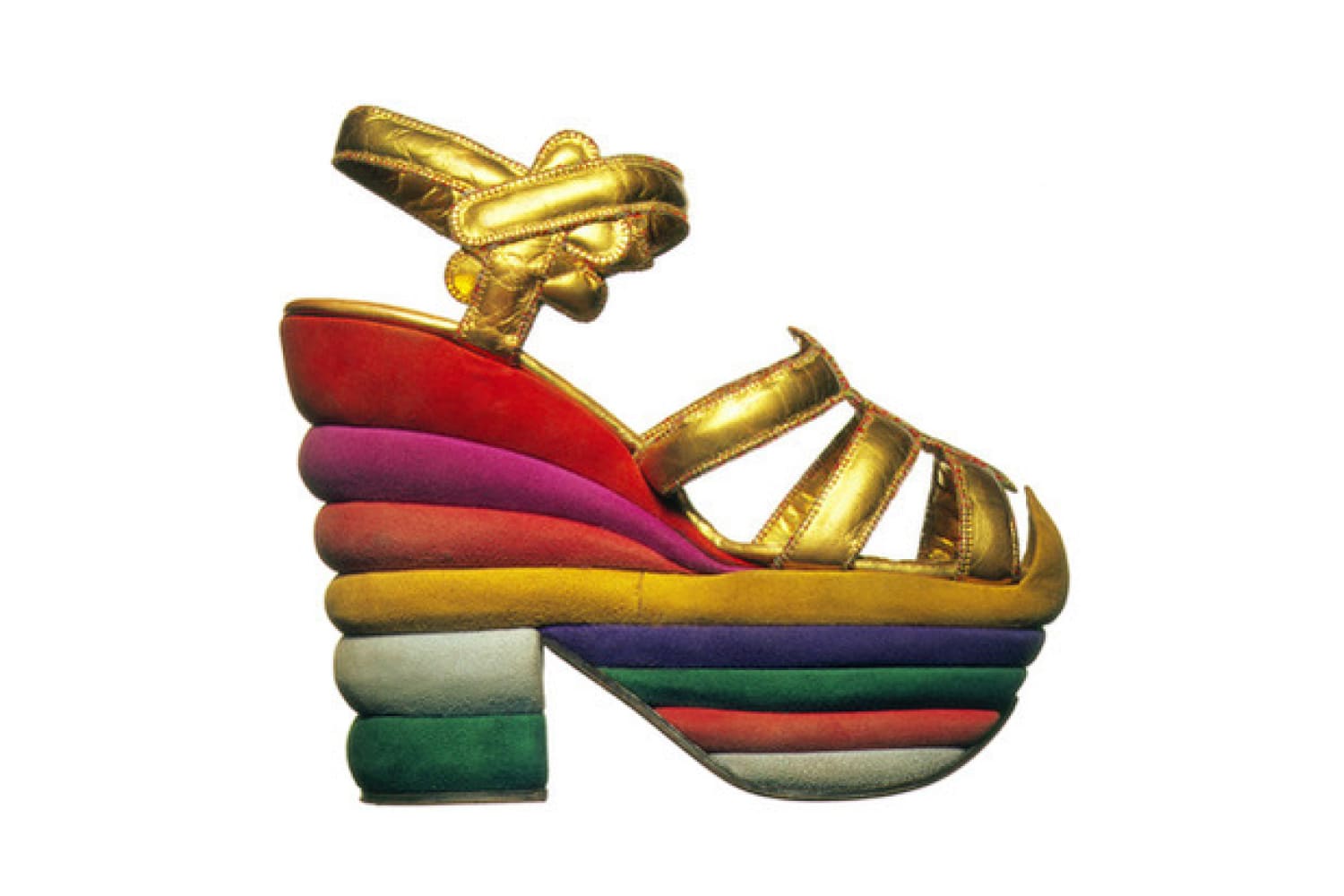
Rainbow, 1938 Salvatore Ferragamo Courtesy Museo Ferragamo, Florence, (Image courtesy of The Wolfsonian)
I further discussed the exhibition with curator Danielle Charlap, asking how the Wolfsonian came to focus on shoes as a summer topic debut.
"When I first started exploring The Wolfsonian’s collection," said Charlap, "I stumbled on the Simplex X-ray fluoroscope machine from the late 1940s and needed to know more. Turns out it was a promotional machine used in retail shoe stores to give customers a live view of their toes wiggling in the shoes they were trying on. As you might have guessed, it proved incredibly dangerous and unnecessary. I had never heard of the machine before but when I asked around, people remembered them."
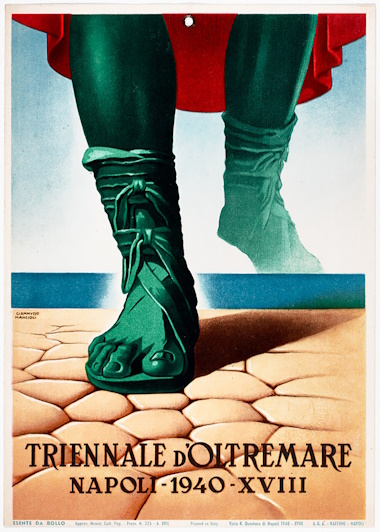
Overseas Triennial, Naples 1940, Poster (Image courtesy of The Wolfsonian -FIU)
She said it piqued her curiosity.
"I started doing a deep dive into the collection to see what other shoe related items we had (spoiler alert: lots of great posters). I started in October 2025 so it’s been a wonderful way to get to know the range of the collection."
Other than the X-ray machine, Charlap said she learned a lot about footwear during the creation process.
". . .How plastic was integrated into shoe design in the first half of the 20th century. 1920s heels sometimes had a thin layer of cellulose nitrate wrapped around wooden heels that could be decorated with rhinestones or made to imitate materials like mother of pearl."
She said she was "blown away" by the artistry of Beth Levine who, together with an incredible industrial designer named Sara Little Turnbull (who worked with 3M, among others), figured out how to attach Lucite heels with adhesive instead of using screws.
"We are also borrowing a shoe by Salvatore Ferragamo from 1941-42 that has an upper made out of cellophane," she explained.
She said she knew about it before doing the research for the show, but points out, "it’s still so interesting to consider how women used to wear swimming shoes to the beach that were laced up canvas boots past the ankle."
Charlap said the museum was able to borrow an example while the collection had a Miami tourist postcard showing women wearing the shoes in the 1920s.
"I pulled out (that postcard) for the show."
We wanted to know if there was one big game changer in the evolution of footwear.
"Like most fields, industrialization transformed the production of shoes. But that’s not really how the show is structured. It’s a lot of vignettes about interesting designs and shoe related materials. For example, we’re borrowing a great inventive shoe designed by André Perugia, which had heels you could swap out to match your mood/outfit. Or one of my personal favorites, I pulled out some really great photographs we have of one designer’s various window displays for a shoe store, a great reminder to appreciate the art of window display design."
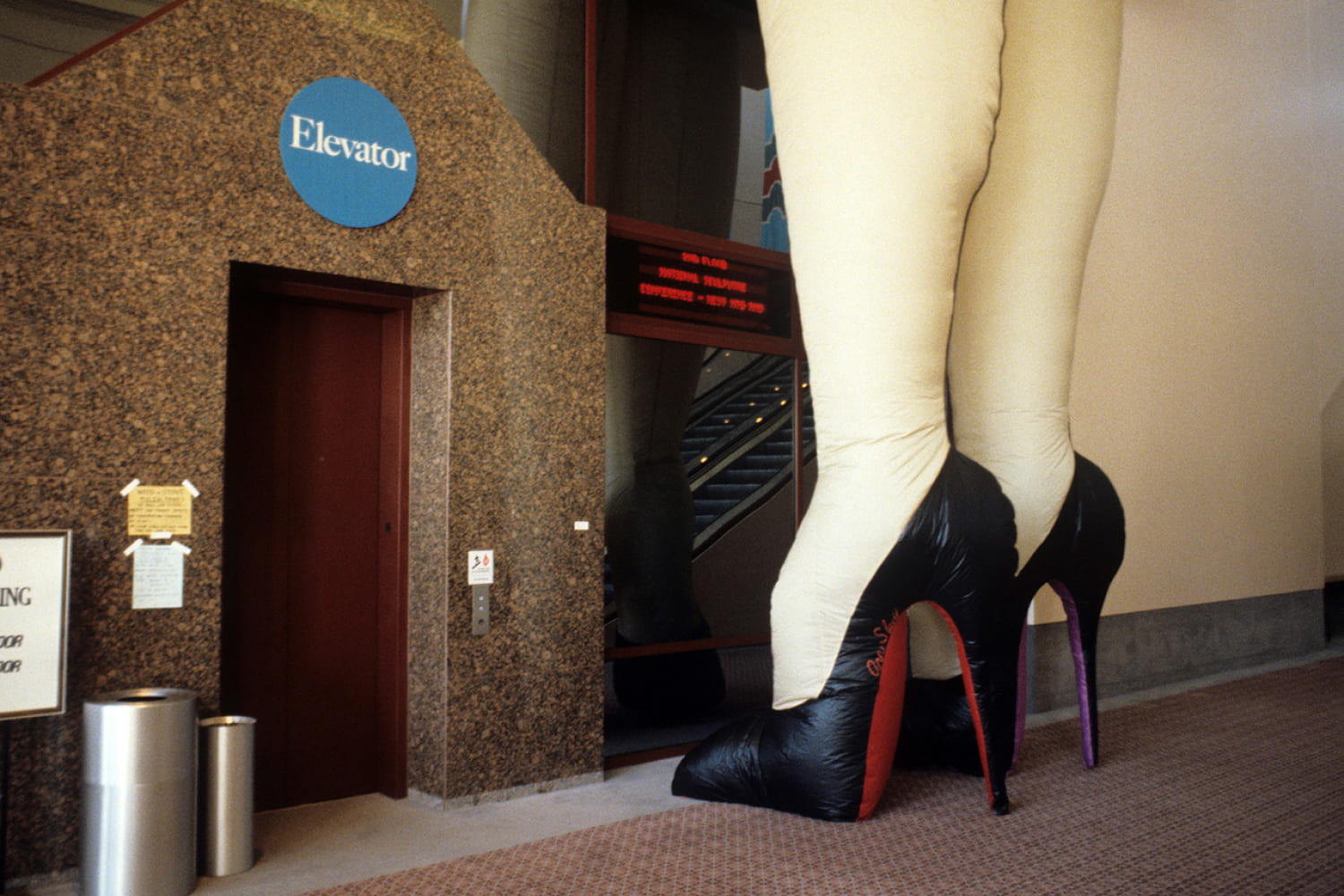
Della (Waiting), 1987, 20-foot inflatable sculpture. (Image courtesy of the artist Ann Slavit)
I found endless books to walk through on this wide subject should your interest need to further piqued: "Shoes" by Judith Miller; "Shoes A-Z. The Collection of The Museum at FIT," by Colleen Hill, Valerie Steele, Robert Nippoldt, and "Feet and Footwear: A Cultural Encyclopedia," by Margo DeMello.
IF YOU GO
WHAT: "Footnotes: Shoes, Symbolism, and Society"
WHEN: 10 a.m. to 6 p.m., Wednesday, Thursday, Saturday and Sunday; 10 a.m. to 9 p.m., Friday; Monday and Tuesday closed.
WHERE: Wolfsonian-FIU, 1001 Washington Ave., Miami Beach
ADMISSION: Free for Florida residents with ID. Otherwise, $12, $8, seniors, children 6 to 18 and and students with identification, admission free for children under 6.
INFO: 305-531-1001 and http://wolfsonian.org/