



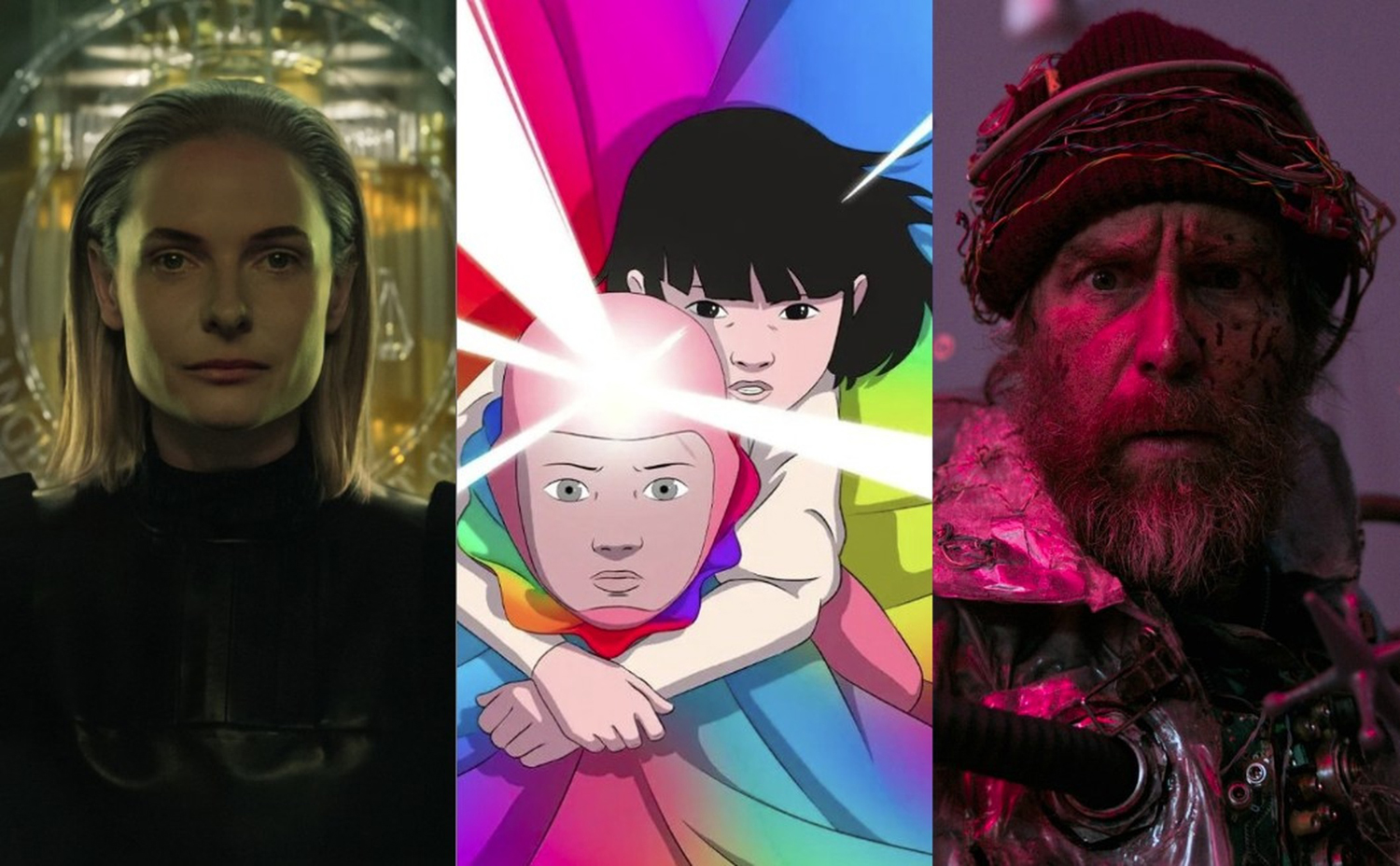
Rebecca Ferguson as Judge Maddox in "Mercy," Arco and Iris, voiced by Juliano Valdi and Romy Fay, in "Arco," and Sam Rockwell as The Man from the Future in "Good Luck, Have Fun, Don't Die."
The future is very much in my present-day thoughts. The fear and uncertainty waft off your TV and laptop screen. All it takes is tuning in to the national news for just a couple of minutes.
The escape that movies promise feels more enticing than ever as January and its disturbing news cycle gives way to a frigid February (even here in South Florida). But as it turns out, filmmakers putting out new genre-driven work are also thinking about what tomorrow may bring. And guess what: They share some of our worries about technology and its potentially destabilizing effect on us.
Three new releases hit the fast-forward button in wildly different ways. In so doing, they bring to mind another trio of movies that continue to fire up the imagination more than 40 years after they were made. “Time Bandits,” “E.T.” and “Blade Runner” came out just over six months apart in the early 1980s, “Bandits” in November of 1981, the other two in June of 1982. The first is a dark fantasy that retains Monty Python's irreverence and gallows laughs in the context of an ostensibly kid-friendly time travel adventure. The other two are flip sides of a visionary sci-fi coin, one tender and hopeful, the other nihilistic and noir-inclined.
Their approaches to fantasy and science fiction couldn't be further apart, yet they're all guided by a strong directorial hand. Two of them immediately felt like the movies their respective directors wanted to make. It would take longer for Ridley Scott to reach that point with “Blade Runner,” but several decades and edits later, he got there too.
So how do these newer visions of the future measure up to their '80s precursors? Step into my time machine. You might want to buckle up.
“Arco”: Rebelling against your parents appears to have no time stamp. It's an impulse that has survived millennia, and as this engaging animated fable illustrates, it's alive and well in the distant future.
The title character is a 10-year-old who's fed up with being left behind while his mom, dad and older sister glide back into prehistoric times using their nifty rainbow capes, not to check out the dinosaurs, but to bring back extinct plants. Of course, the curious tween only wants to hear about the mammoth critters that once roamed Earth.
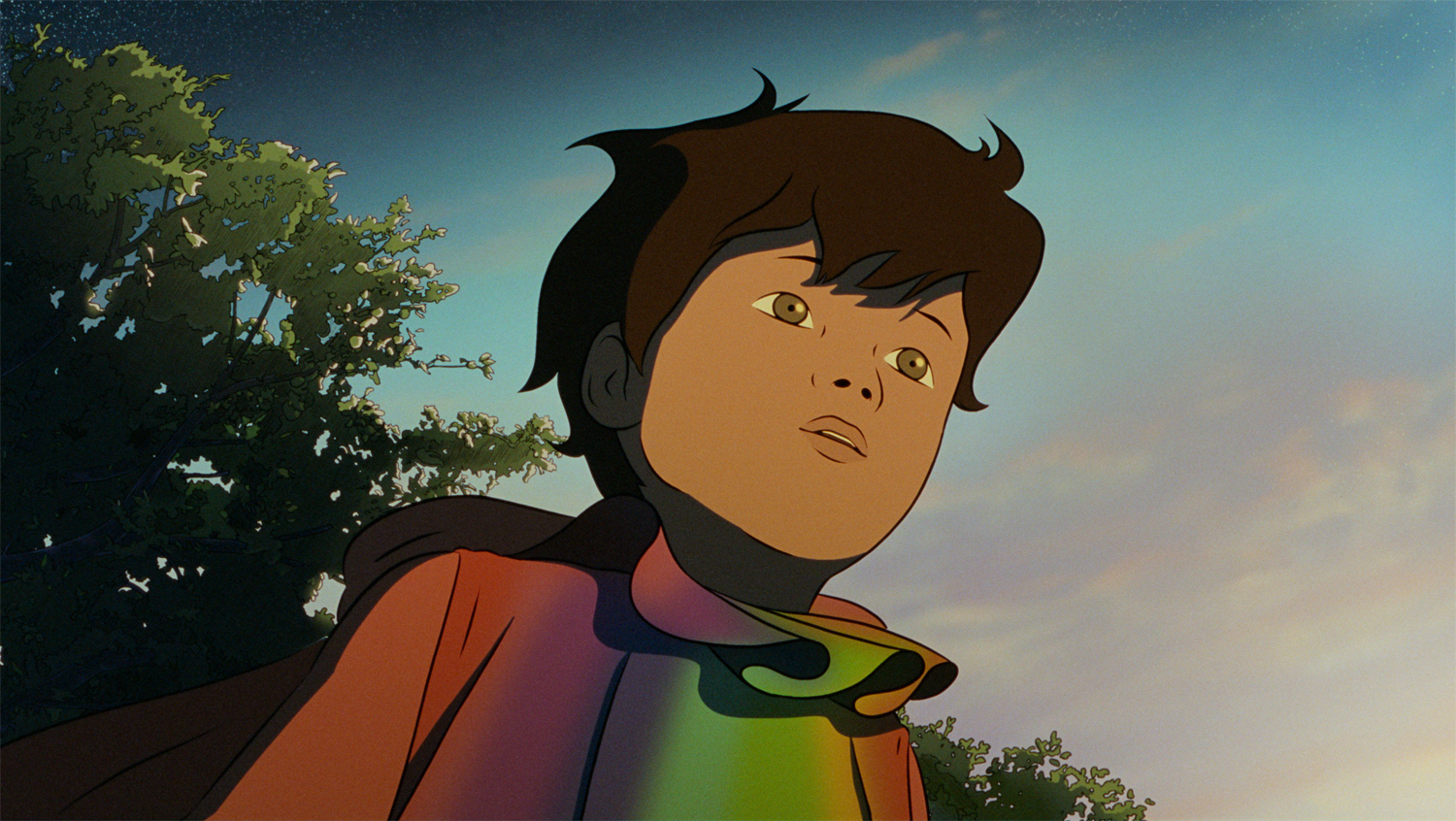
Arco, voiced by Juliano Valdi, in a scene from "Arco." (Photo courtesy of NEON)
Arco, curious and strong-willed, is fortunate to live in the 30th century. It's a peaceful time, a long time after an environmental downturn forced humanity to live up in the clouds Jetsons-style. The film's director and co-screenwriter, French comic book artist turned moviemaker Ugo Bienvenu, relishes the opportunity to explore the 2930s, poring over details like the shaft of light that holds humans afloat while they sleep.
And it's on one of those nights when a restless Arco swipes his sister's cape and, even though he's still two years away from being able to use it legally, takes the plunge into the past. Like the Sorcerer's Apprentice before him, he attempts to wield a power he has no idea how to control.
But whereas a typical story of its ilk would plop our brazen, foolhardy protagonist in the present day, Bienvenu sidesteps that trope, instead depositing Arco in the year 2075. Two futures, equally arresting, awash in Studio Ghibli vibes, down to the impossibly pristine turquoise skies, verdant nature and wistful music score.
The visitor from another time does not stumble into the late 21st century unnoticed. Iris, another 10-year-old who feels she's not being heard by her parents, sees the beam of light Arco's cape makes when it zooms from one time period to another. These children were meant to be friends. After all, it's in their names. Bienvenu, who has lived in Guatemala and Mexico, knew what he was doing when he and screenwriting collaborator Félix de Givry named the main characters Arco and Iris. “Arcoiris,” after all, is the Spanish word for rainbow.
“Arco,” one of this year's nominees for the Animated Feature Oscar, shows us a vision of 2075 that's not too far removed from 2025. Homes and grocery stores and relatively similar to ours. And yet, there are some differences, like clear shields that protect neighborhoods during inclement weather. Then there are the house robots that fill housekeeping and child rearing duties. (Iris' robot, Mikki, is an overprotective nag.) Grown-ups are oftentimes away from home working in the city. They appear to their kids as holograms at dinner and bedtime, a distant presence in their lives that accentuates their mutual isolation.
“Arco's” futuristic details are actually more interesting than the Spielbergian time travel tale it tells, but Bienvenu's storytelling sensibilities fall on the right side of earnestness. There's a Zen, comfort-blanket quality that makes the shopworn plot go down easy, as well as a straightforward, show-don't-tell simplicity in the way Bienvenu presents these two time periods.
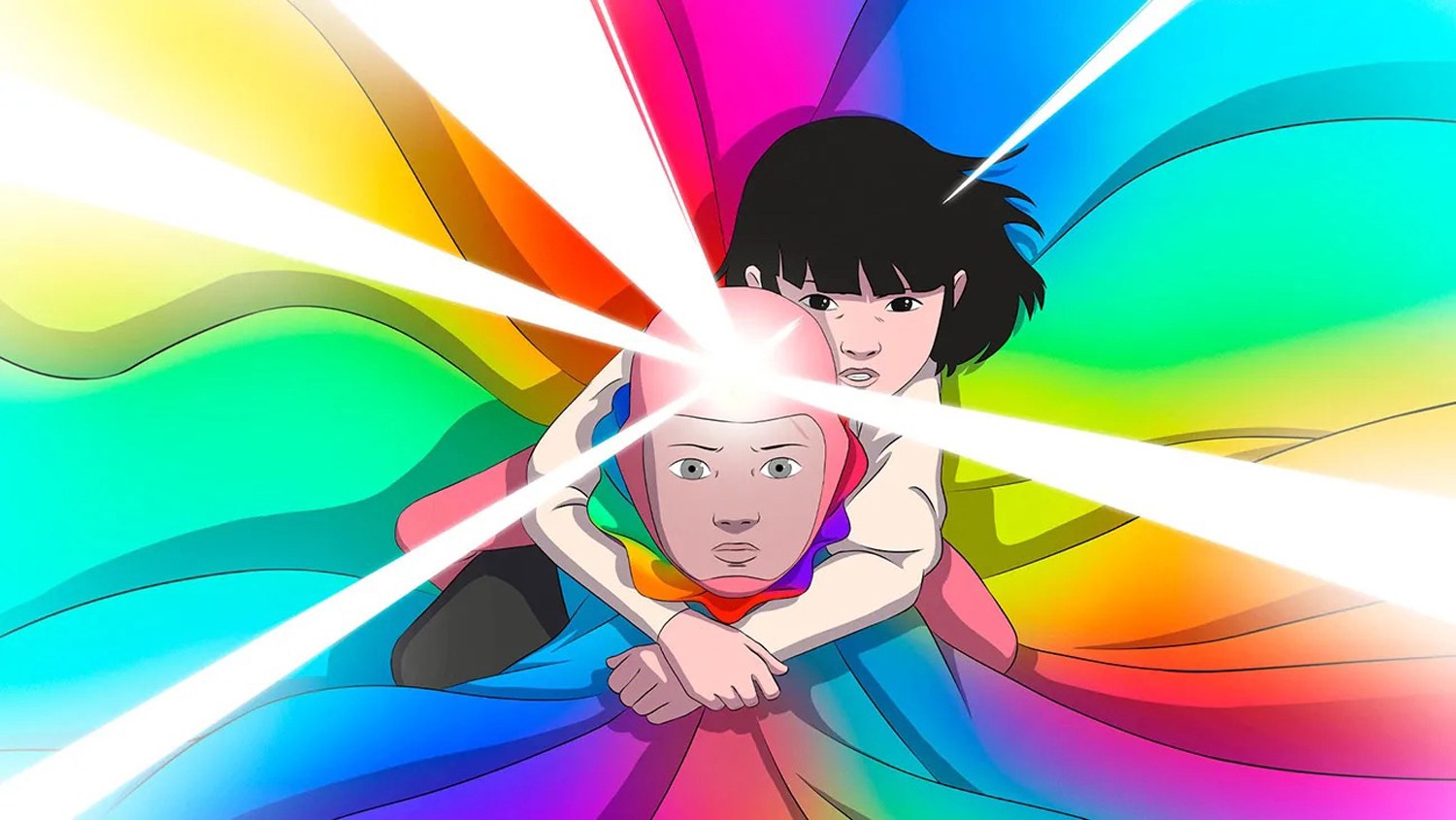
Arco and Iris, voiced by Juliano Valdi and Romy Fay, in a scene from "Arco." (Photo courtesy of NEON)
If there is something that holds back “Arco,” it's a patronizing, patently un-Ghibliesque streak in the way it depicts the negative aspects of its nearer future and, more detrimental still, how it appears to punish its time-hopping protagonist for his disobedience. Also, a trio of bumbling conspiracy nuts who are on to Arco are a comic relief that this absorbing adventure could have done without. But even when the finger wagging gets in the way of the poignancy, here's a kids movie that doesn't condescend to its target audience and delivers the goods in under 90 minutes.
If only NEON, its U.S. distributor, had exhibited more confidence on mainstream moviegoers to release both versions of “Arco,” which exists in its original French language form, with voice work from Louis Garrel and Alma Jodorowsky, and in an English dub with the likes of Natalie Portman, Will Ferrell, America Ferrera, Mark Ruffalo and Andy Samberg doing the voices. Unfortunately, U.S. audiences are only getting to see the latter version in theaters. Having seen both, I can say the English language version is competent, even though Jodorowsky's Mikki is much cooler than Portman's, but it's just not quite on the same level as its original form, especially for animation purists like me. Depriving us from choosing how to experience “Arco” goes against the film's message of unity in the face of change.
“Good Luck, Have Fun, Don't Die”: So you like your time travel adventures geekier and more adult-skewing? Look no further than this gleefully unwieldy action comedy that marks a return to making movies for Gore Verbinski, the grand spectacle purveyor behind the first three “Pirates of the Caribbean” movies and “The Ring.”
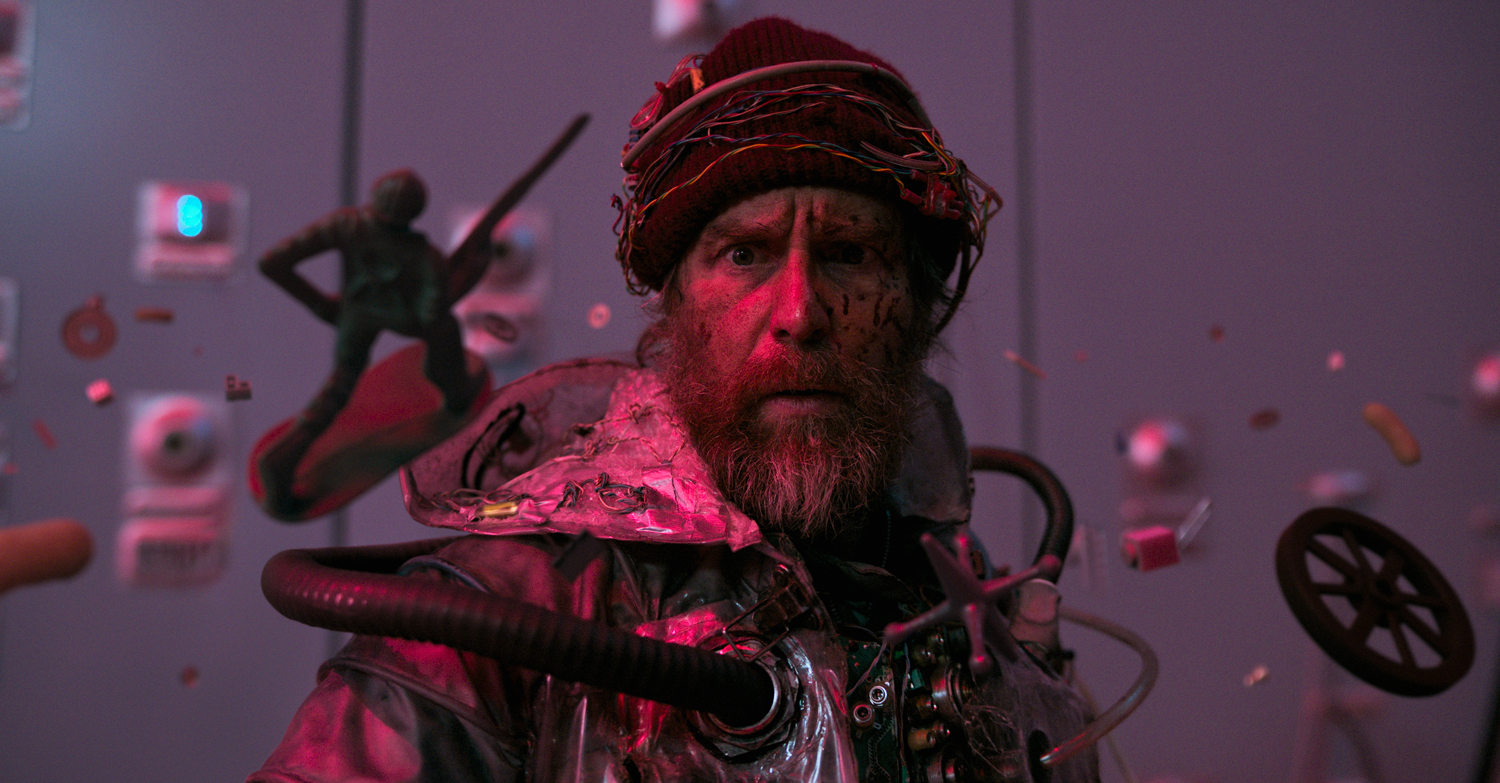
Sam Rockwell as The Man from the Future in a scene from "Good Luck, Have Fun, Don't Die." (Photo courtesy of Briarcliff Entertainment)
To tell the story of its central figure, a nameless man who acts like he has more than a few screws loose, Verbinski has entrusted the versatile Sam Rockwell, who brings the requisite manic energy to the role referred to in the film's credits as The Man from the Future. The Man's mission: to recruit a handful of diner customers on a perilous quest that, if successful, will prevent the future from which he came from being a dystopian cesspool lorded over by a malevolent artificial intelligence.
The film's opening sequence, set within the confines of the aforementioned diner, is a hoot. Rockwell's no-name visitor from the future barges in and declares that the fate of humanity hangs in the balance to patrons who'd rather be left alone and understandably see this loiterer as a pest and a crackpot. The Man from the Future concedes that odds of pulling off his quixotic endeavor are minuscule, but his determination, bordering on obsession, leads him to take drastic action.
Time travel, motley crews, cluttered mise en scene and brash, in-your-face laughs. You don't need to be a cinephile to know who is Verbinski's main influence here. “Good Luck” is a love letter to Terry Gilliam from beginning to end, and it bears several of the Monty Python alum's earmarks: the good and, well, the not so good.
Once it leaves the confines of the diner, the movie becomes bogged down in backstories for the people Rockwell's possibly cuckoo visitor has selected to join him. We take a peek at the chaotic work day of Mark (Michael Peña), who's substitute teaching at the school where his girlfriend Janet (Zazie Beetz) also teaches. We also meet Ingrid (Haley Lu Richardson), a party clown with a curious allergy to Wi-Fi. The flashbacks are fun, but they also prevent the film from maintaining narrative momentum.
Verbinski, in his first feature since 2016's “A Cure for Wellness,” powers through, thanks to his knack for staging mayhem, his ensemble cast's unflappable chutzpah and a bonhomie that prevails despite a high body count. Gilliam's sensibility is all over the place here, with callouts to “Time Bandits,” “12 Monkeys” and even “The Fisher King.” There are also echoes of the Daniels' “Everything Everywhere All at Once,” suggesting the movie that Gilliam could have made out of that material, though this is hardly the emotional powerhouse that Oscar winner is.
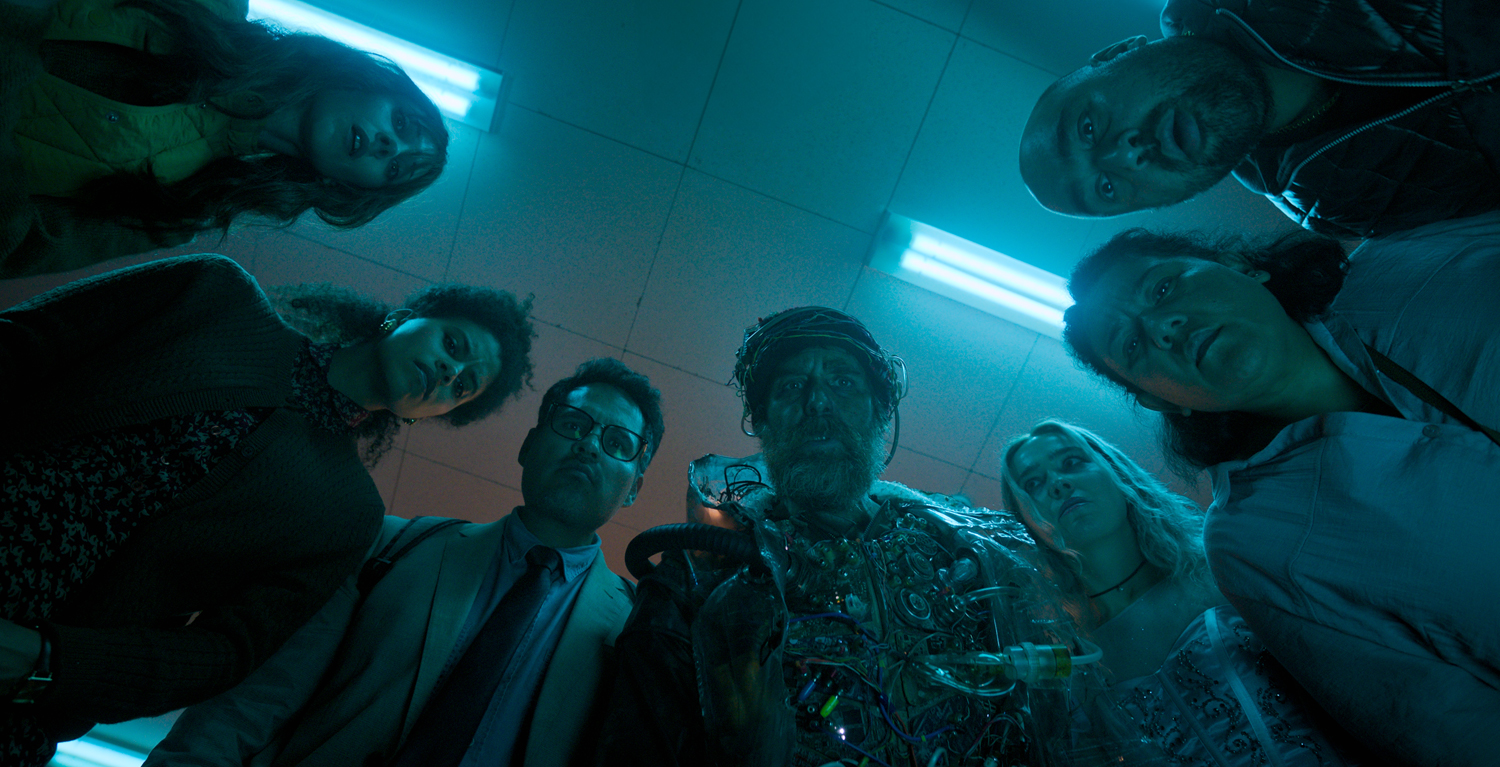
Juno Temple as Susan, Zazie Beetz as Janet, Michael Peña as Mark, Sam Rockwell as The Man from the Future, Haley Lu Richardson as Ingrid, Georgia Goodman as Marie and Asim Chaudhry as Scott in a scene from "Good Luck, Have Fun, Don't Die." (Photo courtesy of Briarcliff Entertainment)
Two things are clear: Verbinski's still got it, and he is still his own worst enemy. “Good Luck's” path of destruction takes Rockwell's crusader and his recruits down some cyberpunk alleyways where a digital menace is often rendered in analog terms. The excess here is bracing but more than a bit taxing. At 134 minutes, this is one demolition derby that wears you down, but what's never in doubt is that the end result, uneven but rollicking, has turned out exactly as Verbinski intended: an affectionate tribute from one maverick storyteller to another, bolstered by a refreshing lack of studio interference.
“Mercy”: What's that? You like your sci-fi straightforward, retro and easy to digest? How about a junky police thriller that splits the difference between heady cautionary tale and the kind of straight-to-DVD B-minus thriller that flew off the shelves at Blockbuster? Quite a few colleagues were unable to resist the temptation of turning this January release, about an embattled Los Angeles police officer in the near future who's on trial of murder, into the butt of January-dump jokes. But from where I'm sitting, this is hardly the debacle some would have you believe. It's entertaining enough to wish it were better.
The latest pulse-pounding venture from director Timur Bekmambetov (“Abraham Lincoln: Vampire Hunter,” the Angelina Jolie thriller “Wanted”) feels like a cheap cash-in on the AI craze, but there's a nervy appeal to its relentless pacing, as if someone took a Philip K. Dick story and turned it into a season of the Kiefer Sutherland counter-terrorist series “24.” It's been coined “Temu Minority Report” for a reason.
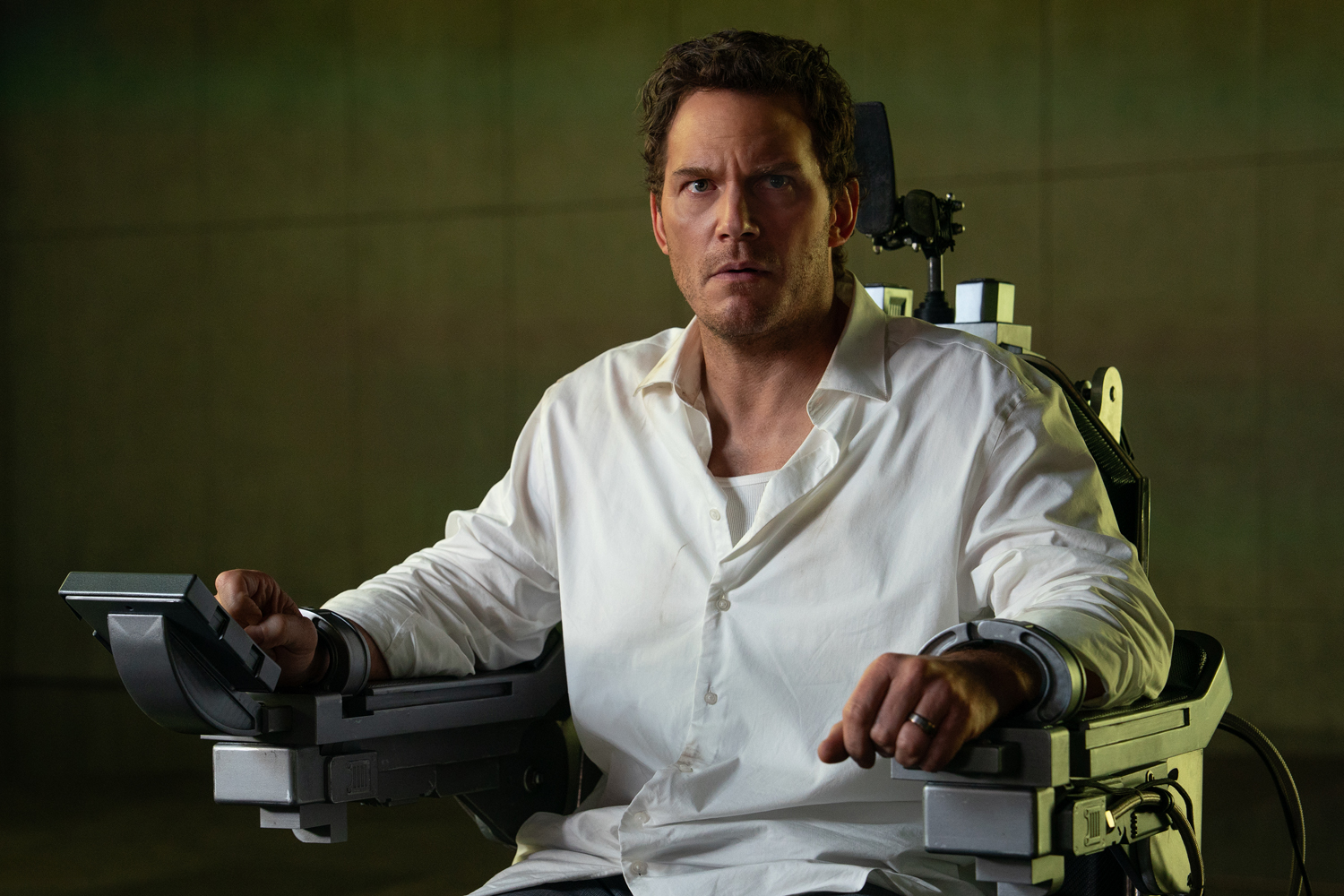
Chris Pratt as Detective Christopher Raven in a scene from "Mercy." (Photo by Justin Lubin/courtesy of Amazon MGM Studios)
The film begins as the two-hander being teased in the trailers. LAPD Detective Christopher Raven (Chris Pratt) wakes up to realize he's shackled to a chair, one more defendant in the Mercy Capital Court, the crime-fighting program he helped create. Raven, an alcoholic whose personal life is a shambles, is informed he has been charged with the murder of his wife, and he has 90 minutes to argue his innocence. If he fails to sway the court, he'll be, um, terminated.
The court in this case is Judge Maddox (Rebecca Ferguson), an AI creation who advises the beleaguered defendant that he has the chance to lower his guilt probability. If it falls to 92%, he can stave off execution. Much like the wrongfully accused leading men in an Alfred Hitchcock thriller, Raven finds himself in the unenviable position of proving his own innocence. (“But is he really innocent?” is a notion Bekmambetov half-heartedly dangles like a carrot to add a wafer-thin layer of uncertainty.)
“Mercy's” against-the-clock narrative works overtime to help offset the gimmicky nature of the setup, which recalls “Searching,” a thriller starring John Cho and produced by Bekmambetov that unfolds completely from computer monitors, flatscreens and other devices. That film was ultimately done in by the demands of remaining true to its stylistic “screens only” constraints, but in “Mercy,” Bekmambetov shows no such aesthetic allegiance, so he engulfs his characters in the video evidence that Raven sifts through, not unlike the “precog” footage in Steven Spielberg's adaptation of “Minority Report,” until those visuals take over. That's when the film shifts into overdrive.
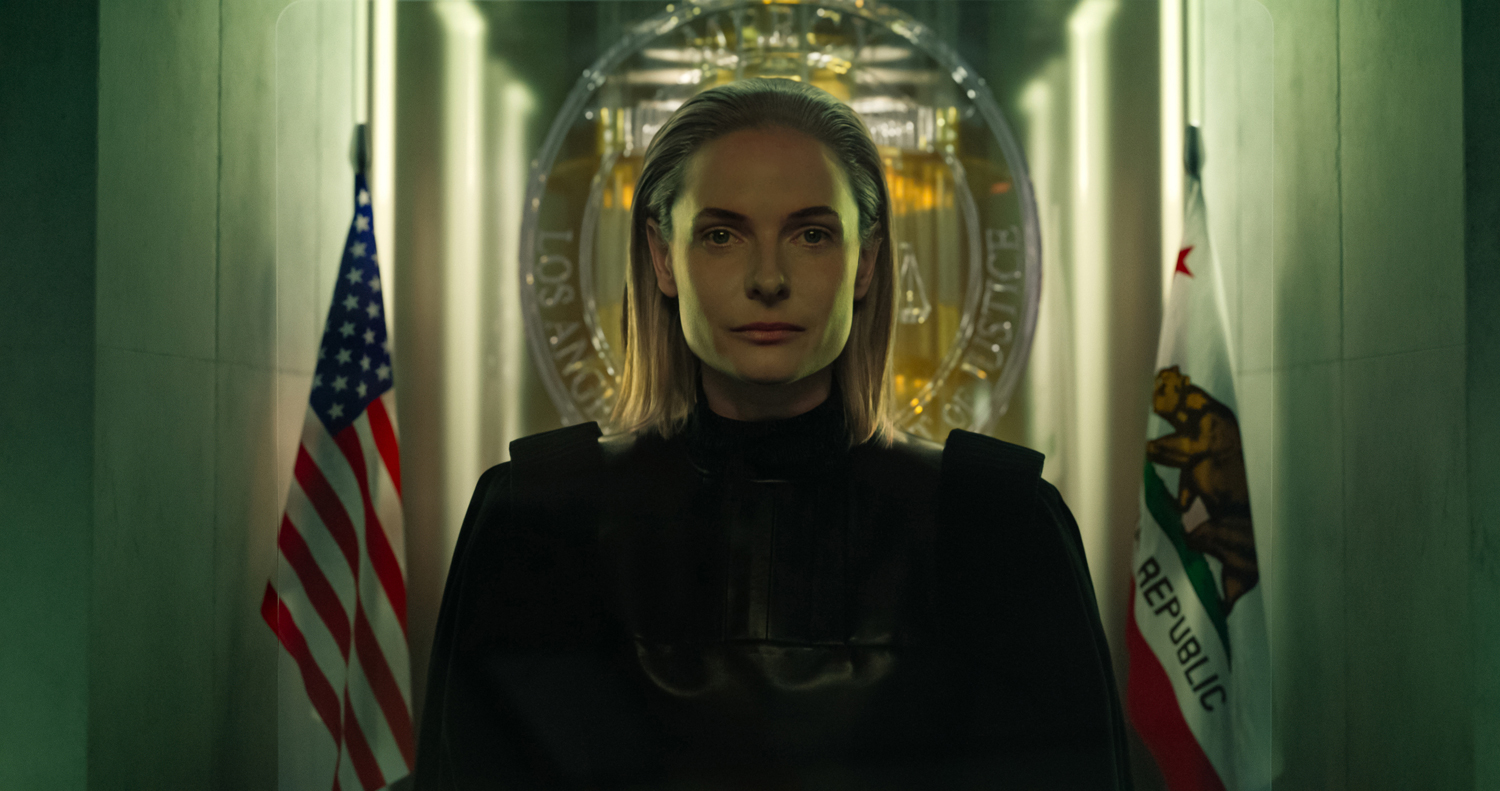
Rebecca Ferguson as Judge Maddox in a scene from "Mercy." (Photo courtesy of Amazon MGM Studios)
But while Bekmambetov ensures the film's single setting remains dynamic and arresting, the lead performances are a more lopsided affair. Ferguson is wholly convincing as a virtual arm of the law. She nails AI's overly deliberate attempts to mimic human expressions, as well as its blank void of a gaze (Whereas AI “actors” are still unable to trying to achieve the opposite: pass off as flesh and blood.). The “Mission: Impossible” star also acts circles around Pratt, who struggles to imbue Raven with the ambiguity that would have made “Mercy” more intriguing. Also, let's just say he's not a convincing drunk, though he gets points for committing.
“Mercy” still hurtles forward like a runaway freight train, barreling through its familiar whodunit and police corruption trappings with unfussy abandon. The mystery is easy to solve, but it's reasonably enjoyable to tag along with all the same, at least until it reaches a climax that's more of a dead end, the victim of one twist too many. That's too bad, because before it fails to stick the landing, it serviceably fulfills popcorn-movie duties. Then it evaporates from your memory bank.
The English dubbed version of “Arco” is being held over at AMC Sunset Place and Cinépolis Luxury Cinemas Coconut Grove. “Mercy” is now showing in wide release, including at AMC Sunset Place, CMX Cinemas Dolphin 19 and Regal Kendall Village. You're going to have to wait until Thursday, Feb. 12 to catch “Good Luck, Have Fun, Don't Die,” but several theaters are hosting a special sneak preview Tuesday, Feb. 10 at 7 p.m.