




From left: Jasper Billerbeck as Nanning Bohm in "Amrum," Anna Mirodin as Julie Gornick in "The Legend of Juan Jose Mundo," Muhammad Gazawi as Khaled in "The Sea" and Bojtorjan Barabas as Andor in "Orphan."
It's been glorified, romanticized and softened in movies and shows, its sharp edges sanded off for viewer consumption, but it's easy to forget how much of one's childhood and adolescence was a daily struggle. A struggle to fit in with your peers. A struggle to memorize all those historical events and grammar rules so you do well in your finals. Sometimes the struggle is even more challenging, like making sure you have a home to return to after school. And sometimes it can be as mortifying as finding out that classmate you like is just not that into you. Bummer.
Your mind tends to hold on to the good memories and only selectively trot out the embarrassing moments for your amusement, but there's a lot of bad stuff to go around, enough for several memoirs. You just have to take the plunge and make sure to leave no stone unturned. It's not for the faint of heart.
Fortunately, there is Option B: listening to other people's stories about growing up and making it to the other side a bit wiser and relatively unscathed. Four movies screening over the next week and change as part of the 29th Miami Jewish Film Festival take that deep dive to pick apart those formative years, so you don't have to. Three are set in different parts of the 20th century. The fourth takes an unflinching look at our tumultuous present.
These three international selections and lone U.S. production deal with subject matter that could have easily been turned into issue-driven, eat-your-veggies cinema, a quality that, it must be pointed out, is no stranger to past editions of this festival. The good news is that, for the most part, these filmmakers put their characters, with all their hangups, resentments and aspirations, before any topical interests. Would you like to see what these determined tweens and teens, three boys and a girl, are up to? I do as well, so let's find out, in chronological order of time period.
But before we start, a shout-out to MJFF Executive Director Igor Shteyrenberg for choosing films that offer a platform for dissenting voices when it comes to the current Israel-Palestine tensions in the aftermath of the October 7 attacks. The discussions that the documentary “Holding Liat” (not reviewed here, but it's really gripping) and the acclaimed drama “The Sea” (reviewed below) are bound to elicit are why we go to film festivals: the cordial, sometimes pointed exchange of ideas and perspectives.
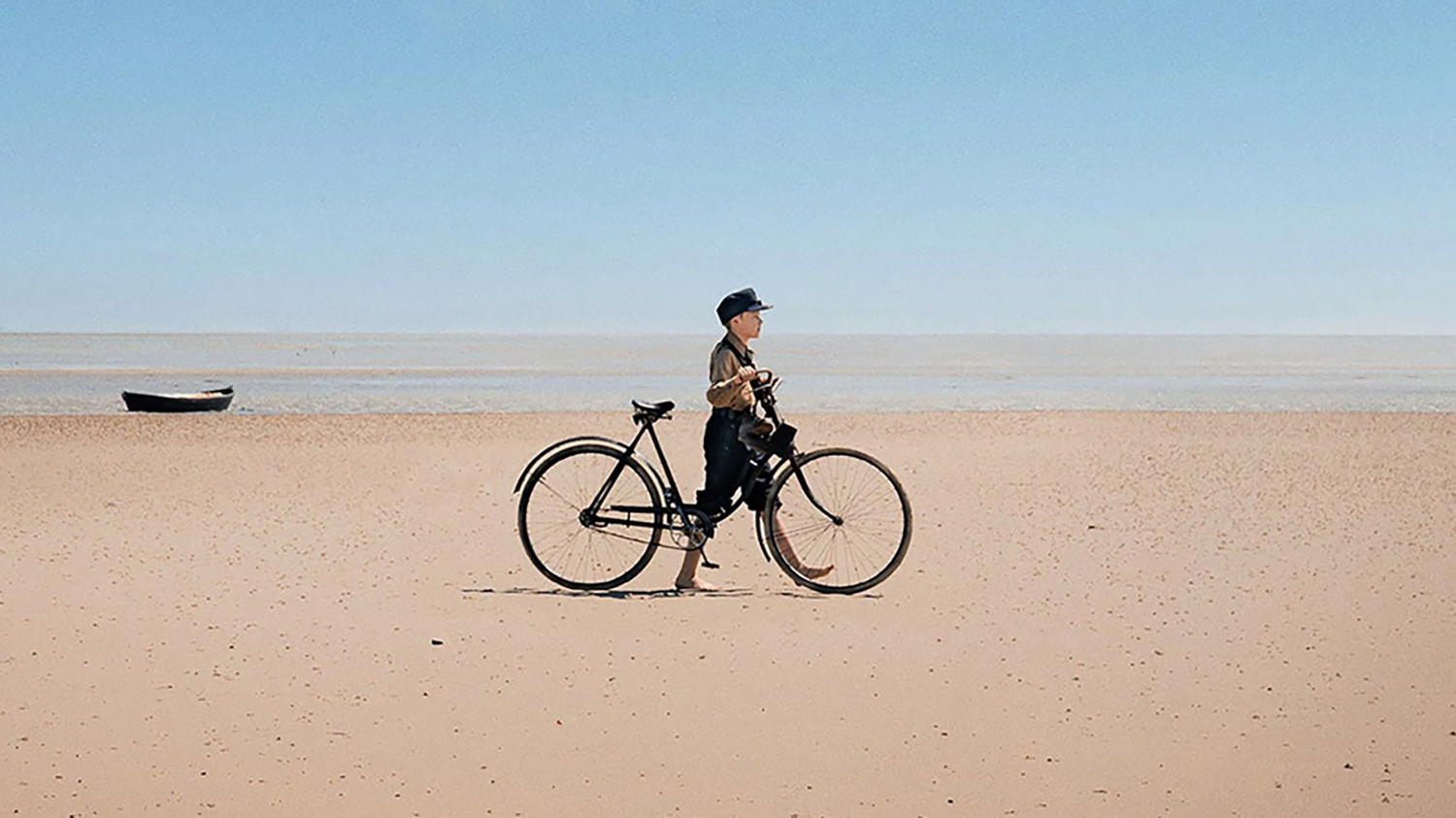
Jasper Billerbeck as Nanning Bohm in a scene from "Amrum." Photo courtesy of Kino Lorber.
“Amrum”: Nanning Bohm looks the part. Sun-bleached blond hair, pale skin and wholesome demeanor, the 12-year-old, played by Jasper Billerbeck, certainly fulfills poster-child duties. But being a member of the Hitler youth is not all it's cracked up to be, not when you're on Amrum, an island off the North Sea coast, where the locals see you as an outsider. Also, as this vividly rendered period piece from Turkish director Fatih Akin reminds us, World War II is coming to an end, and we know how that turns out for Germany.
The death of the Führer sends Hille (Laura Tonke), Nanning's high-strung mother, spiraling in an existential tailspin. Post-partum depression hits hard for this matriarch, who just gave birth and is holding the fort while Dad is away on business. The business being a lieutenant colonel for the SS. Hille and her children are staying with her sister Ena (Lisa Hagmeister) after their home in Hamburg was bombed out by Allied forces.
Nanning, meanwhile, endures animosity from villagers, as well as tensions at home spurred by a difference of opinion between his mom and his aunt. Let's just say Ena expresses the commonly held view that she has had it up to here with this damn war. When Hille expresses a craving for bread and honey, the devoted son sets off on a mission to find the hard-to-come-by ingredients to make his mom's favorite snack.
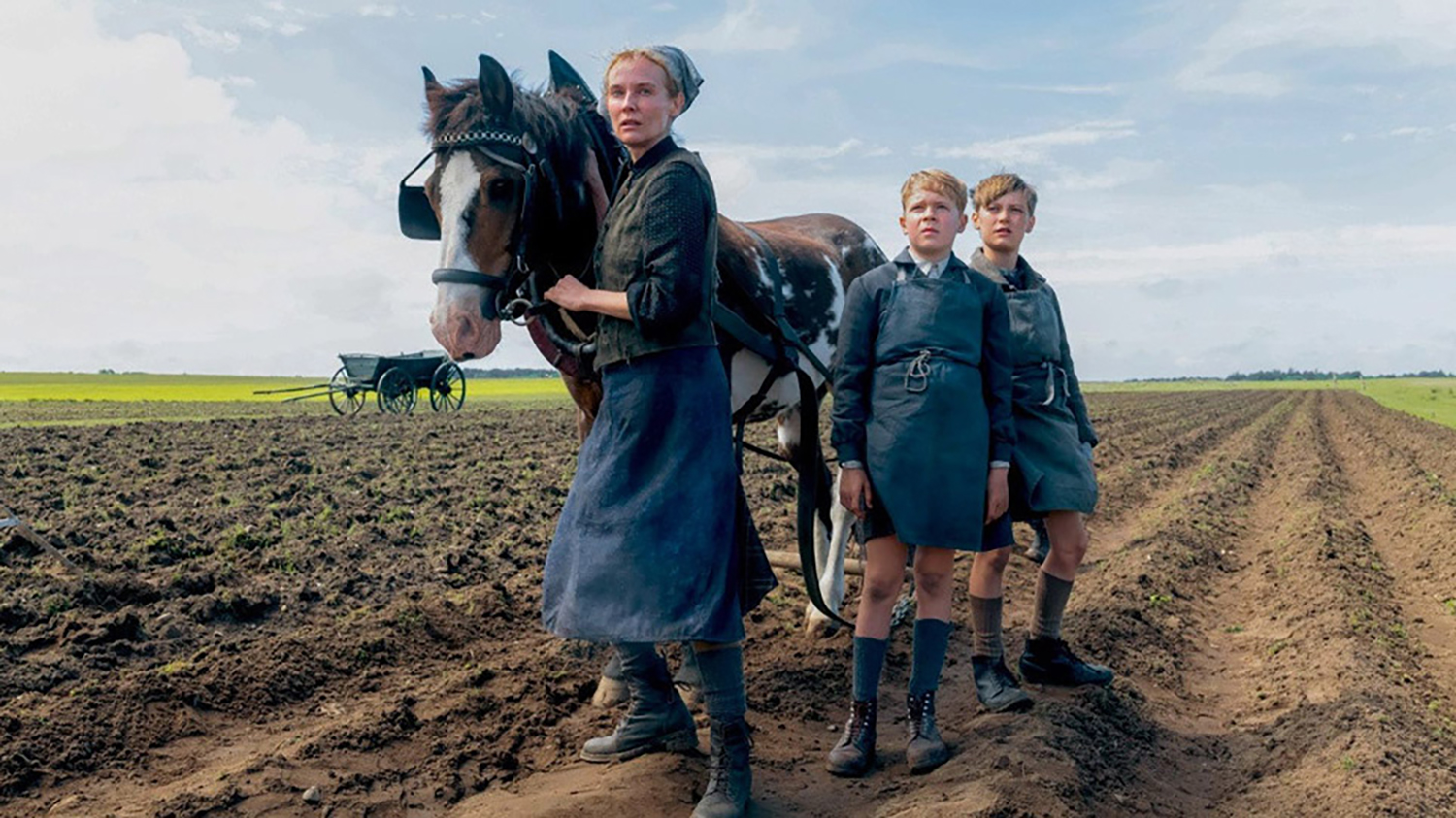
Diane Kruger as Tessa Bendixen, Jasper Billerbeck as Nanning Bohm and Kian Koppke as Hermann in a scene from "Amrum." Photo courtesy of Kino Lorber.
The ensuing portrait of this isolated setting as a microcosm of Germany is made more engaging by Akin's determination to stick with Nanning's errand-driven point of view. This is no fictional account. Akin is bringing a sliver of fellow filmmaker Hark Bohm's childhood to life. Bohm, who went on to become a Renaissance man (actor, novelist, film studies professor, and that's just scratching the surface), shares a screenplay credit with Akin, whose past credits include “Head On” and “The Edge of Heaven.” Their depiction of Nanning as resourceful, stubbornly driven and thoroughly observant plays as a counterpoint to the fantasy-inflected view of life during wartime seen in Taika Waititi's “Jojo Rabbit.”
There are no imaginary Hitlers here, only a good son forced to grapple with the ripple effects of the Nazi Party's disintegration, as he works overtime to help keep his fractured clan together. It's a lot to ask of a child actor, but Billerbeck carries the film on his narrow shoulders. He's given ample support by a cast that includes Diane Kruger. The “Inglourious Basterds” star takes her small role, as a farmer who gives Nanning work picking potatoes, and runs with it.
But “Amrum's” MVP is cinematographer Karl Walter Lindenlaub. The frequent Roland Emmerich collaborator's pristine images, a mélange of steely blues and earth tones, convey the island's desolation and Nanning's own loneliness. He's an emotional castaway, and in this slim, unsentimental memoir, which shows Akin hasn't lost his empathetic touch, he endures an uphill climb to find his place in this world.
“Amrum” screens Sunday, Jan. 25 at 8 p.m. at Miami Theater Center.
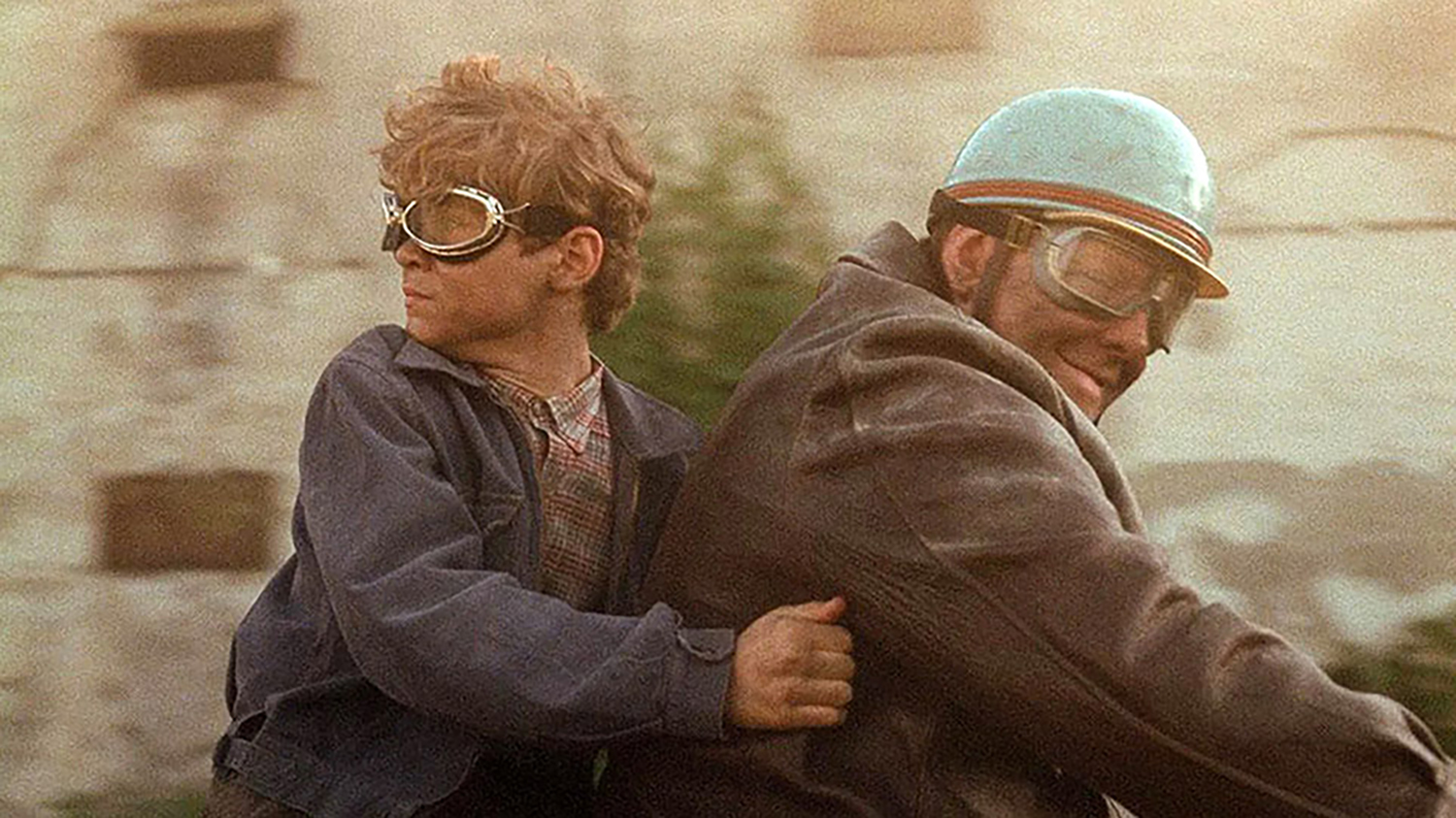
Bojtorjan Barabas as Andor and Gregory Gadebois as Mihaly in a scene from "Orphan." Photo courtesy of Charades Films.
“Orphan”: Ten years ago, László Nemes swept across the international film scene with “Son of Saul,” an arresting feature debut that captured the horrors of Auschwitz with raw, first-person immediacy. The Hungarian director, who won an Oscar and the Grand Jury Prize at Cannes for this film, hews to a rigid approach to making movies. The mood is stern, the attention to period detail fastidious, his knack for capturing hermetic worlds on the verge of major change highly accomplished.
The renowned auteur brings his formal rigor to this tale of a resilient Jewish teen with a hardened shell, and like the boys in the films being reviewed here, also grappling with an absent or distant father. The year is 1957, and Andor (Bojtorján Barabas) whiles away the hours helping his mother Klára (Andrea Waskovics) at work. Budapest is still reeling from 1956's short-lived uprising against the Communist regime. And Andor? He's just as aimless as the country feels, getting into trouble with little rhyme or reason.
Where's Dad, you might be asking? His mother insists he is coming home. Eventually. Rumors swirl that he ended up in a Nazi camp. Is Andor waiting in vain, holding on to false hope?
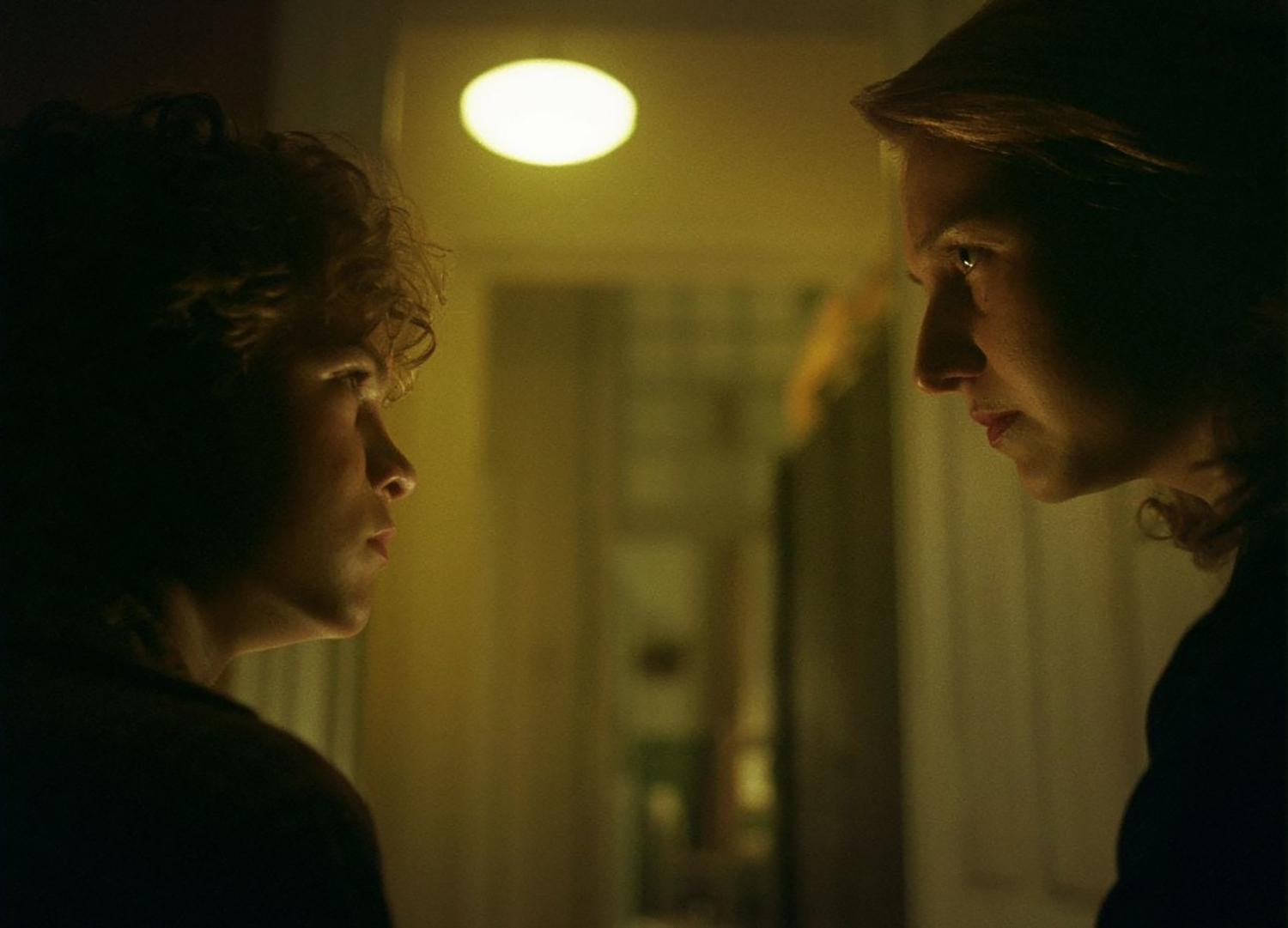
Bojtorjan Barabas as Andor and Andrea Waskovics as Klara in a scene from "Orphan." Photo courtesy of Charades Films.
Enter Mihály (Grégory Gadebois), a butcher with eyes for Klára, a tendency to drink heavily and a cool motorcycle. Things at home deteriorate, so Andor's reaction is to escape. Meanwhile, puppy love might be blooming between Andor and his friend Sàri (Elíz Szabó), whose older brother is hiding out from the Soviets who rant to root out those responsible for the previous year's revolution.
That's quite a few story strands Nemes is juggling, and while “Orphan” is always engaging from a visual standpoint (it is handsomely shot in 35mm by frequent collaborator Mátyás Erdély), it takes too long for his exploration of the decay of family amid political fallout to coalesce. Barabas does a lot of the heavy lifting here. The camera is awfully fond of him, but there is only so much the young actor can do, and as a result he is occasionally overwhelmed by the chaos unfolding around Andor.
The irony here is that Nemes' increasingly impersonal ambitions are in service of an autobiographical story: He was inspired by his father's struggles when working on the screenplay. You wish he would pare down his stylistic flourishes, in this stark portrait of Budapest as a city of shadows, and lighten up, for once. His grip on the material he sells had shifted in the wrong direction. What was once engrossing here feels suffocating. Despite so much going for it, “Orphan” chokes on portent.
“Orphan” screened this past Saturday, Jan. 17 at 8 p.m. At Bill Cosford Cinema, but there's an encore showing on Monday, Jan. 26 at 8 p.m. at O Cinema South Beach.
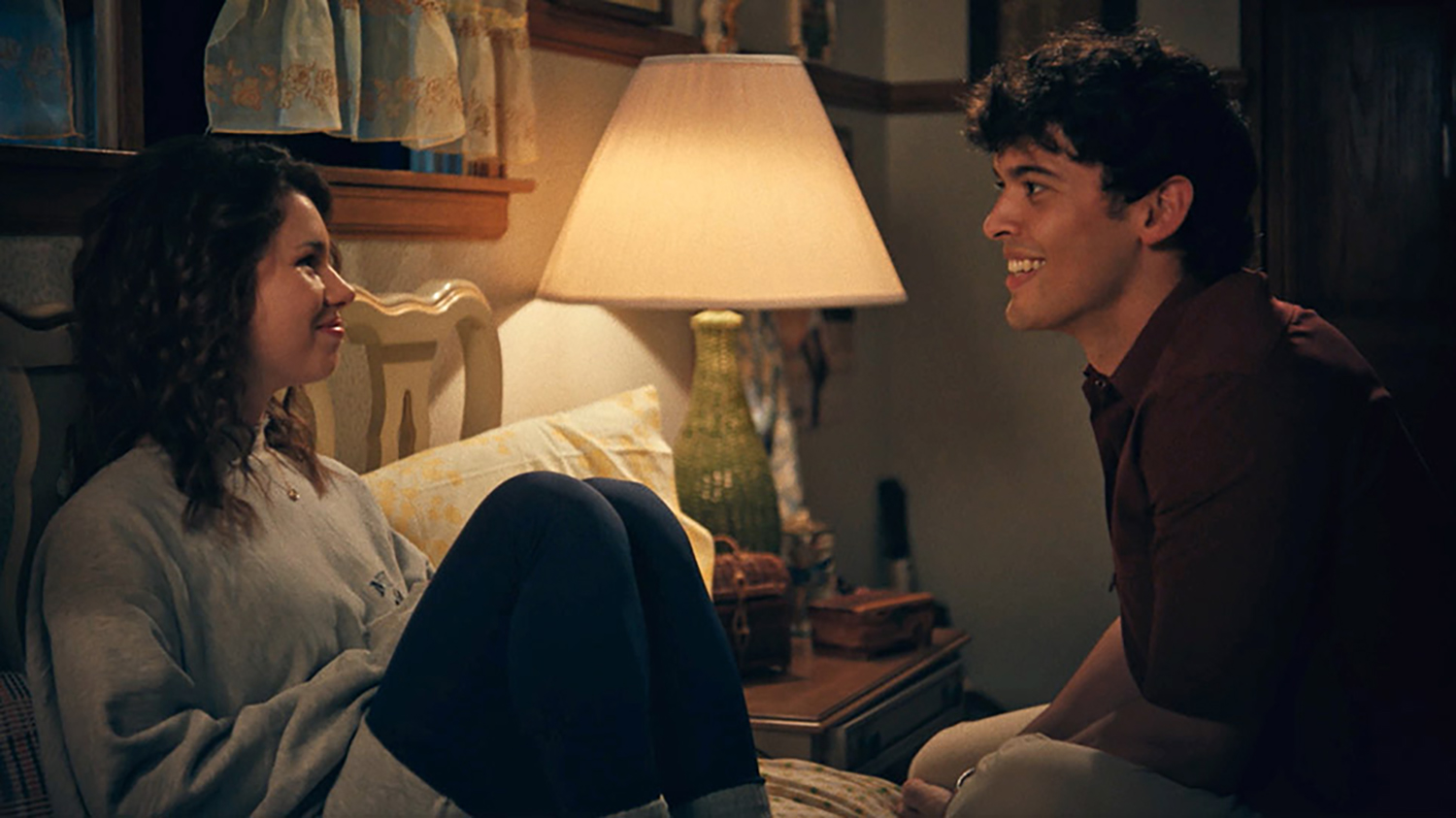
Anna Mirodin as Julie Gornick and Alexandro Byrd as Juan Jose Mundo in a scene from "The Legend of Juan Jose Mundo." Photo courtesy of Call Sheet Films.
“The Legend of Juan Jose Mundo”: A 1980s memoir that punches above its weight, this charmer set in While Plains, New York nails the awkwardness and overall social ineptitude so many of us felt during puberty, enhanced by a period-accurate depiction of its setting that keeps the racism, misogyny and homophobia of the times pretty intact.
That it's so brutally honest while remaining a featherweight concoction is a neat hat trick by director Michael Walker and co-screenwriter Susan Gomes, who breathe life into a brief period of Gomes' adolescence when her family hosted an exchange student. The topsy-turvy effects from the international visitor's stay makes for some cringe-inducing complications.
It's October of 1984, and the story kicks into gear when Julie Gornick (“Priscilla's” Anna Mirodin), a smart but insecure high school junior hobbled by low self-esteem, is informed by her Spanish teacher that she will be getting a male exchange student, not a teenage girl as originally arranged. Cue the title character's grand entrance., who exits the bus carrying the travelers from Spain like a movie star.

Anna Mirodin as Julie Gornick and Alexandro Byrd as Juan Jose Mundo in a scene from "The Legend of Juan Jose Mundo." Photo courtesy of Call Sheet Films.
Wide-eyed, courteous and, yes, cute, Juan Jose (Alexandro Byrd) causes quite the stir in this suburban community. Julie's temporary housemate's libidinous bed-hopping brings on the eye rolls, but who is she kidding? Denial won't get her anywhere, even though she insists she feels nothing for the charismatic new arrival. Not when Juan Jose smokes at the dinner table, not when Juan Jose opens a glass of vino tinto brought from home, and certainly not when he flirts with every girl in sight.
The way the story plays out hardly reinvents the wheel, but Walker and Gomes have a blast leaning into the '80s trappings, such as a trip to the big city that features the requisite clothing store dress-up montage. What makes their buoyant, adorably dorky comedy click, besides a progressive depiction of their protagonist's sexual awakening, is that it takes Julie's growing pains seriously.
Even more crucial, the screenplay is rooted on the evolving nature of Julie's bond with her bestie Suzanne (“Cobra Kai's” Hannah Kepple, channeling the young Kim Cattrall). The dynamic duo, who end up sharing more than secrets, keep this overly idealized snapshot of the mid-1980s, which rises above its cumbersome title, anchored in recognizable human behavior. It's pretty darn irresistible.
“The Legend of Juan Jose Mundo” screens Monday, Jan. 19 at 8 p.m. at O Cinema South Beach. It will also be available to view in the festival's screening room Jan. 20-28.
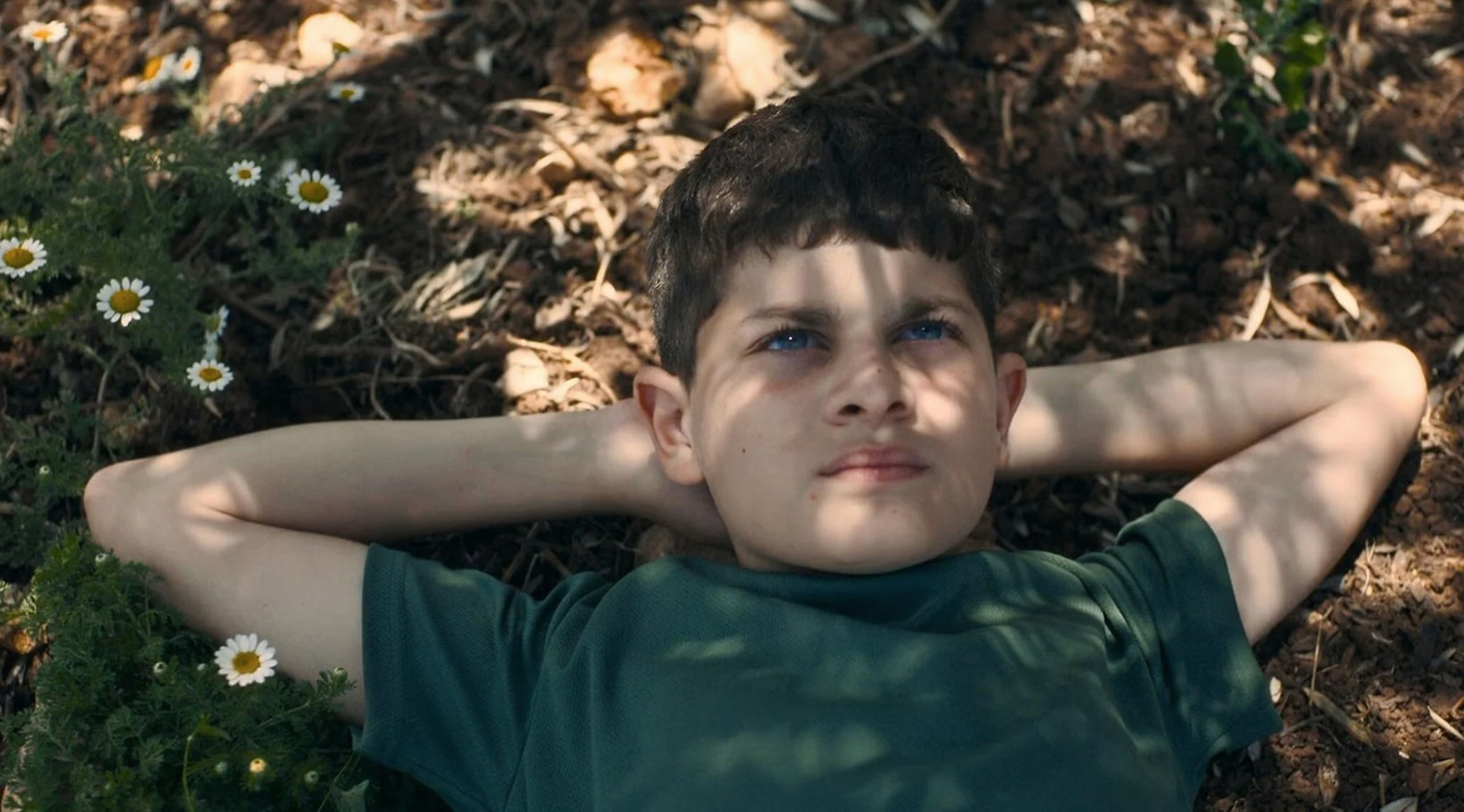
Muhammad Gazawi as Khaled in a scene from "The Sea." Photo courtesy of Menemsha Films.
“The Sea”: “Amrum's” Nanning isn't the only headstrong 12-year-old earning our admiration. Meet Khaled, the doggedly determined Palestinian tween at the center of this exquisitely calibrated domestic drama that morphs into a poignant city symphony. Its gentle naturalism not only brings to mind the work of Italian neorealism master Vittorio de Sica but is also reminiscent of the Iranian New Wave, in particular the early work of current awards-season darling Jafar Panahi.
Like “Amrum,” “The Sea” becomes a mission-driven narrative. Khaled (saucer-eyed Muhammad Gazawi) looks forward to a school trip that will take him to the seaside for the first time. A road block at a checkpoint brings the fun to a halt, when soldiers tell him there's an unspecified issue with his permission slip and thus won't be able to join the others on the Israel excursion.
Anyone who has missed a school outing can relate to the sight of Khaled seeing the bus where his classmates are riding go on without him. His father Ribhi (Khalifa Natour), initially a harried voice on the phone, is of no use, his promise to take action scant consolation for the missed field trip. The hapless student's misfortunes elicit some sharply observed laughs, and the deadpan humor here goes a long way toward making this boy's frustrations all the more relatable.
Not one to give up so easily, Khaled makes his getaway in the dead of night and finds his way into Israel. A brush with danger on his nighttime journey suggests a darker, more issue-driven direction for this disarmingly spare, episodic tale, but it's clear that's not the endgame for writer-director Shai Carmeli-Pollak. Instead, the filmmaker trains his camera on Gazawi, the young performer's expressive eyes drinking everything up, and lets his face and those of the people he meets tell the story.

Khalifa Natour as Ribhi in a scene from "The Sea." Photo courtesy of Menemsha Films.
Ribhi, an undocumented laborer facing a deadline on a property he's working on, learns of his son's vanishing act and drops everything on impulse to go look for him. From this point on, “The Sea” shifts emphasis ever so slightly to allow for Natour to have more screen time. What emerges is a moving father-son story that lets compassion lead the way.
There's something a tad contrived about how the film's resolution comes about, but even when the plot's seams are showing, we've become too invested in Khaled and Ribhi's journeys to mind. Besides, “The Sea's” climax, involving a detainment that sprouts from a misunderstanding, carries an unexpected, mighty sting. Because Carmeli-Pollak puts his characters before any political stance, it makes the ending, thoughtful and melancholy, all the more devastating.
“The Sea's” sensitive depiction of Israeli-Palestinian tensions has earned it praise back home, where it walked away with multiple Ofirs, the Israeli Academy Awards, including Picture, Actor and Supporting Actor. It has also run afoul of Miki Zohar, Israel's Minister of Culture and Sports, who threatened to cut funding from the country's film industry following its big wins. (Despite the controversy, it remains Israel's official entry for this year's Oscars.) I do not think this government official sees the bigger picture. Here's a powerful film that tells a story that resonates so strongly because it's so universal. It asks us to wade in, together. So come on in. The water is warm.
“The Sea” screens Wednesday, Jan. 21 at 6:30 at Miami Theater Center, with an encore showing on Monday, Jan. 26 at 7:30 at Bill Cosford Cinema.
The 2026 Miami Jewish Film Festival is now unspooling at several venues across Miami-Dade through Jan. 29. For more information on showings and tickets, go to miamijewishfilmfestival.org. See miamiartzine.com's Sergio Carmona's reviews of two films showing at the festival:: "Hold On To Your Music" and "The New Yorker: Talbot's Legacy."