


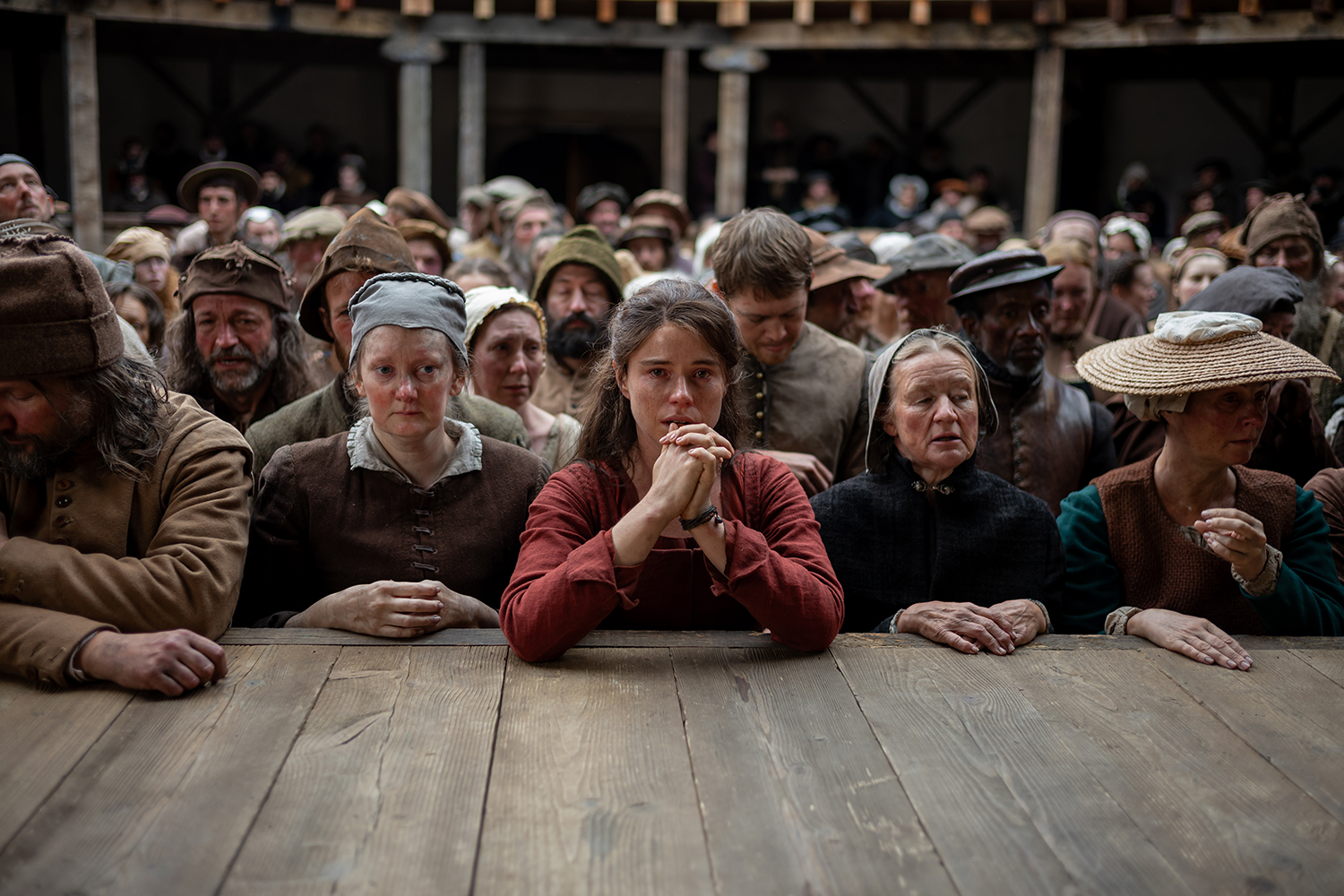
Jessie Buckley as Agnes and Joe Alwyn as Bartholomew in a scene from "Hamnet." (Photo Agata Grzybowska, courtesy of Focus Features)
They've made their checklist, they've packed their patience, and nothing will get in their way. We're not talking about holiday shoppers, but something far more aggressive: major holiday movies. They want to have their cake and eat it, too: the accolades from reviewers, but also the attention of Joe Moviegoer.
Now, as 2025 begins its final descent, studios pull out all the stops in order to rack up critic group plaudits, glowing write-ups and butts in seats. Speaking of critic groups, this reviewer in the middle of his yearly mad dash, a movie viewing marathon that's entered its most intense phase, prior to turning in the nominees ballot as a member of the Florida Film Critics Circle. Time for one last push.
Meantime, a trio of high-profile crowd-pleasers have careened into the awards race with stars in their eyes and their eyes on the prize. One is an acclaimed prestige adaptation that's expanding in theaters following a limited Thanksgiving weekend rollout. Another is a new entry in popular string of mystery movies that's enjoying a pared-down theatrical run before it lands on Netflix later this month. The third is an animated sequel that's stormed out of the gate to become a monster hit, at home and overseas, with global box office domination in its crosshairs. How do these year-end contenders measure up? Let's take a closer look.
“Hamnet”: Agnes Hathaway curls up by a tree, as if she has returned to her mother's womb, at one with the forest. She listens to the sounds of nature, and we listen along with her. This fiercely independent woman, blissfully unaware of the harrowing journey in store for her, harnesses the moment, and she appears to stop time itself.
This arresting image, as the future Mrs. William Shakespeare seizes the spotlight in her own story, plays out almost in open defiance to the conventions aiming to mold this evocative adaptation of Maggie O'Farrell's historical novel into middlebrow Oscar bait. To pander or not to pander. That is most definitely the question.
It's an aesthetic tug of war that director Chloé Zhao navigates, as she attempts to deliver an awards-season heavy hitter that is nevertheless suffused with her trademark earthy mise en scene. While this rather uneven snapshot of Elizabethan England doesn't always live up to the high standards expected from the gifted filmmaker behind “The Rider” and “Nomadland,” “Hamnet” has enough elements working in its favor to rise above its obligations as a golden statuette magnet.
The film's virtues, however, don't become apparent right away. For the first 40 minutes or so, it dutifully chronicles the courtship that brings together Agnes (Jessie Buckley) and Will (Paul Mescal), a Latin tutor with a gift for spinning stories but who nevertheless struggles to find his voice when putting ink to paper. Agnes, meanwhile, is suffocating in a home where she is merely tolerated, with the exception of her supportive stepbrother Bartholomew (the esteemed Joe Alwyn). Will becomes an escape valve, a transition from a life of toil and misfortune to another life of toil and misfortune, albeit one where she is cherished and valued.
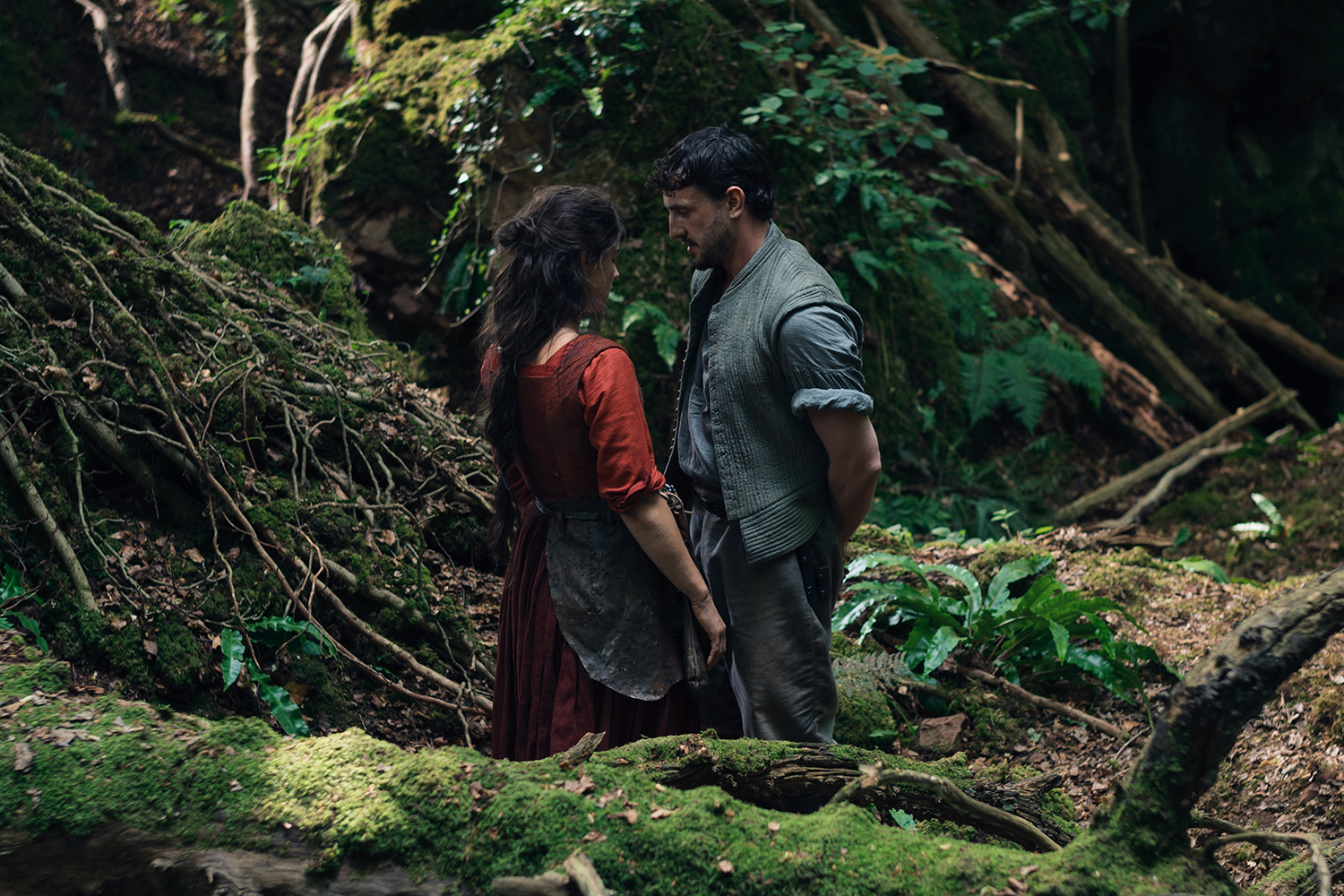
Jessie Buckley as Agnes and Paul Mescal as William Shakespeare in a scene from "Hamnet." (Photo by Agata Grzybowska, courtesy of Focus Features)
This is all well and good, if there happened to be a spark between the stars, but the glaring lack of chemistry between Buckley and Mescal is distracting enough to put a damper on “Hamnet's” first hour. You start becoming frustrated with its low-energy approach toward presenting its protagonists' complicated relationship, first as lovers, then as a married couple. (Mescal, who is good but not as good as Buckley, is every bit a lead, so quit it with the category fraud, Focus Features marketing team.)
It is also limiting for Zhao to whittle down so much of the narrative to highlight Agnes' struggle to reconcile her disenchantment with a husband who's frequently absent with her willingness to allow him to follow his ambitions and go make theater in the big city, all while she stays behind to raise their children. The domestic woes unfold against backdrops that are too manicured, with the insertion of mystical, tree-hugging elements that aren't as well integrated into its fabric as its makers would have you think. Agnes and Will come together and grow distant amid soundscapes that are too fussy, complemented by a wispy Max Richter score that's far from his best.
But while the film is all thumbs as an artfully rendered love story, its wan village romance gives way to a considerably more effective portrait of grief: how its sting lets despair have its way with you, and how art can be a powerful conduit to help you process the pain.
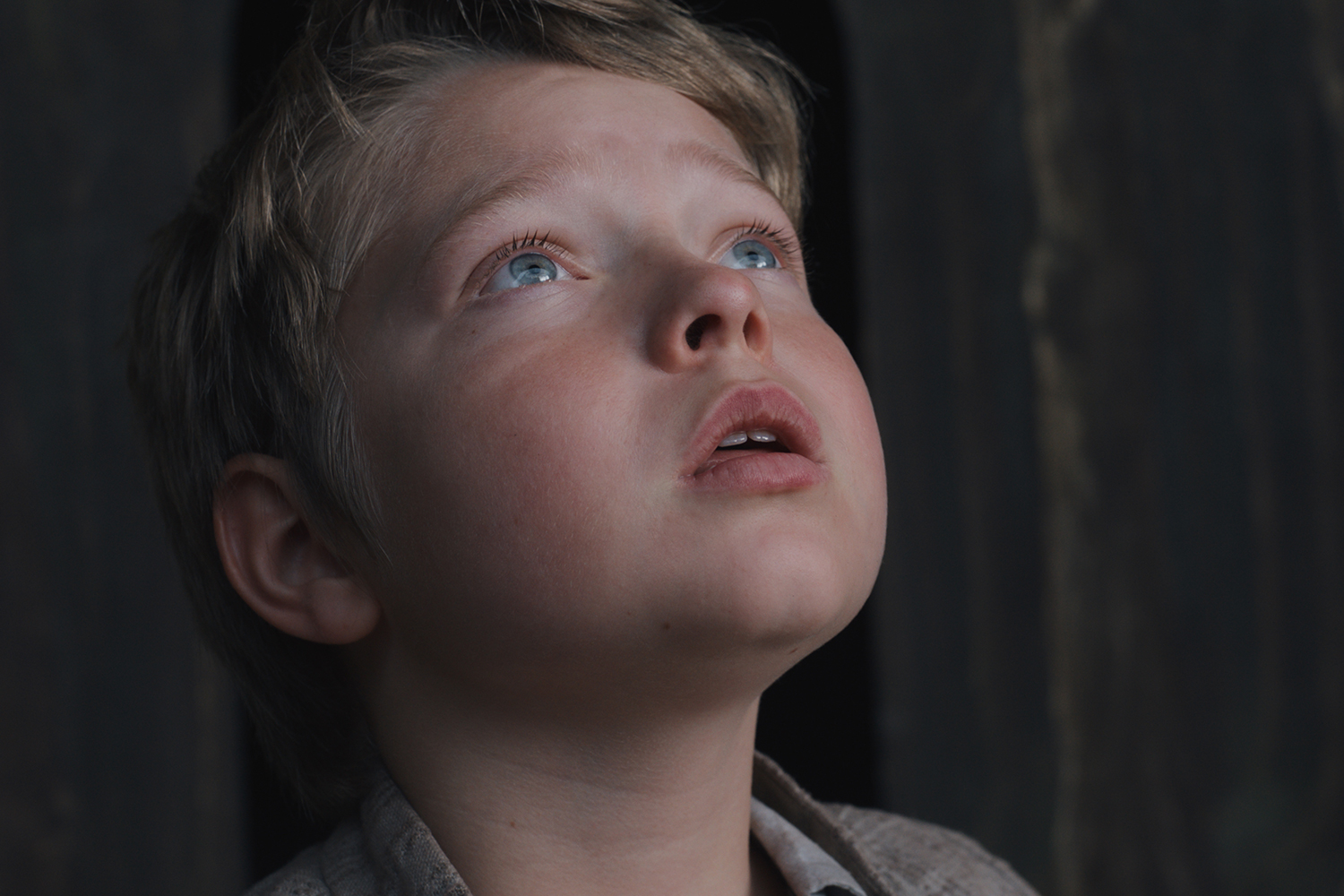
Jacobi Jupe as Hamnet in a scene from "Hamnet." (Photo courtesy of Focus Features)
The stretch that features the title character, one half of Agnes and Will's fraternal twins, gives young Jacobi Jupe a chance to nearly walk away with the movie. His Hamnet is an empath who radiates warmth: round cheeks, expressive eyes and a sweet demeanor. You start wishing the film were more about him, about his devotion to his twin sister Judith (Olivia Lynes), his steadfast commitment to honor Dad's promise to “be brave,” no matter what calamity may come the family's way. The purity in Jupe's marvelous performance goes a long way toward offsetting the film's cinema-of-quality airs, not to mention the way it occasionally flirts with somnolence.
“Hamnet” has elicited a wide array of reactions among my friends and colleagues. Some respond to the film's depth of feeling, its wrenching depiction of loss, while others take issue with the way it reduces one of the most recognizable works of stagecraft in the English language to a couples therapy tool. I understand the love, and I understand the hate. Me? I think Zhao brings it home in the last 20 minutes, when she stages the debut performance of “Hamlet” with a mesmerized Agnes in the audience. This is Buckley's moment to shine, and the Irish dynamo, catharsis well within her grasp, nails those captivating closeups. The tears she elicits have been fully earned, even when the film around her is playing catch-up.
“Wake Up Dead Man: A Knives Out Mystery”: There are filmgoers who will no doubt want to seek out a lighter movie night selection than the Shakespeare household's suffering, and this nifty third entry in writer-director Rian Johnson's star-studded series of private eye baubles fits the bill. No more, no less.
Even more so than the first “Knives Out” and its breezier, more genial follow-up, “Glass Onion,” “Wake Up” isn't dominated by its central crime solver, Benoit Blanc (Daniel Craig). The Southern gent with heavy Hercule Poirot vibes is absent for whole stretches of this Netflix release, the better for the film's true protagonist to take center stage.
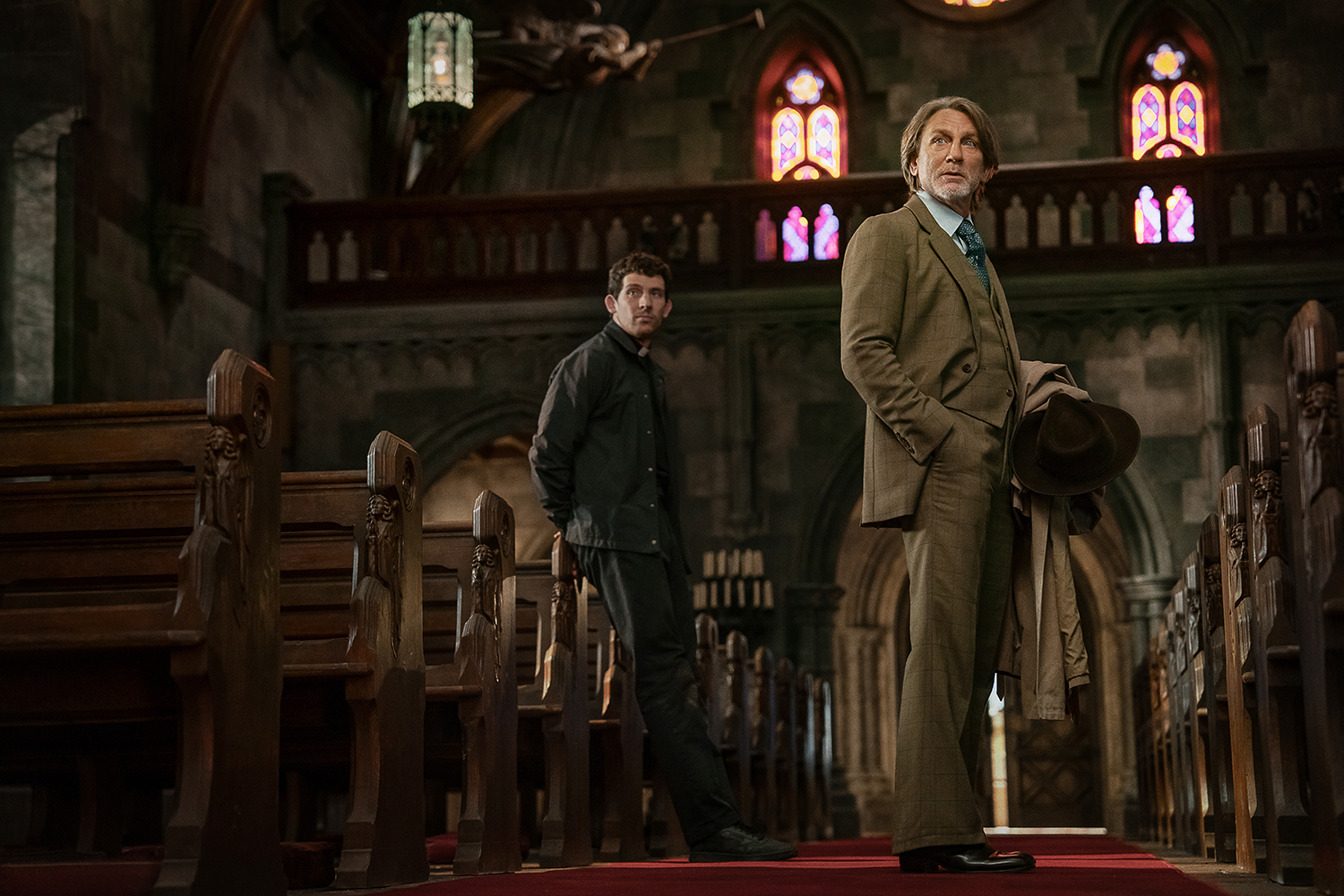
Josh O'Connor as Father Jud Deplenticy and Daniel Craig as Benoit Blanc in a scene from "Wake Up Dead Man: A Knives Out Mystery." (Photo by John Wilson, courtesy of Netflix)
Father Jud Duplenticy (Josh O'Connor) finds himself in quite the pickle. The Catholic priest with a shady past gets relocated to a small parish in upstate New York after an altercation with a deacon suddenly escalates. The stubborn padre, a true believer with a standoffish streak, has been sent to purgatory, and he knows it, a measure of last resort to avert excommunication.
He quickly discovers he treads on hostile territory. His superior, Monsignor Jefferson Wicks (Josh Brolin, channeling Jeff Bridges) lords over his dwindling flock with an iron fist, and the regulars in his congregation largely give Duplenticy the cold shoulder. At least that beats the taunting from the contemptuous Wicks, who, in the film's funniest bit, regales him with sordid details about his, um, self-pleasuring habits during confession.
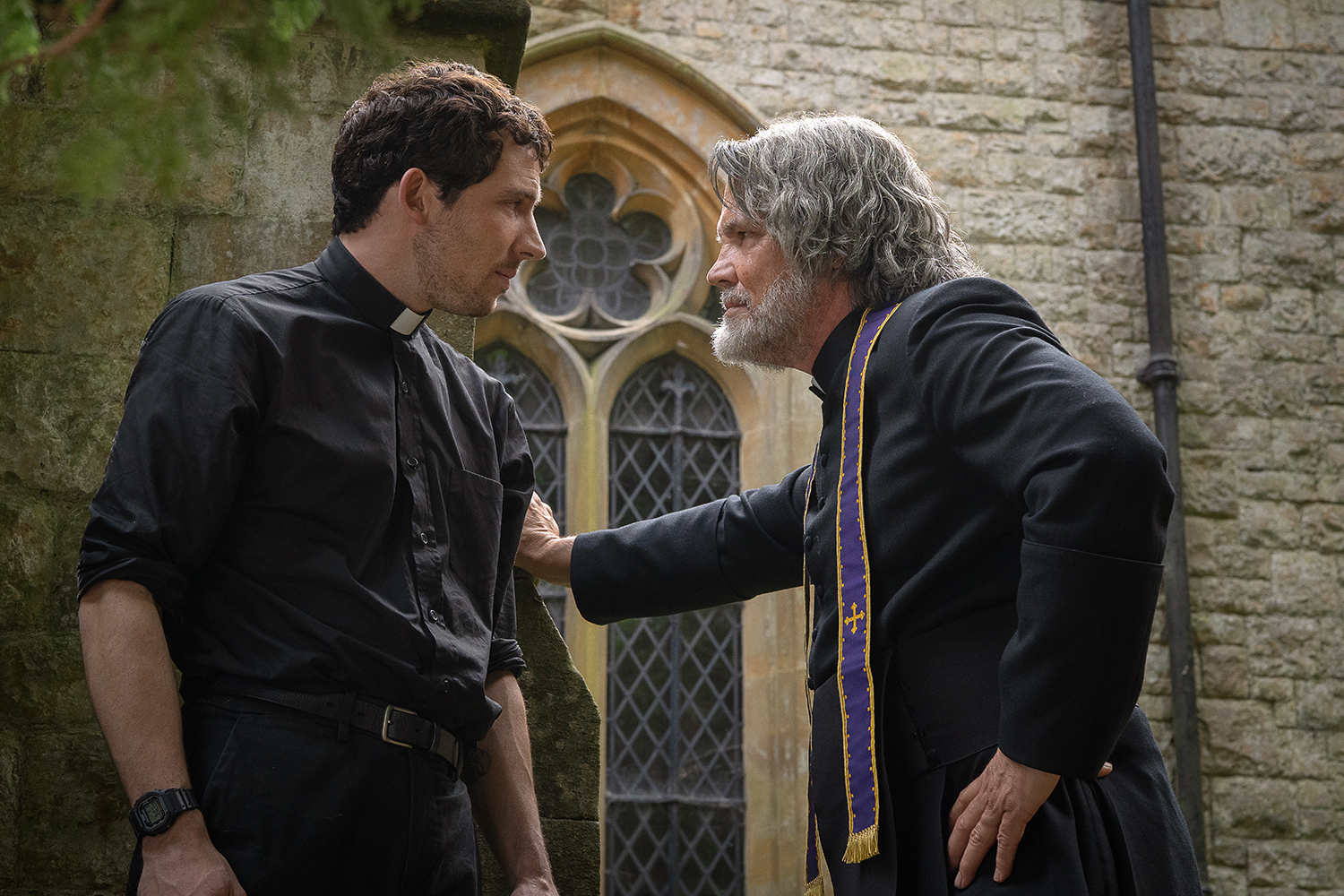
Josh O'Connor as Father Jud Deplenticy and Josh Brolin as Monsignor Jefferson Wicks in a scene from "Wake Up Dead Man: A Knives Out Mystery." (Photo credit: John Wilson. Courtesy of Netflix)
As Duplenticy discovers Wicks has made his share of enemies over the past, this dysfunctional community becomes aware of the friction between these two men of the cloth, fueled by their diverging worldviews: Wicks is more Old Testament, whereas Duplenticy wants the church to be more of a beacon in the darkness.
Things come to a head on Black Friday, when Wicks' murder rocks this troubled house of worship. Enter Blanc, who takes a liking to Duplenticy, even though many fingers point to the young priest as a prime suspect, including no-nonsense police chief Geraldine Scott (Mila Kunis), who wants to bring in Duplenticy and call it a day.
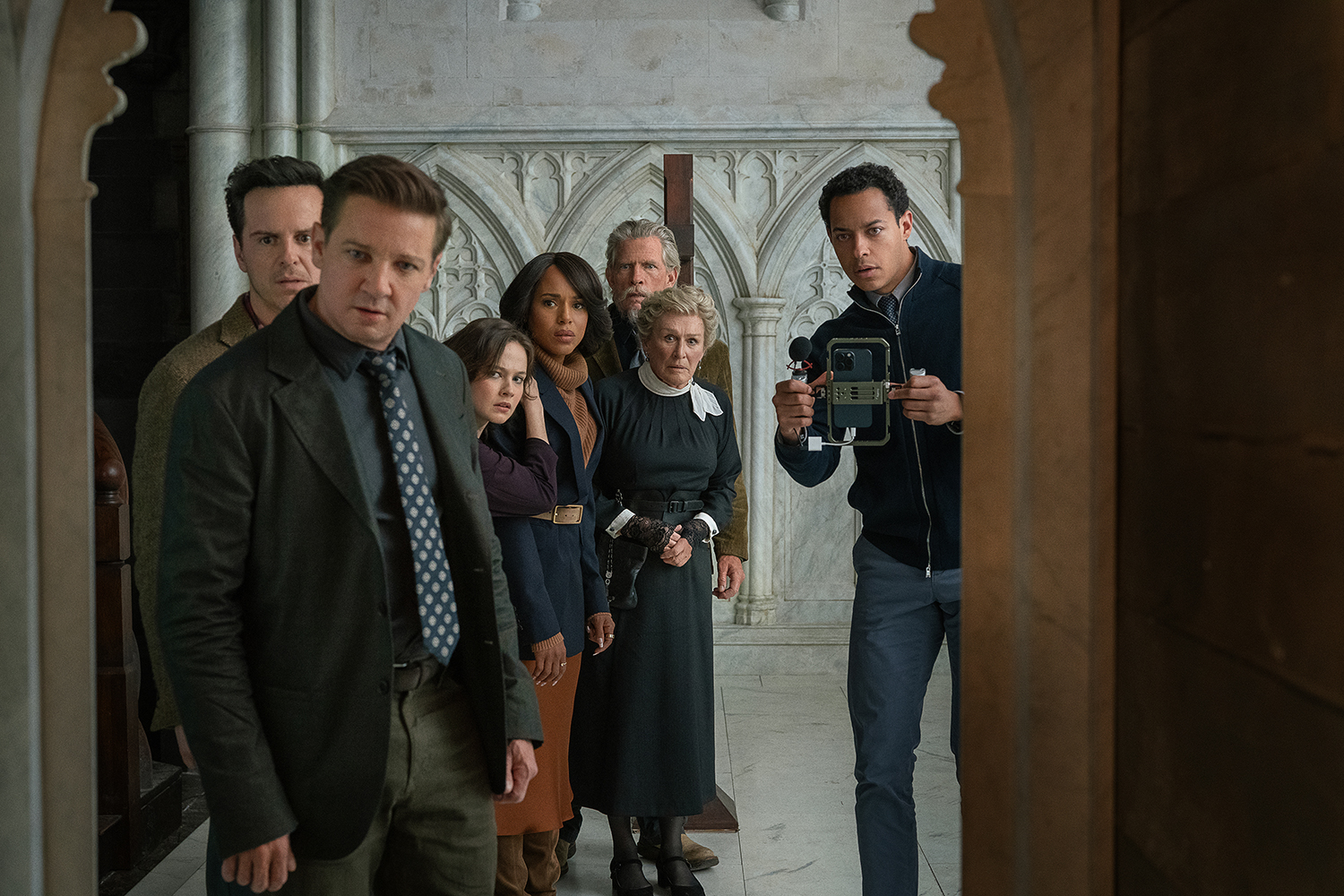
Andrew Scott as Lee Ross, Jeremy Renner as Dr. Nat Sharp, Cailee Spaeny as Simone Vivane, Kerry Washington as Vera Draven, Esq., Thomas Haden Church as Samson Holt, Glenn Close as Martha Delacroix and Daryl McCormack as Cy Draven in a scene from "Wake Up Dead Man: A Knives Out Mystery." (Photo credit: John Wilson. Courtesy of Netflix)
Cue the complications, red herrings and judiciously timed revelations, including one that threatens to take the film into uncharted supernatural territory. For at least the first half, it seems “Wake Up” is poised to take the crown as the best “Knives Out” to date. It boasts the franchise's strongest ensemble cast, which includes the likes of Glenn Close (in top form), “Sideways'” Thomas Haden Church, Andrew Scott, Jeremy Renner, “Good Luck to You, Leo Grande's” Daryl McCormack, “Priscilla's” Cailee Spaeny, Kerry Washington and Jeffrey Wright. Its exploration of faith, organized religion and herd mentality is meaty without becoming preachy the way that the topical dissection of xenophobia, prejudice and all-American greed marred the first “Knives Out.”
But when it comes time to unveil the mystery at its core, “Wake Up Dead Man” hits a brick wall. Johnson is unable to shake off the Achilles' heel that afflicts every single “Knives Out” movie. The filmmaker's attempts to untangle the web of malfeasance he has weaved are clunky, muddled and long-winded. These resolutions are meant to glide effortlessly. Instead, it's like witnessing an albatross land, or listening to a child tell a story, wherein they forget several key details, so they keep going back and forth until you start losing the thread.
But this faux pas is not a deal-breaker. Even at 144 minutes, “Wake Up Dead Man” remains buoyant popcorn fare that fuses the most appealing elements of the previous films. It's best experienced in a packed theater, so of course Netflix is giving it a bare-bones release before relegating it to its maze-like algorithm. Sure, Craig goes full ham with gusto, but the lion's share of the credit goes to O'Connor, who's riding the wave of a stellar year on the big screen, at least as far as his output is concerned. His character's baptism by fire is what anoints this competent whodunit and gives it wings.
“Zootopia 2”: Your best bet for escapism at your local multiplex comes in the shape of an animated sequel that's even more of a rollicking ride than its predecessor. The sprightly buddy cop comedy is Disney's most accomplished adventure headlined by anthropomorphic talking animals in many a moon, a loose-limbed, fleet-footed concoction that never loses sight it's a cartoon. Believe the hype.
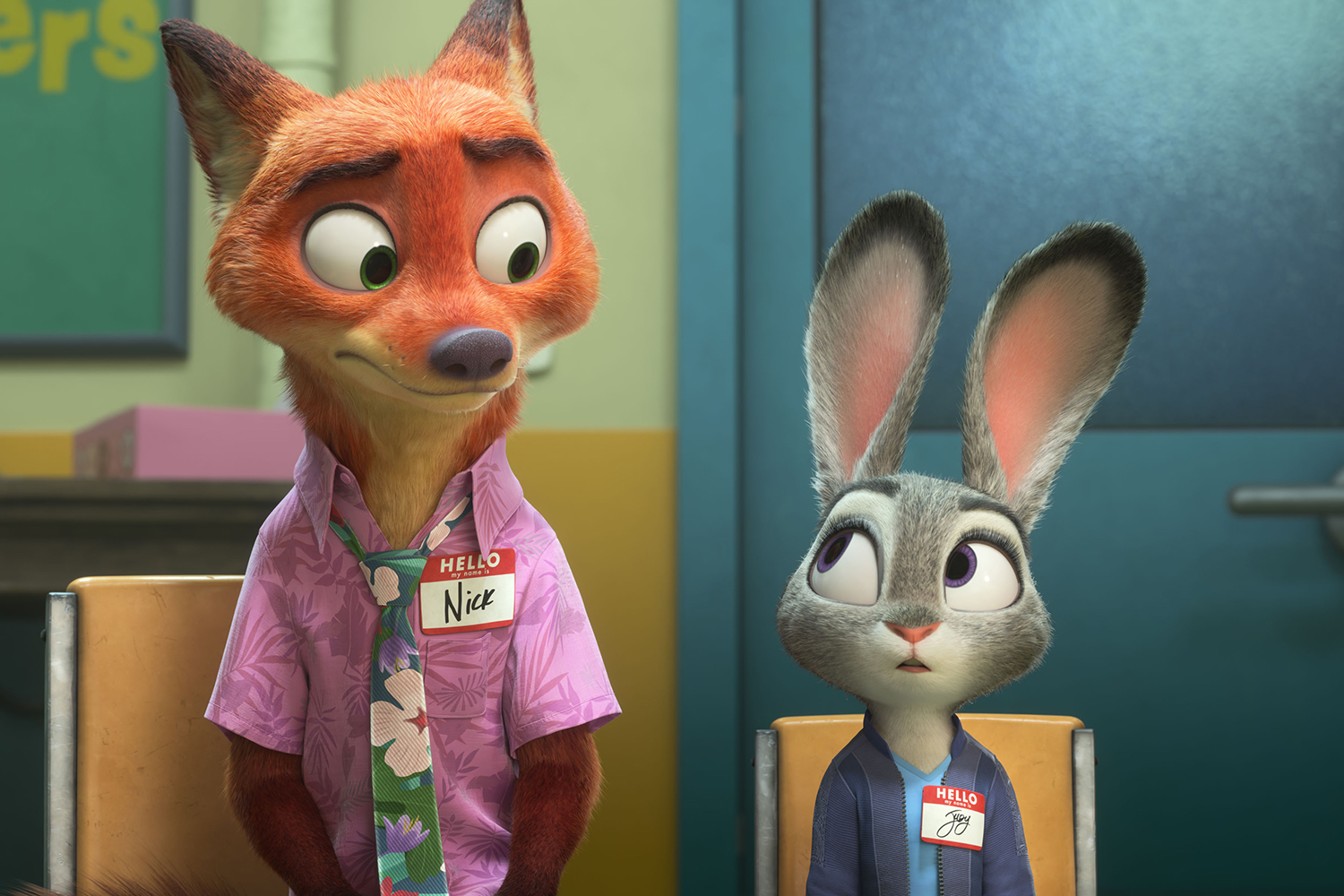
Nick Wilde (voiced by Jason Bateman) and Judy Hopps (voiced by Ginnifer Goodwin) in a scene from "Zootopia 2." (Photo courtesy of Disney)
This new chapter in the law enforcement partnership of by-the-book sleuth Judy Hopps (the voice of Ginnifer Goodwin) and reformed con artist Nick Wilde (a suitably sly Jason Bateman) begins a week after they become official partners at the Zootopia Police Department, when an attempt to shut down an illicit contraband operation lands them in hot water with Chief Bogo (a gruff Idris Elba). It has come to this Cape buffalo's attention that this rabbit-and-fox pairing might not be as compatible as it seems. Judy too often takes the initiative without letting her more laid back counterpart have a say, and Nick doesn't appear to be fully appreciative of his partner's work ethic and indefatigable drive.
Off the two of them go to partnership therapy, which further lays bare the divide that threatens to split them up for good. Judy's invitation to crash the Zootenial Gala brings our heroes face to face with slithering thief Gary De'Snake (Ke Huy Quan), a pit viper who pilfers an old journal chronicling the creation of the weather walls that allows multiple species to coexist in Zootopia.
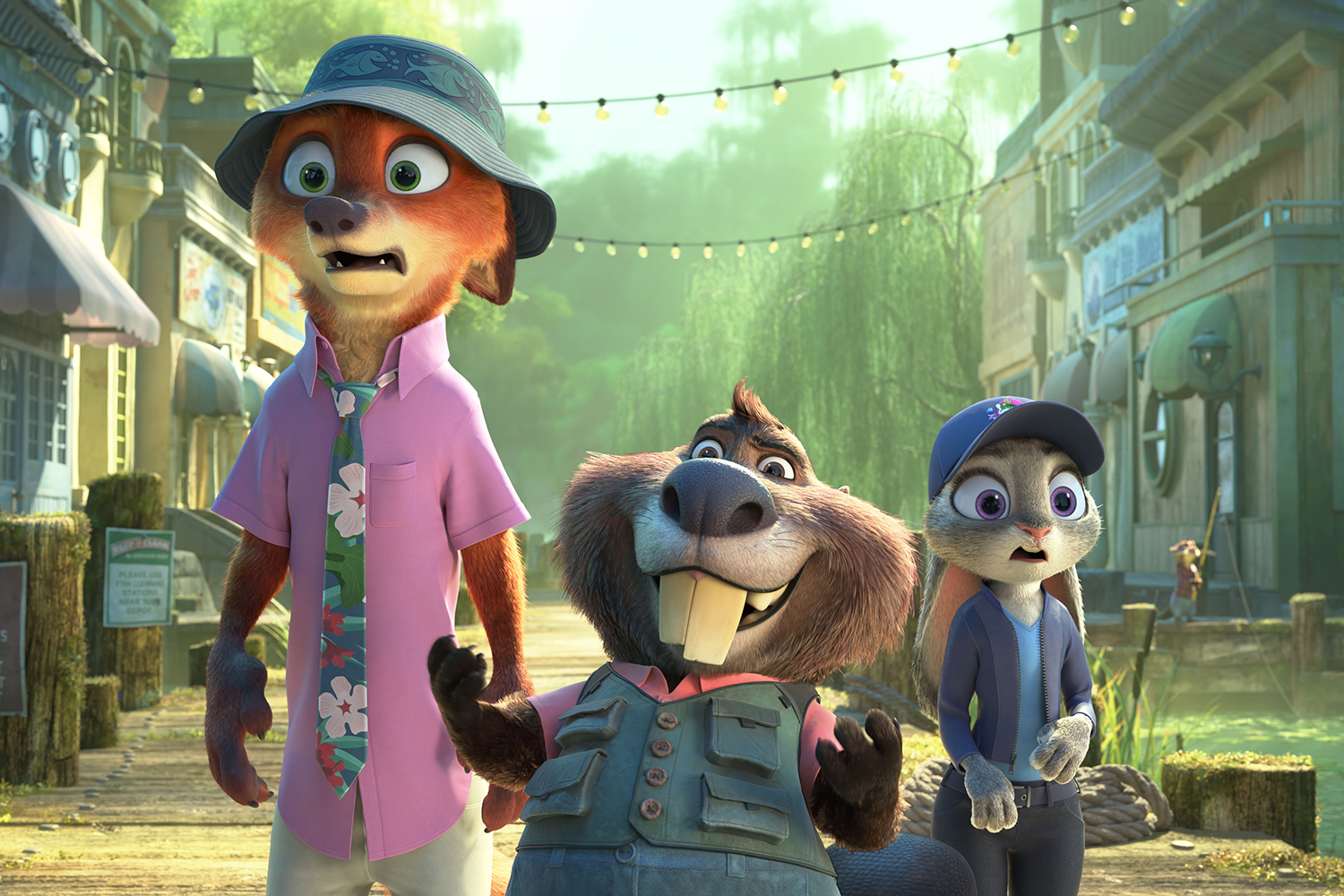
Nick Wilde (voiced by Jason Bateman), Nibbles Maplestick (voiced by Fortune Feimster) and Judy Hopps (voiced by Ginnifer Goodwin) in a scene from "Zootopia 2." (Photo courtesy of Disney)
Gary insists reptiles, who have been ostracized from the bustling metropolis, have been unjustly vilified, and there's something hidden in the journal that will help clear his family's name. Amid the ensuing chaos, Judy and Nick find themselves wrongly accused of aiding and abetting, so it's their names that they suddenly find themselves required to clear. Let the relentless pursuit begin.
As “Zootopia 2” hurdles forward at breakneck speed, directors Jared Bush and Byron Howard, working from Bush's clever, neatly constructed screenplay, rarely let viewers catch their breath. They combine the comic sensibility of 2000s Disney films like “The Emperor's New Groove” with the death-defying thrills of “Indiana Jones and the Temple of Doom” and a pinch of Tom Cruise's “Mission: Impossible” movies. The film not only features Quan, “Doom's” Short Round, in a prominent role, but includes several visual cues from Steven Spielberg's film, itself an underappreciated masterwork.
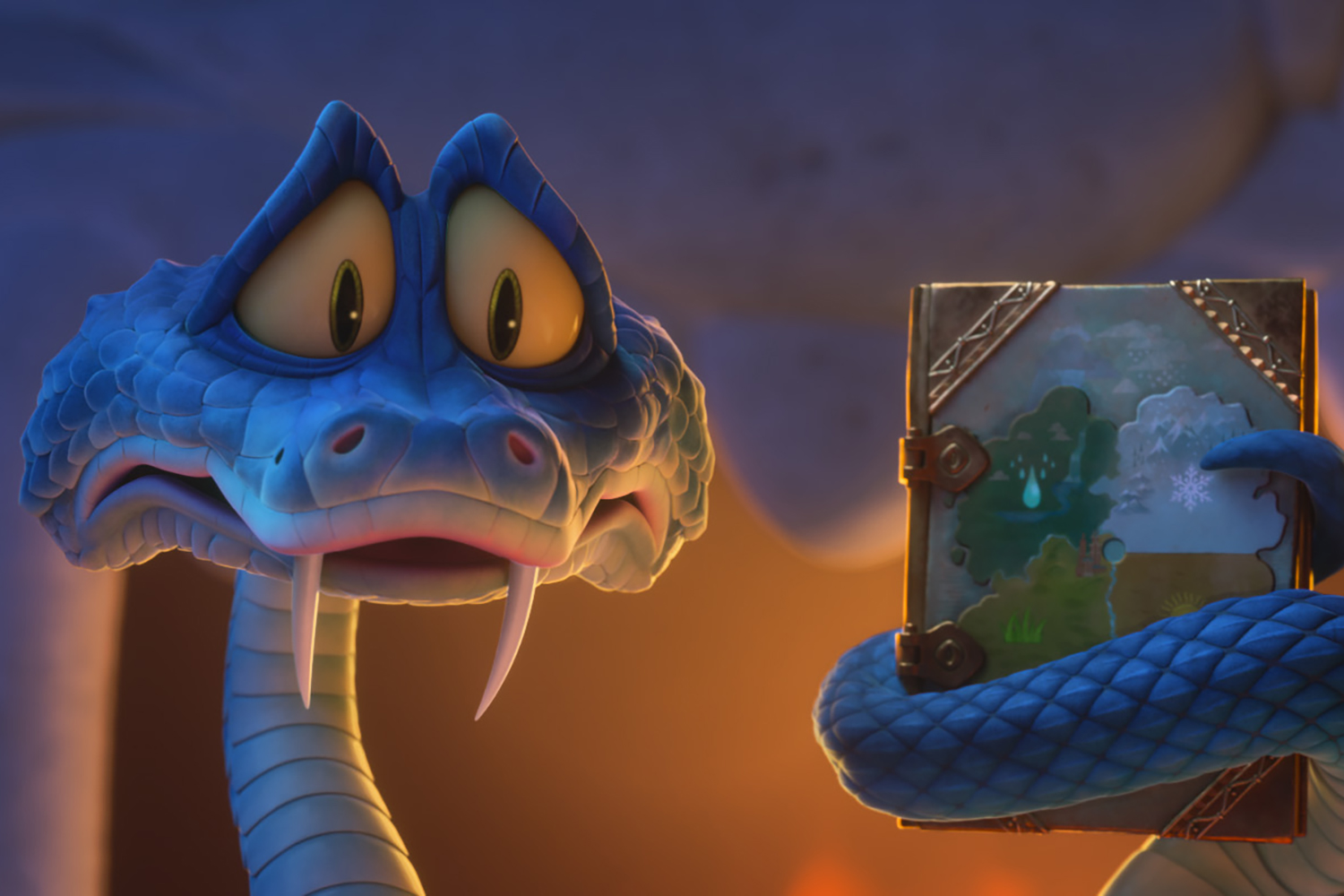
Gary De'Snake (voiced by Ke Huy Quan) in a scene from "Zootopia 2." (Photo courtesy of Disney)
Did I say visual? “Zootopia 2” is brimming with inspired sight gags that not only reference Disney films from various eras but possess the zany, anything-goes zest of Looney Tunes cartoons. A blink-and-you-missed-it nod to Hungry Hungry Hippos sent me to movie heaven, and there's a lot more where that came from.
The first “Zootopia” is swell, but it couldn't resist stepping up to the soapbox to deliver its message of social harmony in the animal kingdom. The sequel is an action comedy first, an ode to friendship second and a paean to community building third. You keep hoping that the energy never dies down, and while it remains exhilarating throughout, Bush and Howard also feel duty-bound to abide by the Disney formula; that includes perfunctory cameos from critters seen in the first film. Moreover, do we really need to unmask yet another hidden villain? A similar revelation already felt stale in the first film. The sequel also trades in its sardonic edge in its overly gooey final reel.
But by that point, this overqualified follow-up has already proven zippier and more satisfying than any family film released this year, and it's certainly head and shoulders above anything released by a major studio this past summer. Where was this burst of movie joy when we really needed it? Better late than never. Bush and Howard have crafted a treasure trove for kids, heavy on the slapstick and expertly conceived setpieces. Thanks to some cheeky double entendres and pop culture callouts, it's also great fun for grown-ups.
“Zootopia 2” shows a mighty fine film can come under the guise of an insipid cashgrab. This one sends you out of the theater on a dizzying high. Don't let it scurry away.
“Hamnet” is now playing across South Florida, including at AMC Aventura 24, CMX Brickell City Centre, Coral Gables Art Cinema, Silverspot Cinema Metsquare in downtown Miami and Regal Dania Pointe.
“Wake Up Dead Man” is now playing at The Landmark at Merrick Park, Cinépolis Luxury Cinemas Coconut Grove, CMX Dolphin 19 and Paradigm Cinemas: Gateway Fort Lauderdale before it bows on Netflix Dec. 12.
“Zootopia 2” is now playing in wide release, including IMAX engagements at AMC Aventura, AMC Sunset Place 24, AMC Pembroke Lakes 9 and the AutoNation IMAX at the Museum of Discovery & Science in downtown Fort Lauderdale.