



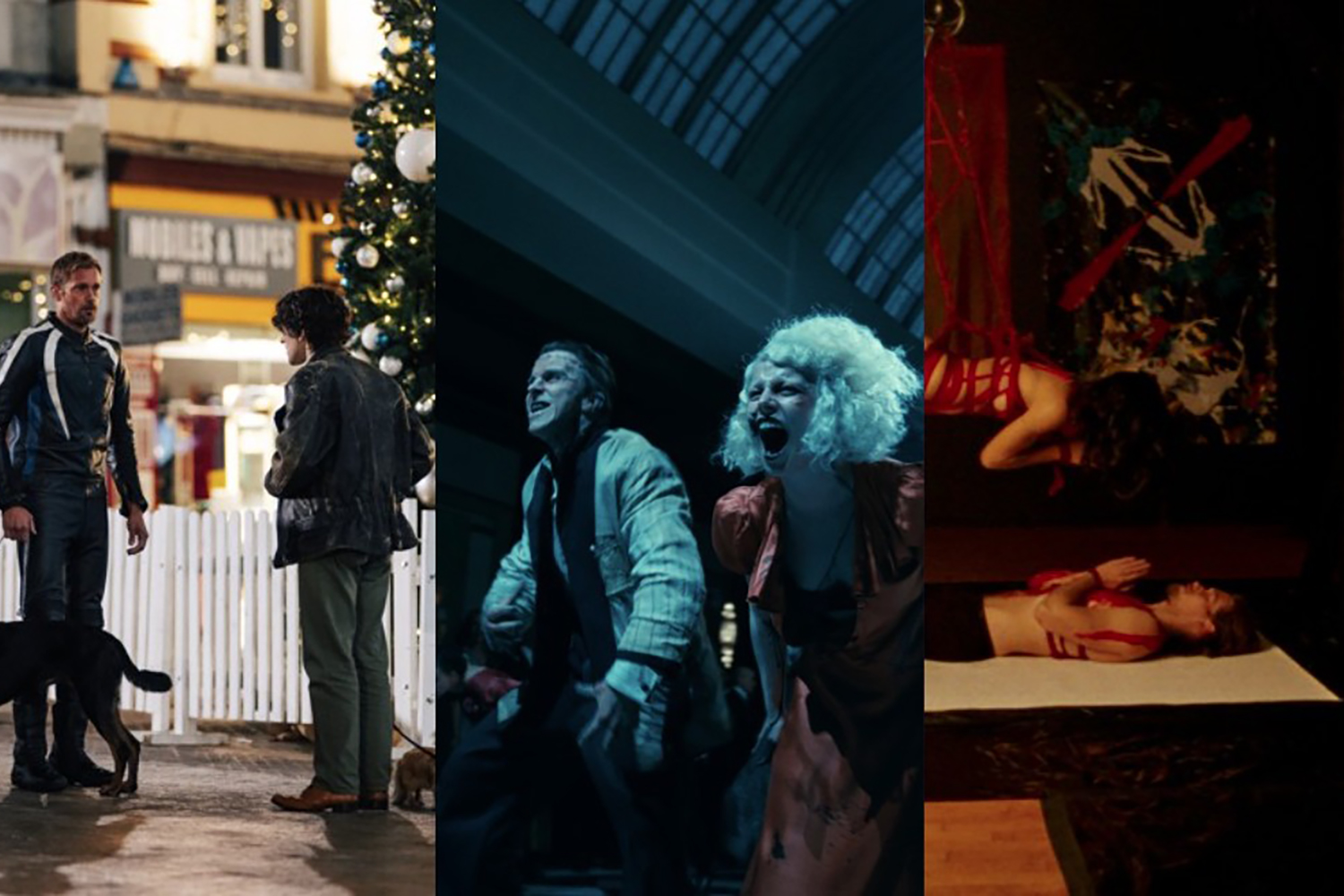
Alexander Skarsgard as Ray and Harry Melling as Colin in a scene from "Pillion," Christian Bale as Frank and Jessie Buckley as The Bride in a scene from "The Bride!" and Maiara Walsh as Charlie and Cameron Cowperthwaite as Atticus in a scene from "Bight."
What happens when an infatuation spirals out of control? What goes down when a bad romance becomes gasoline that splashes down on the roiling fires of desire and deep yearning? The French have a term for it: amour fou.
That translates to crazy love, and yes, it does entail taking leave of your senses. But that doesn't mean all filmmakers throw caution to the winds when tackling the most extreme forms of romantic attachment.
As we dive into Oscar weekend, a trio of recent releases display different shades of love outside the mainstream. One of them confronts these emotions with full-throttle abandon, a penchant for blending genres not typically known for going together, and a tip of the hat to Hollywood's Golden Age. Another is an intense, micro-budgeted foray into bondage and sadomasochism that pits two dysfunctional couples against each other, and the third is a British dramedy that gives BDSM a queer, sweet-natured spin.
- Which one emerges as the alpha top?
- Which one will likely have you screaming out the safe word?
- It's time to turn up the heat. Are you ready for this?
“The Bride!”: “Men suck” is a welcome point of departure for an unvarnished look at relationship drama, but to have this perspective come in the form of a cheeky monster movie mashup is something I didn't have in my 2026 bingo card. The sophomore directorial effort from Maggie Gyllenhaal flatlined at the box office this past weekend and drew scorn from some corners of Film Twitter who prefer their genre fare straightforward, tidy and disciplined.
It's their loss. “The Bride!” is none of those things, but I bought what this eccentric pastiche is selling all the same. The Warner Bros. release boasts spiffy production values and a game cast of A-listers. (Every penny of its reported $80 million budget is up on the screen.) Gyllenhaal fully embraces the exclamation point in the title, turning it up to 11 as she stitches together an ornate “Frankenstein” riff, lovers-on-the-lam gangland intrigue and a glossy valentine to studio musicals of the 1930s.
The filmmaker distills these disparate elements through her own punk-rock feminist sensibility, and while the head-on collision of themes and textures is far from cohesive, there's a manic energy coursing through the movie's veins that keeps things lively for viewers intrepid enough to fall on its kooky wavelength.
A Chicago woman (Jessie Buckley) runs afoul of Mafia boss Lupino (Zlatko Buri) when she dares to speak her mind circa 1936, landing her in an early grave. But that's not just her speaking truth to male chauvinism. Residing in her like Gollum's less benign personality is the spirit of Mary Shelley (also Buckley), who reminds us she wrote “Frankenstein” on a dare, then lived to see the novel's legacy taken away from her. Gyllenhaal is determined to restore the author's voice, quite literally, by having her speak up and act out via this 1930s woman, often with destructive consequences.
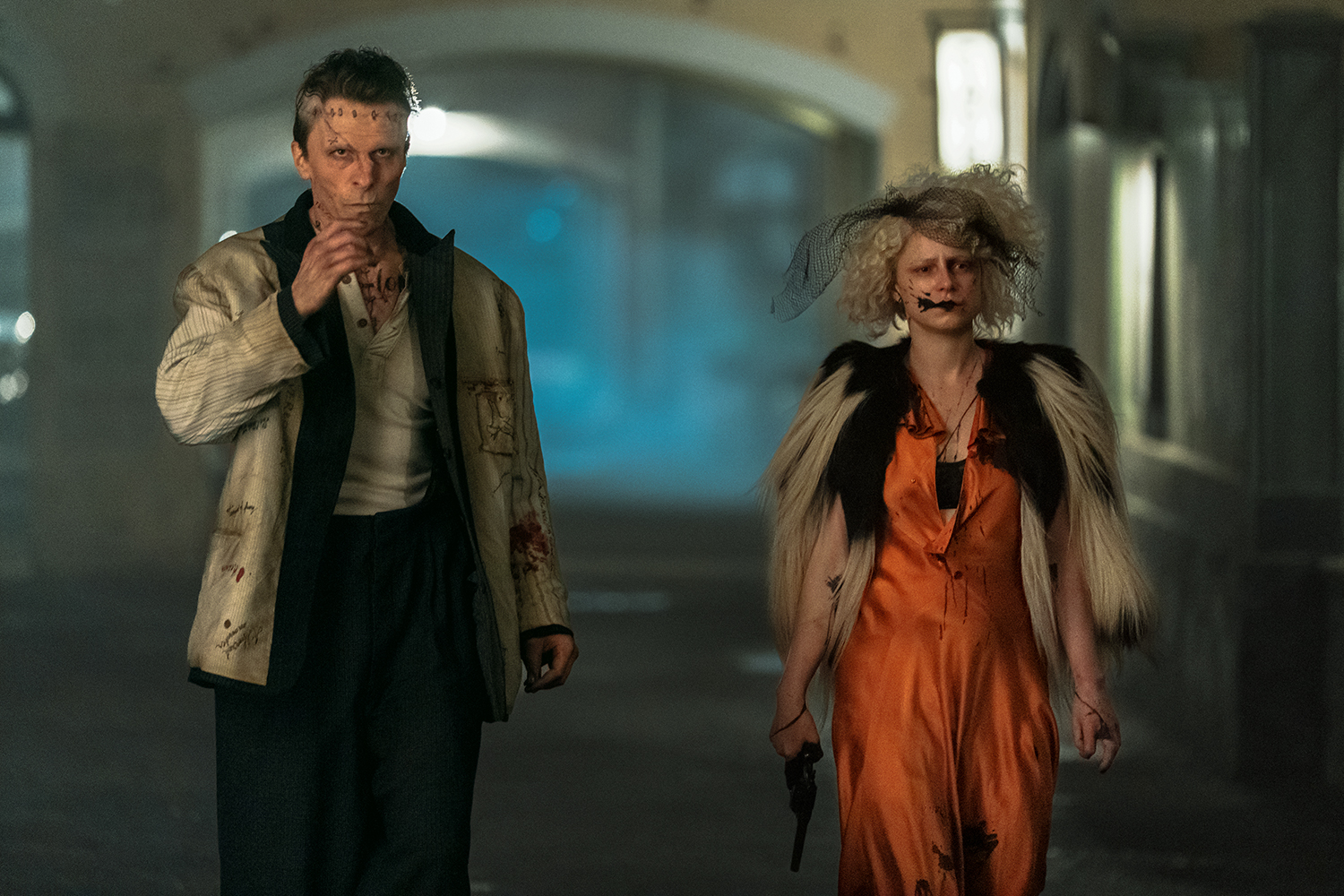
Christian Bale as Frank and Jessie Buckley as The Bride in a scene from "The Bride!" (Photo courtesy of Warner Bros. Pictures)
It's a flourish of pure id from the thespian-turned-filmmaker. It's also an awkward device, a self-indulgent actor's exercise that initially prevents “The Bride!” from fully coming to life. But the outlook brightens when Frank (Christian Bale), Dr. Frankenstein's undead creation, enters the picture. This film's mad scientist is not Frank's daddy Victor, but Dr. Cornelia Euphronious (Annette Bening), a scientist known to dabble in reanimation.
Frank's been roaming the Earth for a while, and though his affinity with movie musicals helps keep the loneliness at bay, now he yearns for a mate, he tells the good doctor, who reluctantly agrees to his bizarre request, one that involves grave digging.
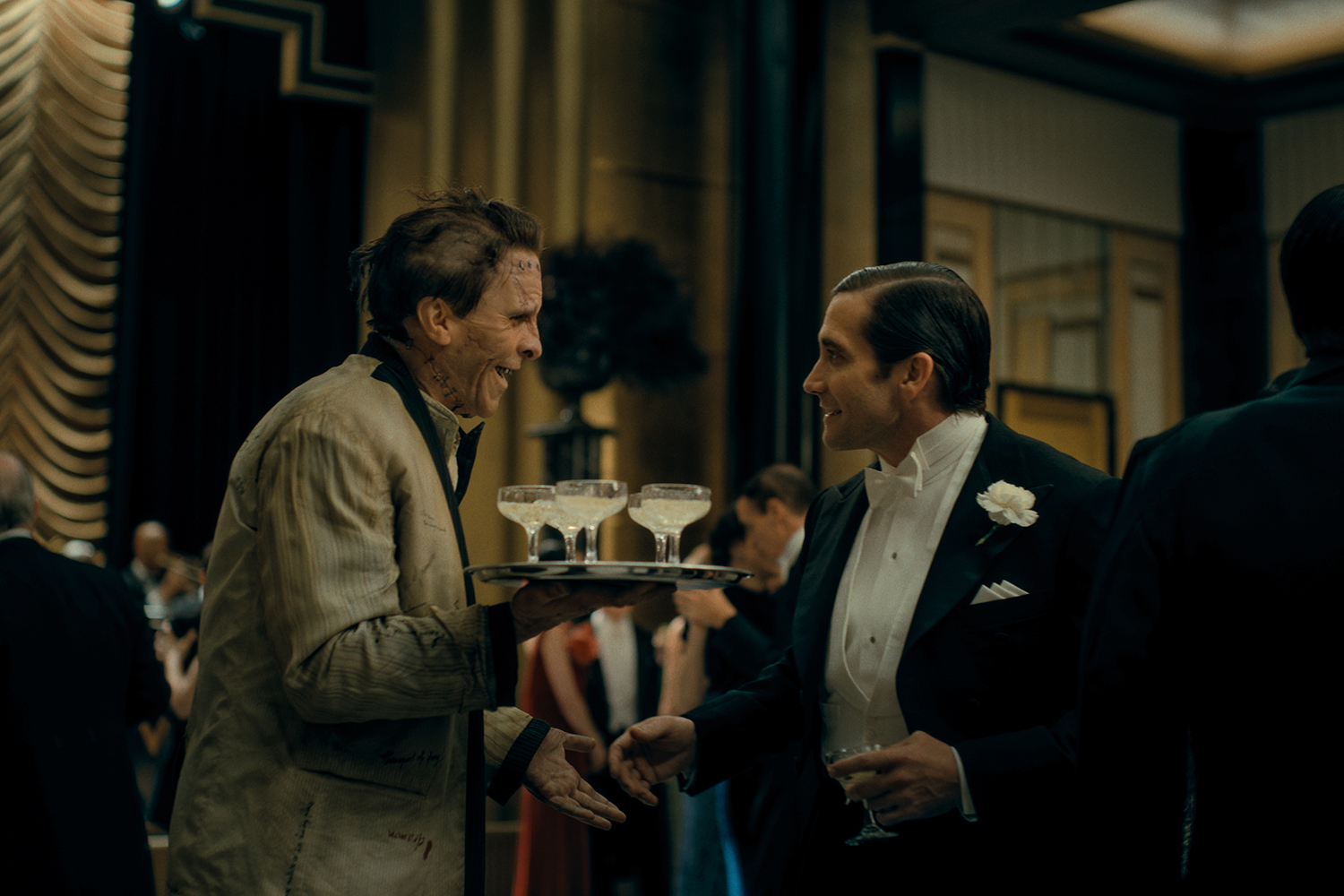
Christian Bale as Frank and Jake Gyllenhaal as Ronnie Reed in a scene from "The Bride!" (Photo courtesy of Warner Bros. Pictures)
One zap of lightning brings Buckley's ill-fated Windy City dame back from the dead, but not her memories. Frank takes advantage of the situation and tells her that she's his bride. The combustible duo hightail it out of Chicago and go on a splashy crime spree, Bonnie and Clyde style. Detective Jake Wiles (Peter Sarsgaard, Gyllenhaal's partner in art and in life) and his smarter, sharper assistant, Myrna Malloy (Penélope Cruz) on the couple's trail, but they're refreshingly laid back about their manhunt.
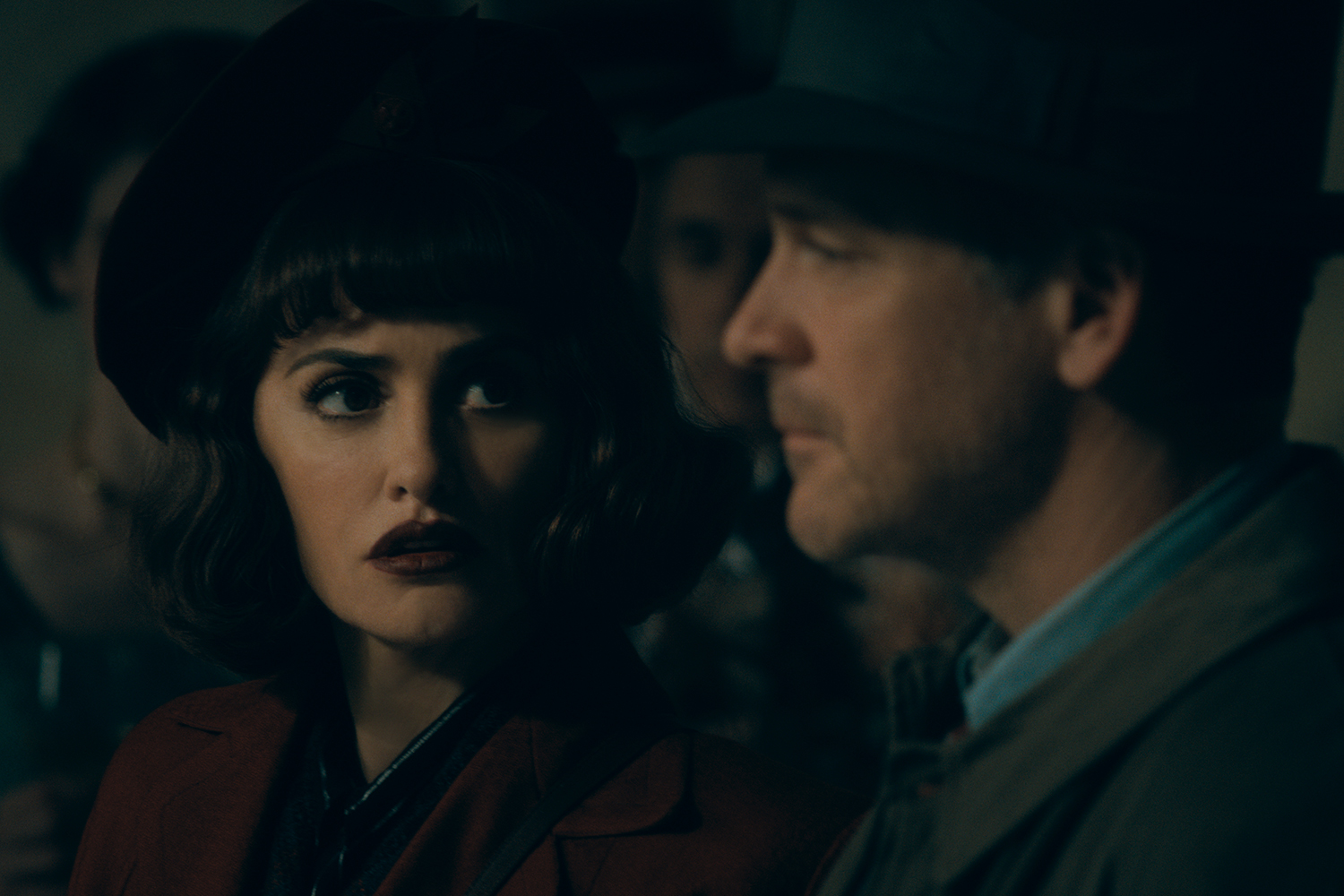
Penelope Cruz as Myrna Mallow and Peter Sarsgaard as Jake Wiles in a scene from "The Bride!" (Photo courtesy of Warner Bros. Pictures)
Actually, “The Bride!” is much less interested in the central's couple's life of crime than in Frank's movie obsession, so much so that Gyllenhaal stages several movie-within-the-movie scenes featuring Ronnie Reed, Frank's absolute favorite star of the silver screen. Played by Gyllenhaal's brother Jake with instantly recognizable shades of Fred Astaire and Dick Powell, it's an irresistible extended cameo by the “Brokeback Mountain” and “Nightcrawler” actor, especially for those of us who are TCM junkies.
Despite some nifty dancing, including a dazzling number at a swanky New York City soireé, “The Bride!” stops short of becoming a full-fledged musical, but that's okay, because it harnesses the light touch of the movies to which Gyllenhaal pays tribute. The film's detractors claim the director isn't quite sure what she wants to say, that her creation is scattershot and unfocused. While she is definitely juggling one too many thematic strands, it's clear from where I'm sitting that “The Bride!” is a film about female agency. It follows its gaslit protagonist, her mouth permanently stained with the black bile used to revive her, and traces her journey from victimhood to empowerment. It's a chaotic road to travel, but this is the good kind of messy.
Weirdness reigns supreme in this dizzying, gleefully unhinged hybrid that never takes itself too seriously and, against some mighty odds, generates sexual heat between the leads. Gyllenhaal has crafted an imperfect rebel yell that invites you to surrender to its dream factory-fueled delirium. Ignore the naysayers, and don't wait until it amasses a cult following. This jittery contraption deserves to be appreciated now, not later.
“Bight”: Years before she first sat in the director's chair, Gyllenhaal starred in “Secretary,” Steven Shainberg's disarmingly demented comedy about an office worker who embarks on a consensual BDSM relationship with her boss, a strong-coffee lawyer played by James Spader. One wonders what Gyllenhaal's character would have made of this indie four-hander about two couples and the knots, physical and mental, that bind them. Three little words come to mind: “Bight” lacks bite.
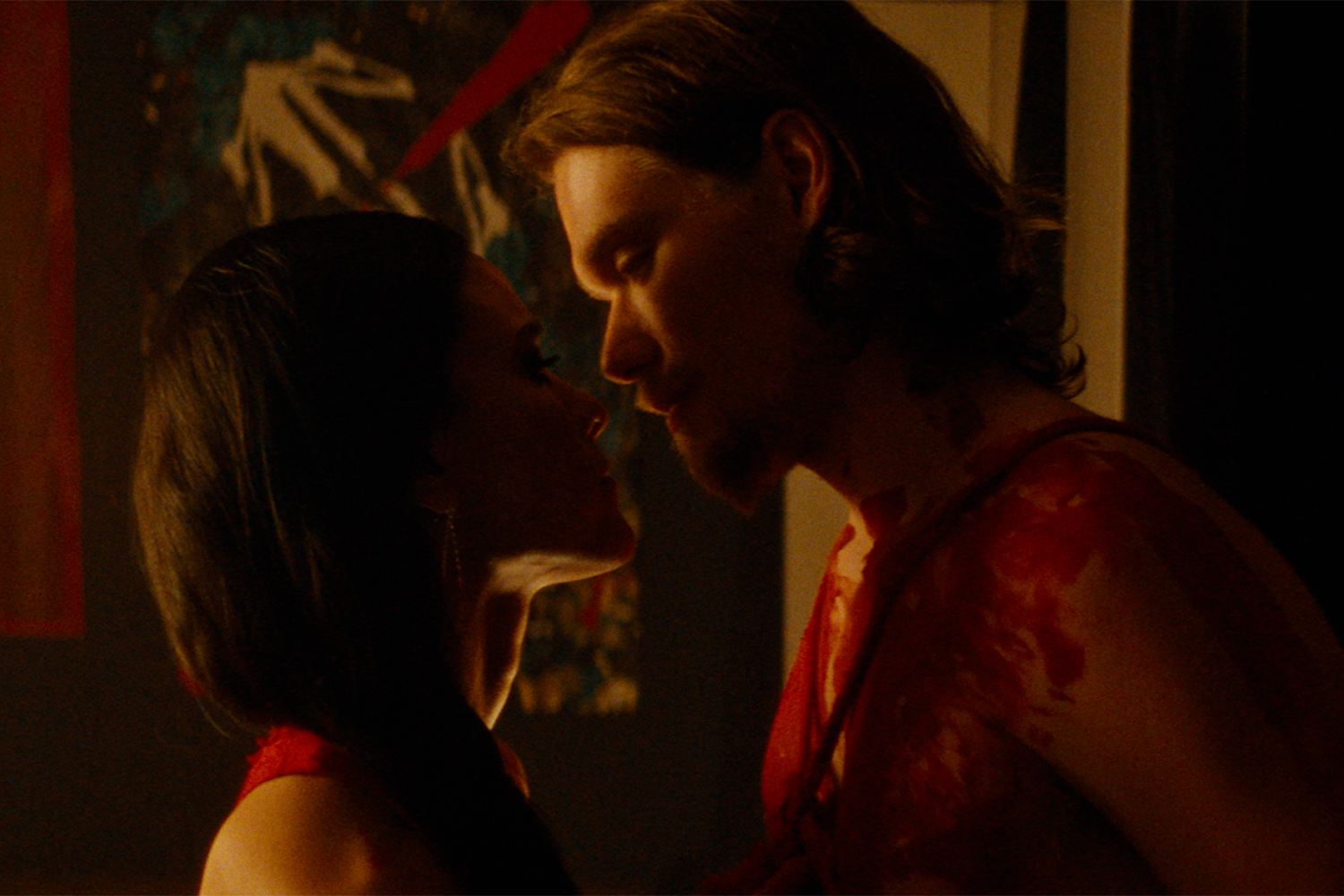
Maiara Walsh as Charlie and Cameron Cowperthwaite as Atticus in a scene from "Bight." (Photo courtesy of Scatena & Rosner Films)
The feature directing debut of former Disney Channel star Maiara Walsh (“Cory in the House,” “Desperate Housewives”), “Bight” purports to be a psychosexual thriller that plays like “Who's Afraid of Virginia Woolf?” as reenvisioned by Zalman King. The filmmaker, who also stars in this Scatena & Rosner Films release, wants to titillate and push the envelope.
Problem is, the characters spend a good three-quarters of the film's running time bickering, and Walsh does this quartet no favors by saddling them with lots and lots of dialogue. The effect is numbing, the opposite of erotic.
Charlie (Walsh) is contending with twin crises in her life: a nasty (offscreen) boss who demands constant attention and a husband, Atticus (Austin Butler look-alike Cameron Cowperthwaite), who has become distant and withdrawn. They're navigating the aftermath of a miscarriage, and somewhere along the way, these two have lost that loving feeling. Alas, it's hard to become invested in this couple's troubles because their marital malaise is rendered so oppressively.
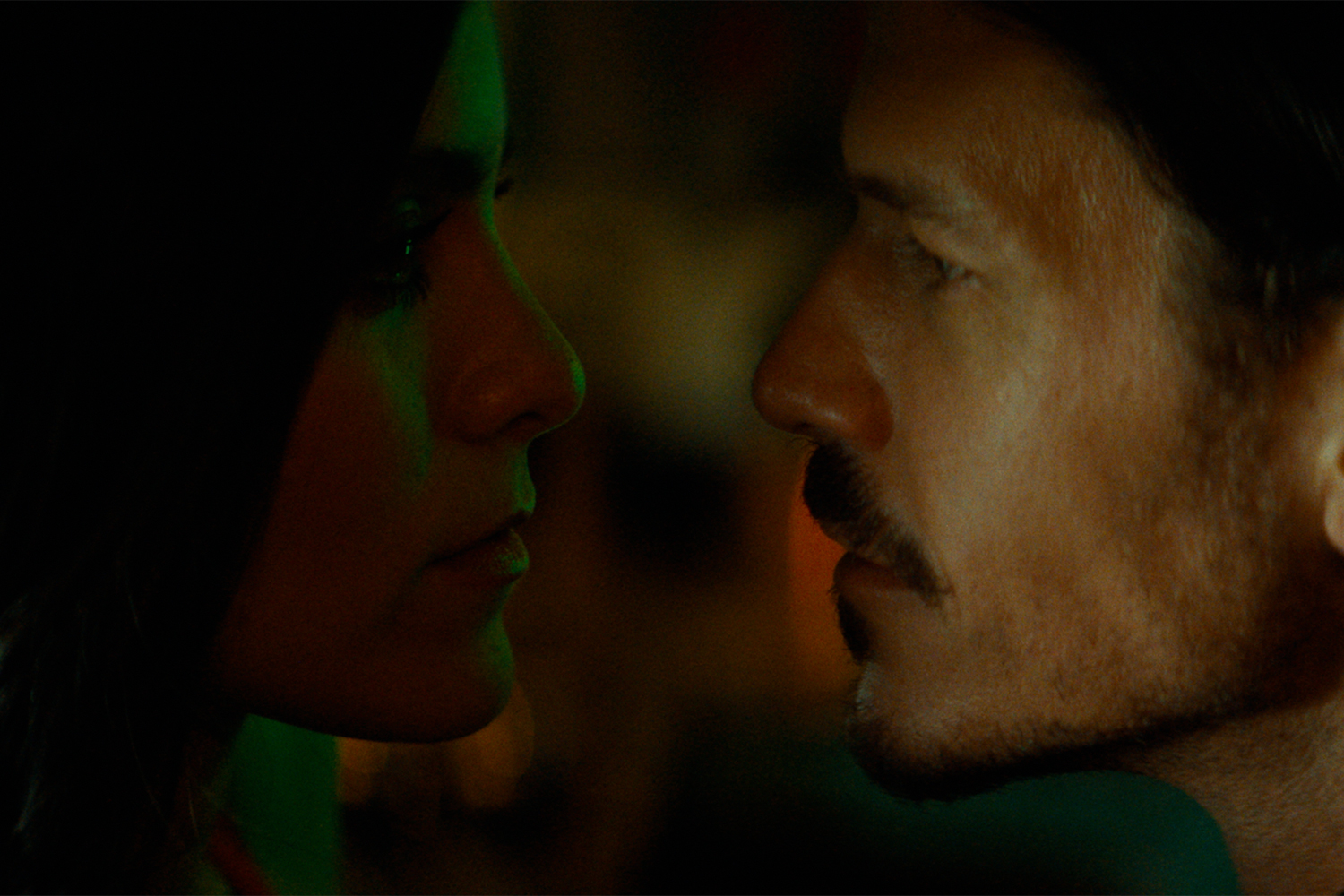
Maya Stojan as Naomi and Mark Hapka as Sebastian in a scene from "Bight." (Photo courtesy of Scatena & Rosner Films)
The last thing that Atticus, an artist who's lost his creative spark, wants to do is attend an art exhibition hosted by their friends Sebastian (Mark Hapka) and Naomi (Maya Stojan). But Charlie insists a night out is just what they need to help lift them out of this rut.
Much to Charlie and Atticus' surprise (not ours), they arrive at the venue and quickly realize it's just going to be the four of them. Sebastian, a bad boy of the art world, has a night of truth-telling, and crimson ropes, in store for them, all in the name of art. And perhaps something more sinister.
All hope that Naomi and Sebastian would be the fun, adventurous counterpoint to Charlie and Atticus' ennui goes out the window when Walsh also has the (sexier) hosting couple carping ad nauseam. The kvetching is singularly unsexy, and it doesn't let up.
“Bight” has been designed to make viewers feel like they're trapped with the characters as they grapple with their issues, but the sensation is more akin to being stranded inside Walsh's hermetic, self-absorbed bubble. You search in vain for a shred of kindness toward her characters, but it's something her overstuffed screenplay doesn't prioritize.
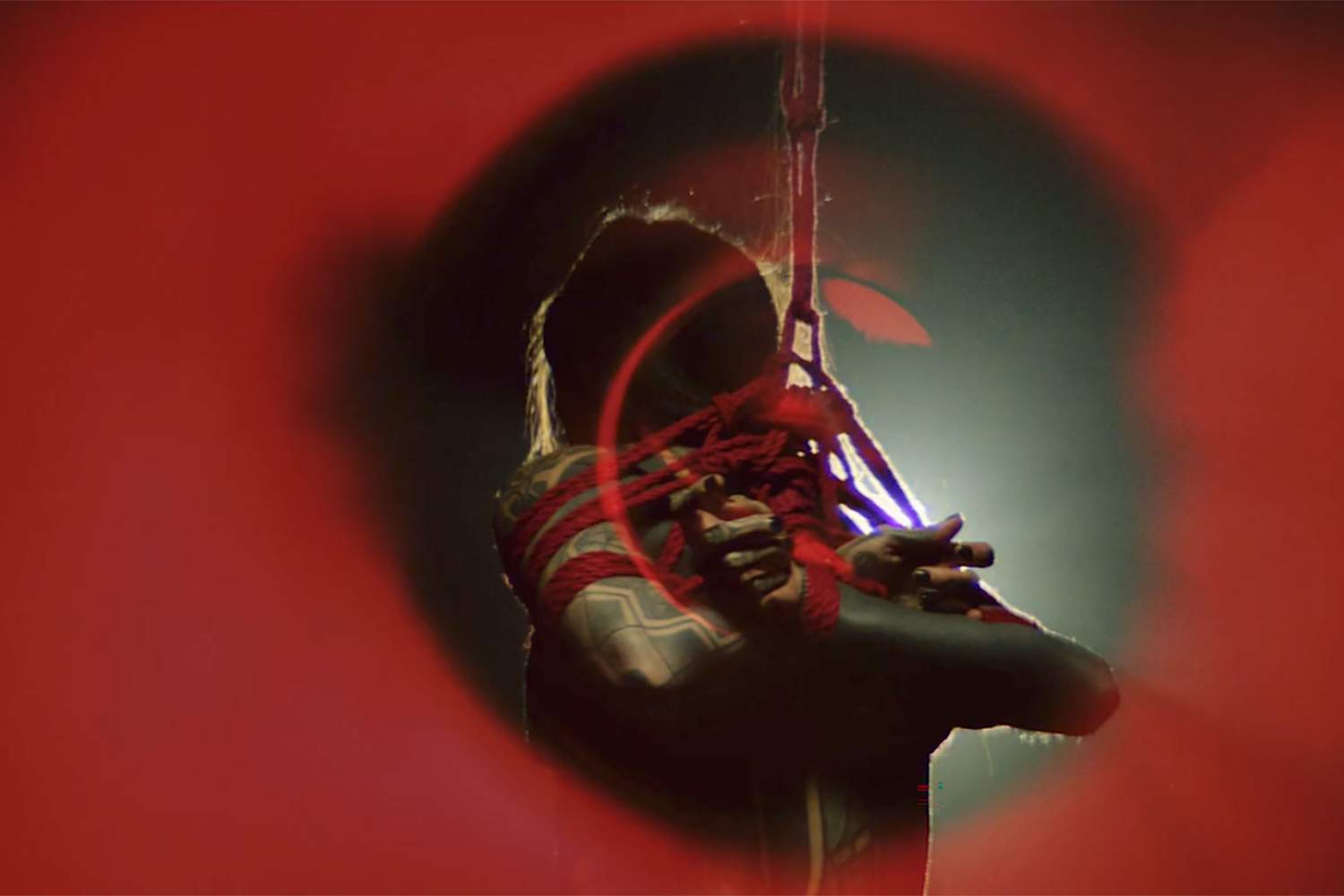
Maiara Walsh as Charlie and Cameron Cowperthwaite as Atticus in a scene from "Bight." (Photo courtesy of Scatena & Rosner Films)
The one aspect where “Bight” does score is in its look, which rarely reflects its shoestring budget. Cinematographers Petros Antoniadis and Devon Daduone's widescreen compositions capably set the stage for the dangerous games being played, enhanced by the blacks and reds that dominate the film's color palette. The cast's collaboration extends well beyond acting on camera. Walsh also handled the production design, and Cowperthwaite and Hapka are credited as the film's editors.
But as inhibitions fall to the wayside during this dark night of the soul, “Bight” starts heading in a more grisly direction and, as it hurtles into full-on horror, Walsh loses the tenuous grip she had on the material. What started as a variation on Adrian Lyne's “9 ½ Weeks” desperately wants to metamorphose into a twisted freak show heavily reminiscent of “Irreversible” and “Enter the Void” auteur Gaspar Noé.
But Walsh is unable to make that leap, and her train wreck of a chamber drama seems convinced that the only path toward enlightenment is through poorly staged mayhem. Her extreme brand of couples therapy is seductive on the outside, ugly on the inside.

Jake Shears as Kevin and Harry Melling as Colin in a scene from "Pillion." (Photo by Chris Harris, courtesy of A24)
“Pillion”: The ideal antidote to “Bight's” bad vibes comes in the form of a British rom-com, or in this case, “dom-com” that harbors a melancholy undertow. It's the most tender depiction of the shifting power dynamics in a submissive/dominant pairing I've seen captured on film.
Writer-director Harry Lighton, also making his feature directing debut, adapts his unconventional queer romance somewhat loosely from the 2020 novel “Box Hill.” Adam Mars-Jones' slim book lets its protagonist Colin tell readers about the intense love affair he had with Ray, the biker he literally stumbled on during his 18th's birthday, circa 1975, when he was a chubby lad with a penchant for leather and motorbikes. Lighton ditches the period setting for the present day and turns Colin (Harry Melling) into a thinner, older bachelor who, in his own words, has “an aptitude for devotion.”
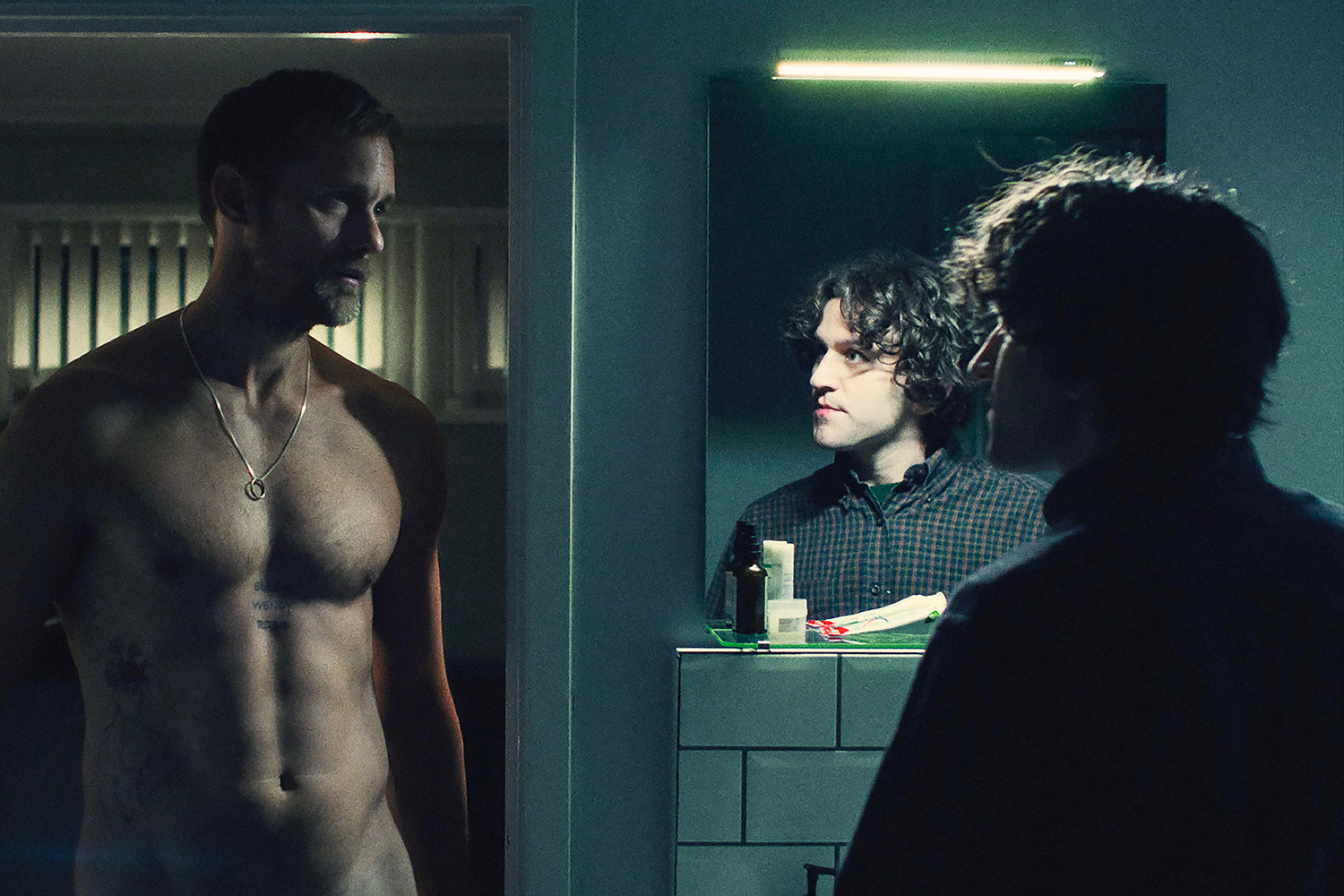
Alexander Skarsgard as Ray and Harry Melling as Colin in a scene from "Pillion." (Photo courtesy of A24)
“Pillion” starts at Christmastime, when Peggy (Lesley Sharp), Colin's cancer-stricken mom, sets him up on a blind date at a pub. But the dude that catches Colin's eye is Ray (Alexander Skarsgård), who appears to make a beeline for him. An enigma of a man with a piercing gaze, the hunky alpha invites Colin for a steamy but impersonal alleyway tryst. Colin is convinced this will never evolve beyond a one-time hookup, but it turns into a lot more than he bargained for when Ray essentially orders him to move into his place.

Douglas Hodge as Pete, Lesley Sharp as Peggy, Alexander Skarsgard as Ray and Harry Melling as Colin in a scene from "Pillion." (Photo credit: Chris Harris. Courtesy of A24)
A concern that Lighton would dilute the men's sub-dom bond into sitcom-level domesticity proves unfounded, as it quickly becomes apparent he's left the sharp edges of the emotional minefield Colin steps into fairly intact. Initially feeling like he's in over his head, Colin discovers there is empowerment in servitude, and what emerges is a frequently funny depiction of a submissive person slowly becoming aware that he may actually be holding all the cards.
Lighton sustains an upbeat optimism while never losing sight of the frankness in his material or undermining the genuine concerns Peggy voices about her son's new beau. One of the film's best scenes is a tense dinner table showdown between Ray's protective mum and an impenetrable Ray.
As for the sex scenes, test screening audiences reportedly saw more skin, but they nevertheless retain a carefully controlled potency. Control is an important theme here, but it also applies to the way Lighton approaches this story. “Pillion” is tight as a drum. In just about every scene, one feels the filmmaker asked himself, “How do I convey the most amount of information in the shortest amount of time, with the least amount of dialogue?”
Lighton has crafted a master class in economy of storytelling, aided immeasurably by editor Gareth C. Scales' judicious pruning. They do go a bit overboard, in the sense that minor characters like Colin's co-workers and Ray's biker gang mates barely register. But this is a minor quibble in a film whose generosity of spirit is matched by its terrific central performances and a screenplay that's as wise as it is winsome. Its title refers to the passenger seat in a motorcycle. Witnessing timid, insecure Ray discover he has the fortitude to claim the driver's seat and steer his way to relationship bliss, well, that's moviegoing goals right there. That engine roar you hear is the sound of “Pillion” riding off with our hearts.
“The Bride!” is now showing in wide release across South Florida, including IMAX engagements at AMC Aventura, AMC Sunset Place, CMX Dolphin, Regal Kendall Village and the AutoNation IMAX at the Museum of Discovery and Science in downtown Fort Lauderdale. “Bight” is now available for digital rental on various platforms, including Amazon Prime, Apple TV, Fandango at Home, Google TV and YouTube. “Pillion” is now showing at Silverspot Cinema in downtown Miami and AMC DINE-IN Coral Ridge 10. An On Demand release date announcement is expected soon.