


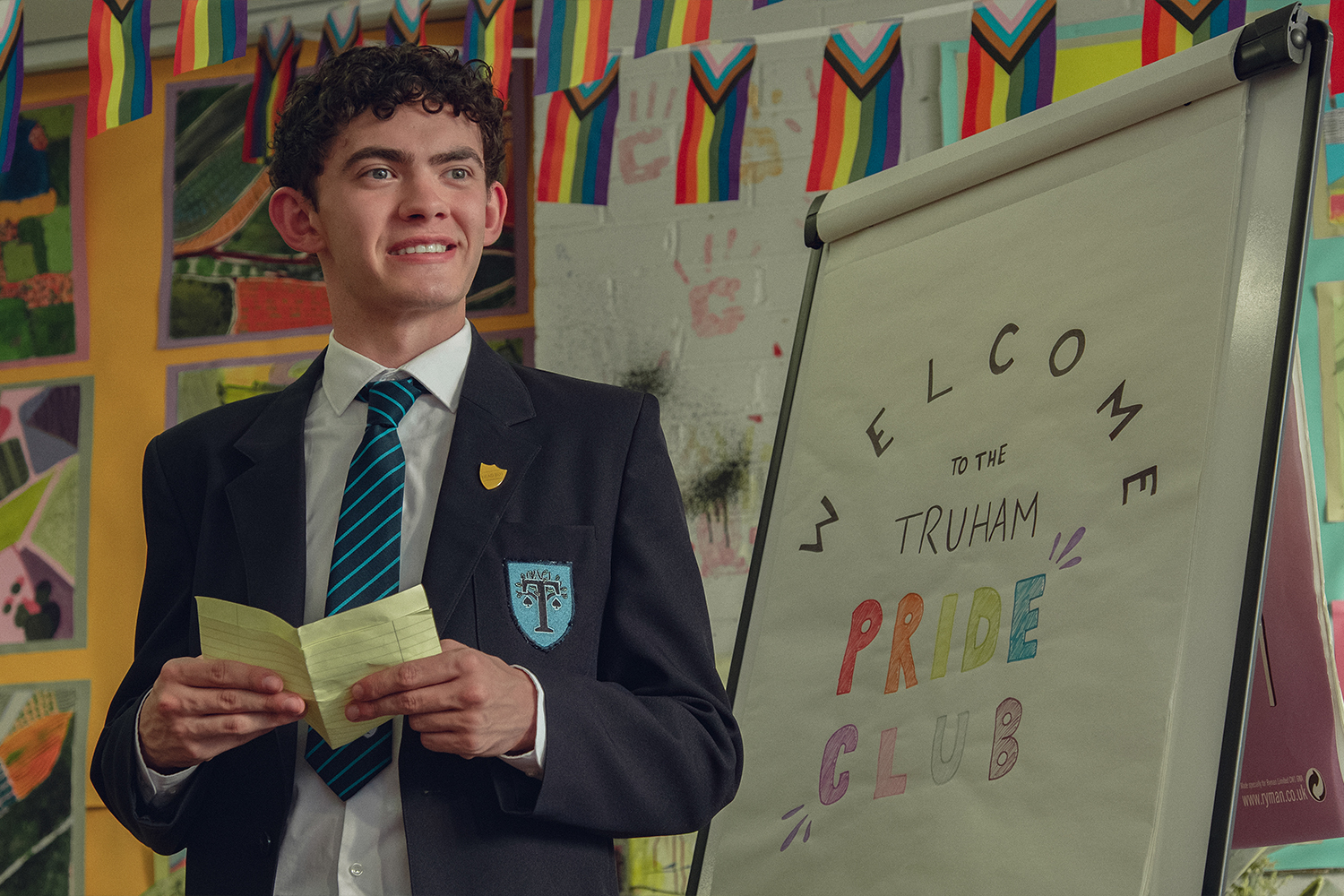
Joe Locke as Charlie Spring in a scene from "Heartstopper Forever." (Photo by Samuel Dore, courtesy of Netflix)
You can tell a lot from someone by the way their bedroom feels. More than front porches and dining rooms, they're the place where you chart the path your life could take. It's here where you might discover you really like a 19th-century author your classmates dismissed as dull. It's here where you find out the hard way that cramming for that science final at the last minute was a very bad idea.
And it's in the confines of these four walls, decorated to align with your hopes and dreams, where your inner voice whispers that you stray from the norm, in a particular way that no one could have prepared you to acknowledge, much less accept.
It's in your bedroom where you decide to keep this part of you locked away. Because there's too much hostility outside that door. Because you're simply not ready to take that step. Because you're convinced that the fabric of your reality will disintegrate into a million pieces if anyone were to find out.
And it's in your bedroom, away from all the stultifying calls to conform, where you might discover that you are not alone. Where you discover yourself in the eyes of a fellow traveler.
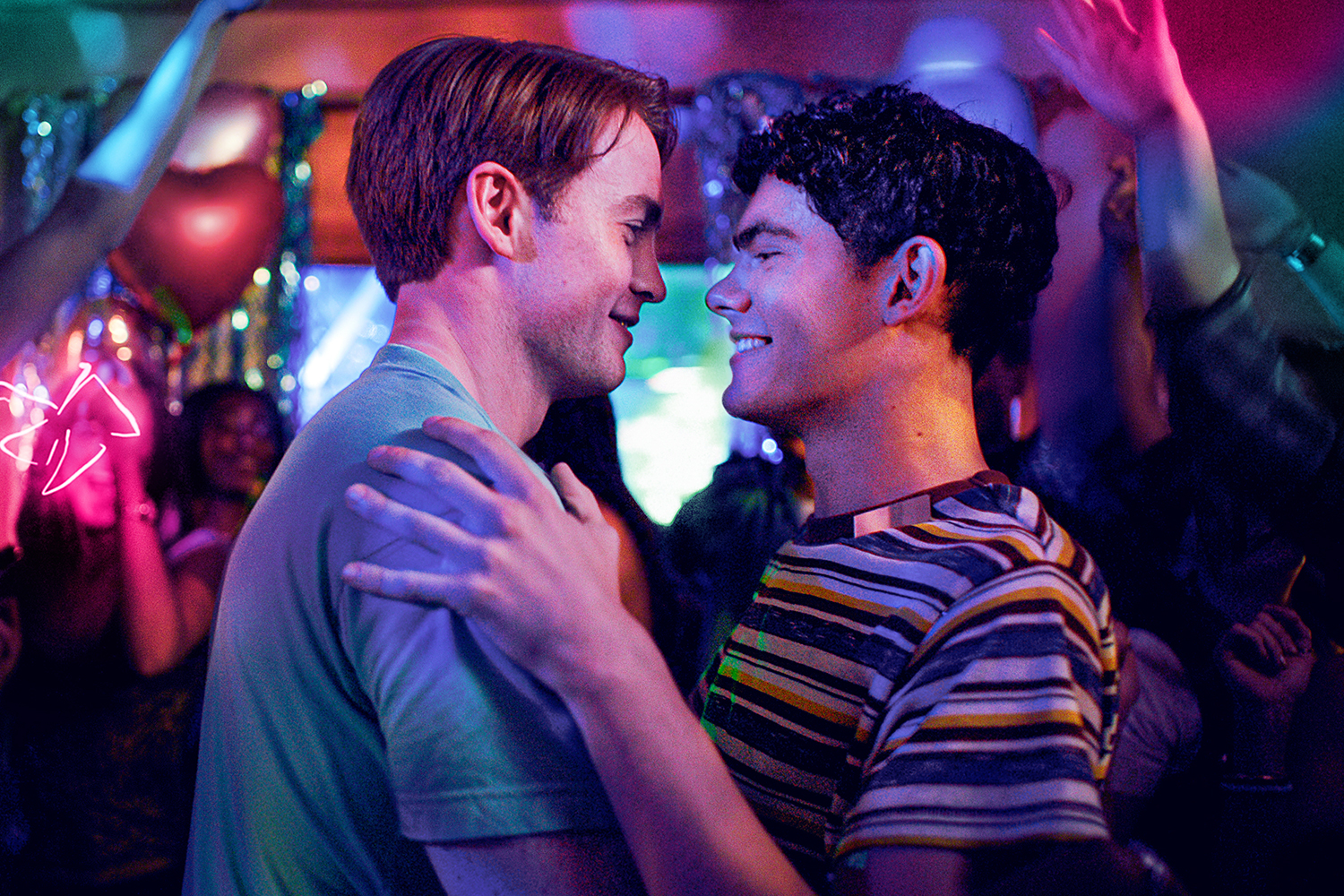
Kit Connor as Nick Nelson and Joe Locke as Charlie Spring in a scene from "Heartstopper Forever." (Photo courtesy of Netflix)
Overhead shots of bedrooms are a motif coursing throughout “Heartstopper Forever,” an exquisitely rendered feature that wraps up the Netflix series, based on English author and illustrator Alice Oseman's webcomic, that topped the streaming giant's viewing charts across the globe, though never in the United States.
It brings the soul-tingling tale of teenage boyfriends Nick Nelson (Kit Connor) and Charlie Spring (Joe Locke) to a conclusion that finds a melancholy-tinged happy medium between reality and the wish-fulfillment fantasy that originally set this story in motion.
Oseman, who was also the showrunner for “Heartstopper's” three seasons, is clearly eager to nudge Nick, who is bisexual, and Charlie, who is gay, into more mature territory. Her script, based on the sixth (and final) graphic novel collecting the tail end of her webcomic, follows suit, placing obstacles in the boys' way that feel considerably more adult than the crises they've faced before.
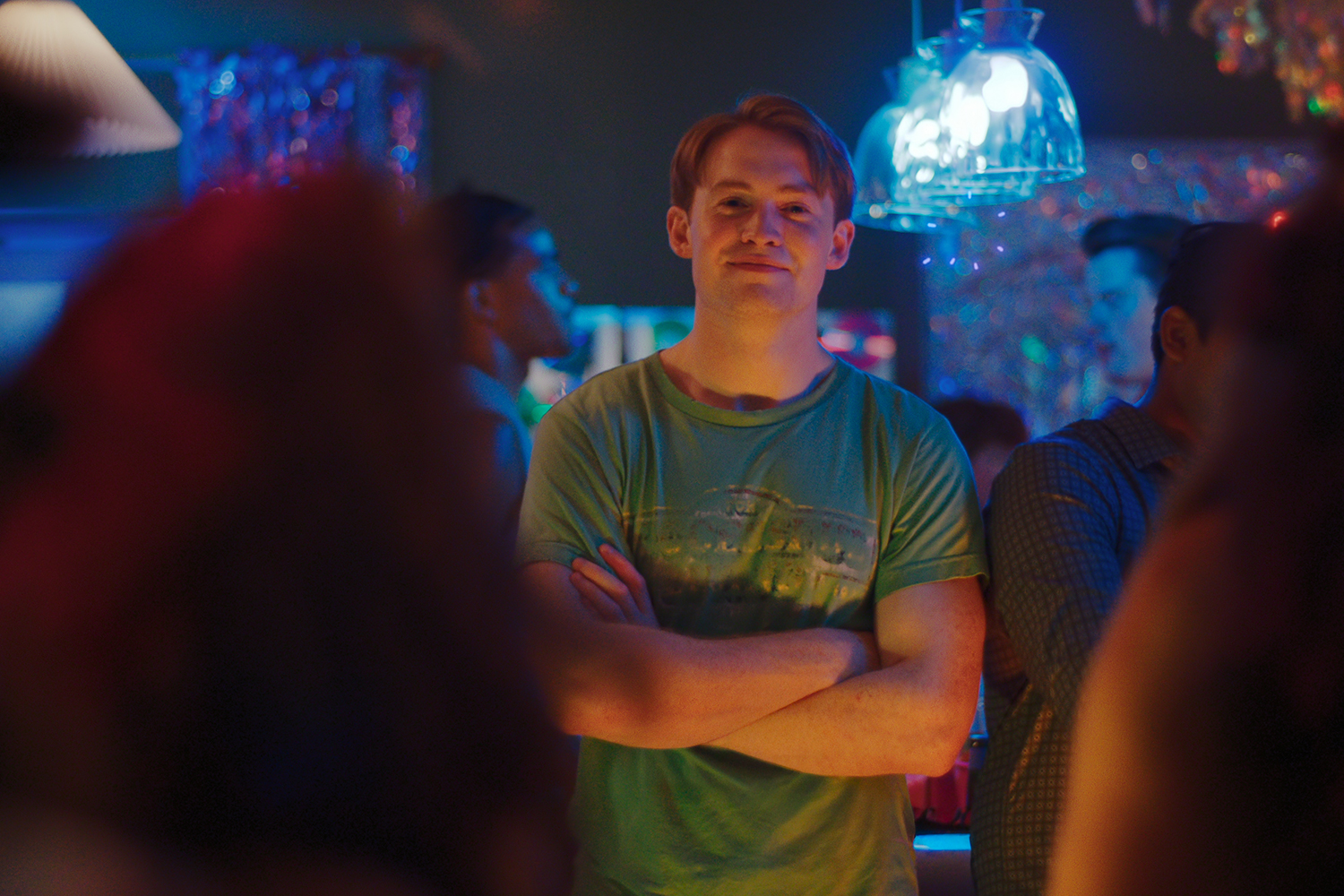
Kit Connor as Nick Nelson in a scene from "Heartstopper Forever." (Photo courtesy of Netflix)
But it's director Wash Westmoreland, taking over from directors Euros Lyn (Seasons 1 and 2) and Andy Newbery (Season 3), who makes “Forever” feel so grown-up. The “Colette” and “Still Alice” filmmaker shepherds his protagonists as they explore their evolving sexual appetites. Connor and Locke are more than up to the challenge, alternating between intimate lovemaking and more frisky, um, handplay. A note to parents: Unlike the show, this film is rated TV-MA, the streaming content equivalent of an R rating. If your children are 13 and under, you might want to wait a couple of years, or watch it beforehand to reach a decision.
But as much as I applaud this development, “Heartstopper” was never at its core about its characters' libido. And the crossroads Nick and Charlie are fast approaching is two-fold. “Heartstopper” viewers know the first issue, introduced at the end of Season 3: Nick, who's one year ahead of Charlie and nearing graduation, wants to go to college, or uni, as they say in the U.K., in Leeds, meaning they'll have to segue into a long-distance relationship. Charlie, who's had his share of abandonment issues throughout his adolescence, is not crazy about the idea, but he can see how his boyfriend, a rugby king, lights up when talking about this university and its sports program.
There's a bigger problem for these two, though, and it's what gives “Heartstopper Forever” its psychological depth. At Truham, the school where Charlie was tormented after he was outed, then honed his confidence as he found his inner strength, he is truly coming into his own, even running for “head boy” at the school.
###_C_178488840109509_####Charlie's growth in popularity comes as music to Nick's ears. It also alters the dynamic of a relationship where Nick was accustomed to be rescuer, the rock that supported Charlie as he dealt with his eating disorder. Season 3 laid bare that mental health, not just romantic fulfillment, was Oseman's endgame. (Episode 4, “Journey,” is a high point in the series.) Now, as this shift unsettles the boys' harmony, she invites viewers to go beyond the show's safety-blanket appeal to grapple with a rift that injects a taste of the real world into its idealized portrayal of growing pains.
It's a bracing evolution for this story, on the page (where things unfold a little differently) and on the screen, where Westmoreland trusts viewers to keep up as he escorts these good-hearted lads to the threshold of adulthood. His direction here is reminiscent of how Alfonso Cuarón approached the world of Harry Potter when he came on board to helm “The Prisoner of Azkaban”: respect for the source material, coupled with a willingness to tinker with its trappings.
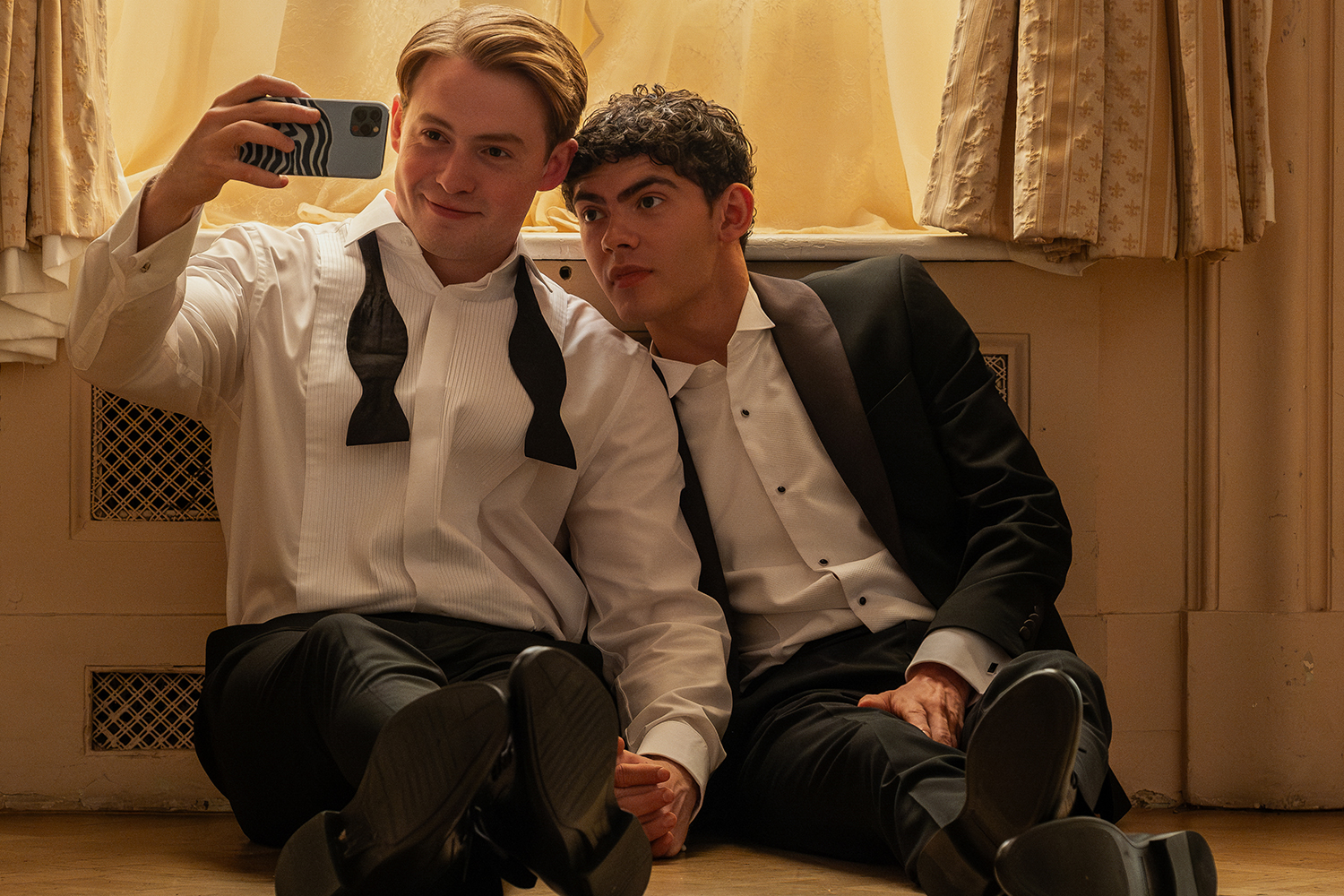
Kit Connor as Nick Nelson and Joe Locke as Charlie Spring in a scene from "Heartstopper Forever." (Photo by Samuel Dore, courtesy of Netflix)
Some of the show's fans have greeted the release of “Heartstopper Forever” with misgivings about how, due to the limited storytelling real estate that a 110-minute film grants the material, the supporting characters who comprise the rest of this circle of friends are relegated to the sidelines.
Their complaints are understandable, since it's so easy to become invested in the lives of lesbian couple Tara Jones (Corinna Brown) and Darcy Olsson (Kizzy Edgell), as well as the complicated but loving bond between transgender artist Elle Argent (Yasmin Finney) and burgeoning filmmaker Tao Xu (William Gao), not to mention the arc that has bookworm Isaac Henderson (Tobie Henderson) coming to terms with his asexuality.
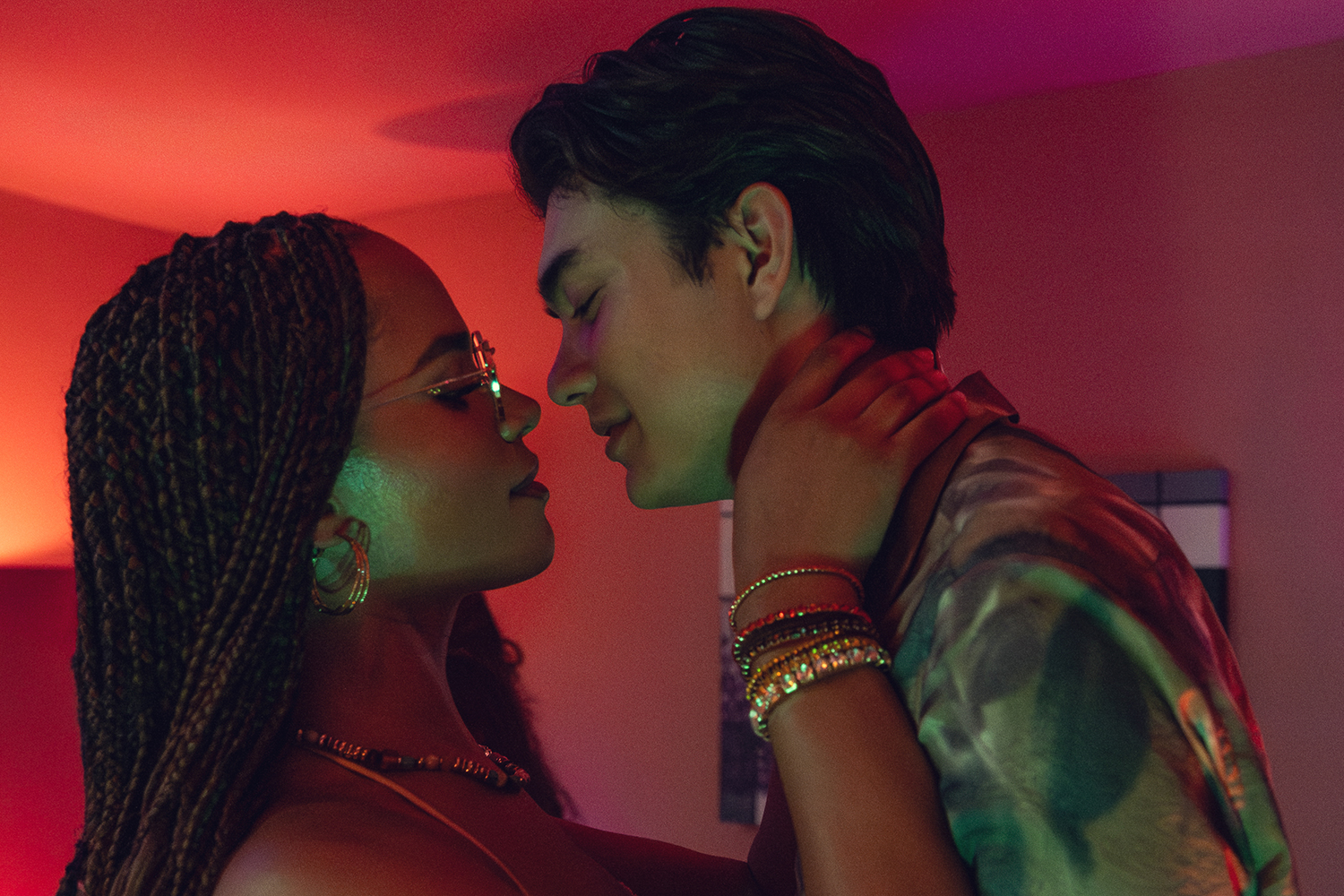
Yasmin Finney as Elle Argent and William Gao as Tao Xu in a scene from "Heartstopper Forever." (Photo by Samuel Dore, courtesy of Netflix)
But when it was announced that a fourth season was not to be, and the series was to conclude with a feature, focusing on Nick and Charlie feels like a necessary decision that, to this fan, pays dividends. Because “Heartstopper Forever” feels like a real film. Working with cinematographer James Rhodes, Westmoreland opts for a more high-contrast palette and more fluid camerawork, giving Nick and Charlie an ideal canvas against which to navigate this emotional minefield that puts their tender and pure connection to the ultimate test.
It sets up the stage for Connor and Locke to deliver some of their strongest, most nuanced work to date, while still giving the chance for their remarkable chemistry to waft off the screen. It's what has kept so many of us coming back, again and again, to check in on Nick and Charlie. Because, as adept and sensitive as its portrayal of LGBTQ+ lives is, “Heartstopper” always transcended its YA trappings to become one of the finest depictions of romantic longing ever filmed.
So no, I'm not sad “Heartstopper” is over. Because Oseman and Westmoreland stick the landing. Because they didn't muck it up, even though some of the PSA-coded dialogue of the second and third seasons lingers here and there. Because they knew their characters needed to evolve in order to thrive. If anything, it's a source of unadulterated joy that the show remained consistent from beginning to end.
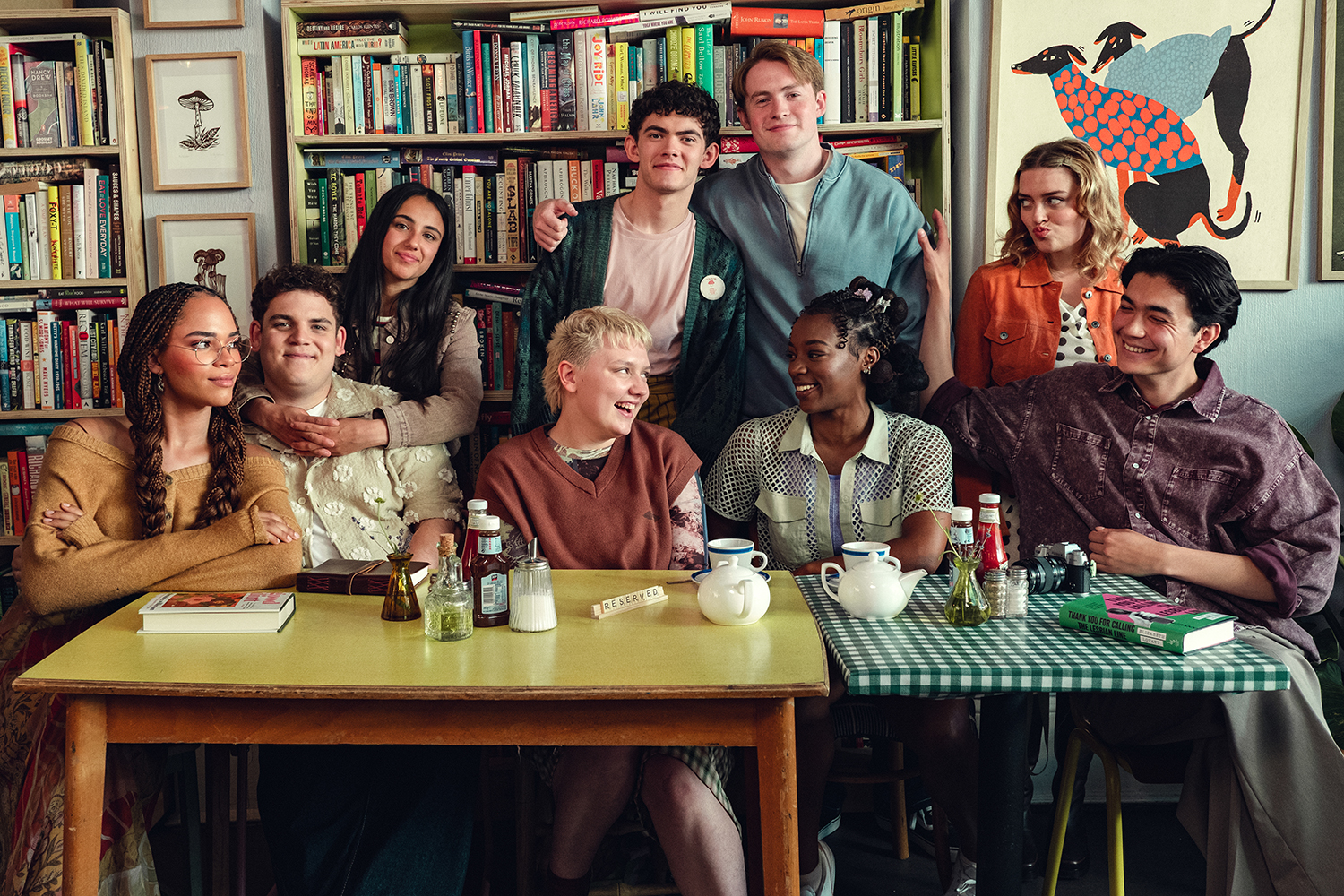
Yasmin Finney as Elle Argent, Tobie Donovan as Isaac Henderson, Leila Khan as Sahar Zahid, Kizzy Edgell as Darcy Olsson, Joe Locke as Charlie Spring, Kit Connor as Nick Nelson, Corinna Brown as Tara Jones, Rhea Norwood as Imogen Heaney and William Gao as Tao Xu in a scene from "Heartstopper Forever." (Photo by Samuel Dore, courtesy of Netflix))
What does sadden this critic is the dismissive attitude from too many of my friends and colleagues when I recommended this show, and now this exceptional film. The ones who assured me it would go on their watchlist, as months turned into years. The ones who gave me that incredulous look, the look that says “not for me.” The ones with whom I was hoping to share the enchantment of discovery, and instead left me alone to cherish this show all by myself.
Because this journey has reached its deeply satisfying conclusion, and the very people whom I hoped would join me for this ride chose not to get on board. They did so hoping it won't be a big issue moving forward. Predicting I wouldn't give it much mind. Expecting me to move on as if nothing happened. To which I say, in the immortal words of Bugs Bunny: “He don't know me very well, do he?”
So raise your glasses. Let us toast “Heartstopper.” For the talented folks it introduced to us, on both sides of the lens. For the happiness it ushered into our lives. For being an anchor at a time when I was feeling adrift. For the good and bad memories it unlocked. For the more enlightened world it manifests. Here's to the magnificent journey it took us on, one so kind and welcoming, it even has room for those who let their apathy speak louder than their words.
“Heartstopper Forever” is now streaming on Netflix, as are the three seasons preceding it and a behind-the-scenes documentary special titled “Heartstopper: Ending on a Hi.”